




List of Contents
What is the Intelligent Virtual Assistant Market Size?
The global intelligent virtual assistant market size is valued at USD 25.42 billion in 2025 and is predicted to increase from USD 32.01 billion in 2026 to approximately USD 178.80 billion by 2034, expanding at a CAGR of 24% from 2025 to 2034.
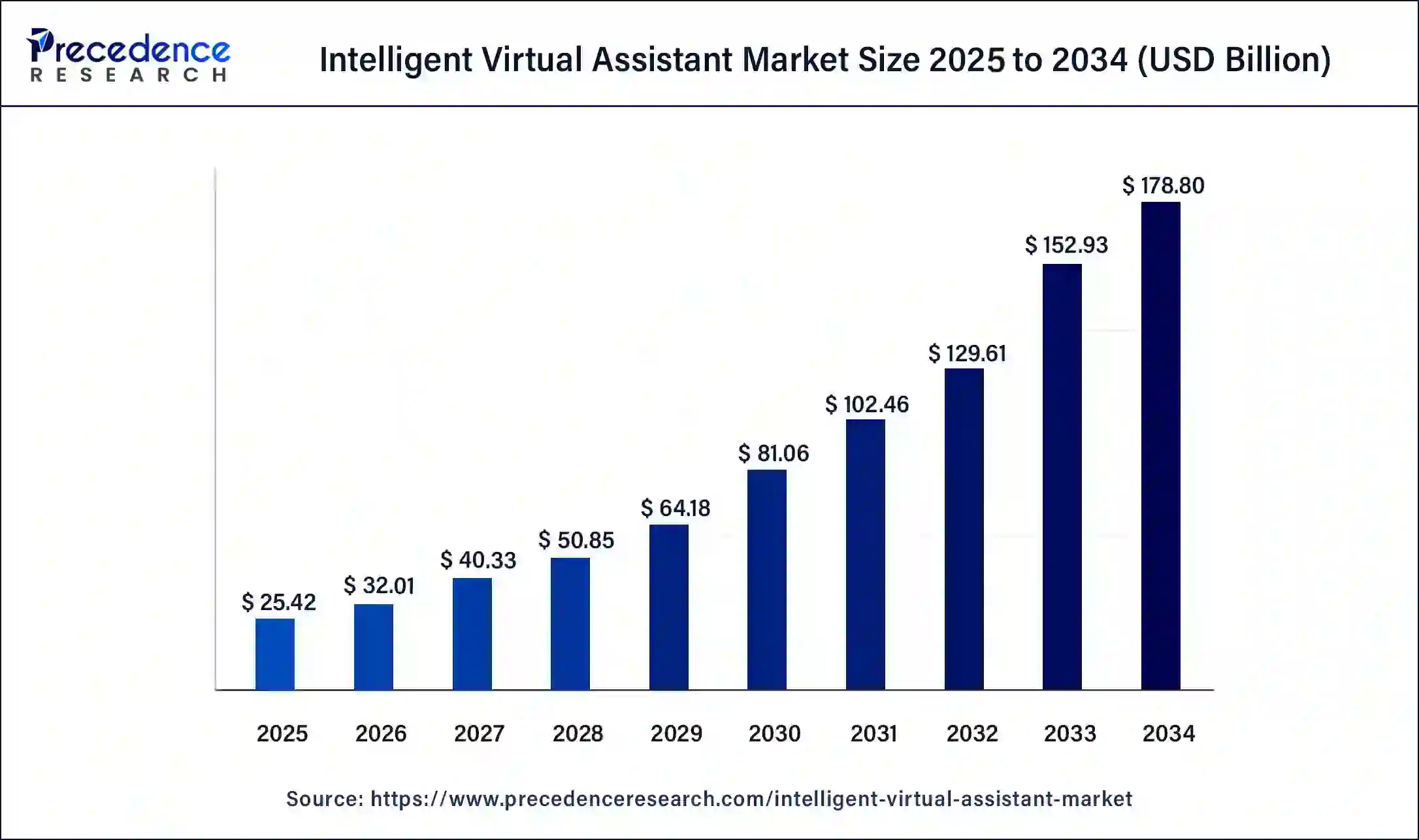
Intelligent Virtual Assistant Market Key Takeaways
- North America contributed more than 39% of the revenue share in 2024.
- Asia-Pacific is estimated to expand the fastest CAGR between 2024 and 2034.
- By product, the chatbot segment has held the largest market share of 68% in 2024.
- By product, the smart speaker segment is anticipated to grow at a remarkable CAGR of 32.8% between 2025 and 2034.
- By procedure, the text to speech segment generated over 61% of revenue share in 2024.
- By procedure, the automatic speech recognition segment is expected to expand at the fastest CAGR over the projected period.
- By end-user, the consumer electronics segment had the largest market share of 32% in 2024.
- By end-user, the healthcare segment is expected to expand at the fastest CAGR over the projected period.
What is an intelligent virtual assistant?
The intelligent virtual assistant market is a rapidly growing sector characterized by AI-powered virtual agents designed to perform tasks and provide information through natural language processing. IVAs find applications in customer service, healthcare, and smart homes, enhancing user interactions. Key players offer advanced features like speech recognition, personalized responses, and integration with various platforms. The market's expansion is driven by the increasing demand for automation, efficiency, and improved customer experiences, with IVAs playing a pivotal role in transforming how businesses and individuals interact with technology.
Intelligent virtual assistants are deployed across industries, addressing diverse needs such as virtual customer support, appointment scheduling, and data analysis. The market's evolution includes advancements in emotion recognition, language understanding, and expanding use cases, solidifying IVAs as indispensable tools in modern digital ecosystems.
Intelligent Virtual Assistant Market Growth Factors
- Advancements in Natural Language Processing (NLP): Ongoing developments in natural language processing significantly augment the capabilities of IVAs, allowing them to comprehend and respond to user queries more accurately and contextually.
- Rising Demand for Virtual Customer Support: The escalating need for efficient customer service solutions has positioned IVAs as pivotal tools, providing real-time assistance, resolving queries, and ultimately enhancing overall user satisfaction.
- Integration of AI and Machine Learning: The increased incorporation of artificial intelligence (AI) and machine learning technologies empowers IVAs to continually learn and adapt, resulting in more personalized and efficient interactions over time.
- Expansion of Use Cases: IVAs are diversifying their applications beyond customer service, finding utility in various domains such as virtual personal assistants, virtual health assistants, and more.
- Growth in E-commerce: The e-commerce sector is leveraging IVAs to streamline processes like product recommendations, order tracking, and personalized shopping experiences, contributing to enhanced customer engagement.
- Surge in Remote Work: The global transition to remote work arrangements has accelerated the adoption of IVAs, which are now utilized for tasks like scheduling, meeting coordination, and information retrieval, supporting the changing work landscape.
- Accessibility and Inclusivity: IVAs are instrumental in fostering more accessible and inclusive digital environments by providing assistance tailored to individuals with disabilities.
- Enhanced Human-Machine Collaboration: IVAs are becoming integral components of collaborative work environments, facilitating seamless interactions between humans and machines for improved productivity and efficiency.
- Security and Privacy Concerns: Given the handling of sensitive data, robust security measures and the effective addressing of privacy concerns are crucial aspects for the sustained growth of the IVA market.
- Emerging Voice Biometrics: The integration of voice biometrics into IVAs enhances security and personalization, contributing to a more secure and user-friendly experience.
Intelligent Virtual Assistant Market Outlook
- Industry Growth Overview: The intelligent virtual assistant market is expected to develop quickly from 2025 to 2030 due to growing enterprise automation, AI integration, and customer service digitization. The healthcare, banking, and e-commerce industries are the primary adopters of intelligent virtual assistants. The primary intelligent virtual assistant markets are North America and the Asia Pacific.
- Global Expansion: Leading providers are expanding operations into emerging markets, including Southeast Asia and Latin America, to take advantage of multilingual capabilities and areas of lower operational costs. Companies like Amazon, Google, and Baidu are investing in local data centers to meet growing demand in these markets.
- Major Investors: Venture capitalists and technology conglomerates are increasing their investments in conversational AI startups. Companies are investing in scalable platforms nurturing voice commerce, mental health, and education.
- Startup Infrastructure: The ecosystem is changing rapidly with a plethora of startups building hyper-personalized, emotionally intelligent assistants. For example, Kore.ai in the USA and Yellow.ai in India are raising significant money for their cross-industry AI automation tools.
Market Scope
| Report Coverage | Details |
| Growth Rate from 2025 to 2034 | CAGR of 24% |
| Market Size in 2025 | USD 25.42 Billion |
| Market Size in 2026 | USD 32.01 Billion |
| Market Size by 2034 | USD 178.80 Billion |
| Largest Market | North America |
| Base Year | 2024 |
| Forecast Period | 2025 to 2034 |
| Segments Covered | Product, Procedure, End User, and Region |
| Regions Covered | North America, Europe, Asia-Pacific, Latin America, and Middle East & Africa |
Market Dynamics
Driver
Advancements in Natural Language Processing (NLP) and the growing demand for virtual customer support
The surge in the market demand for intelligent virtual assistants (IVAs) is propelled by two key factors, advancements in natural language processing (NLP) and the growth in demand for virtual customer support. The continuous evolution of NLP technologies has empowered IVAs to comprehend and respond to user queries with increasing sophistication. Enhanced language understanding allows IVAs to engage in more nuanced conversations, providing users with a seamless and natural interaction experience.
Simultaneously, the escalating demand for virtual customer support solutions across industries has positioned IVAs as integral components of modern business strategies. As businesses prioritize efficient and responsive customer interactions, IVAs play a pivotal role in delivering real-time assistance, resolving queries, and offering personalized support. Their ability to understand context, interpret user intent, and learn from interactions contributes to elevated customer satisfaction. These dual forces, NLP advancements and the demand for superior customer support underscore the dynamic growth trajectory of the IVA market as organizations seek intelligent, automated solutions to enhance customer engagement and streamline operations.
Restraint
Privacy concerns and integration challenges
One significant restraint for the intelligent virtual assistant (IVA) market is the growing concern around user privacy. As these virtual assistants become more ingrained in daily life, there is an increasing amount of sensitive and personal information being processed. Users are becoming more cautious about the data collected by IVAs and how it's used. Privacy breaches, data mishandling, or unauthorized access to personal information can erode user trust. Striking a balance between providing personalized experiences and ensuring robust privacy measures will be crucial for the sustained growth of the IVA market.
Integration challenges pose another hurdle for the IVA market. Deploying IVAs seamlessly into existing systems and workflows can be complex, particularly for businesses with diverse and legacy systems. Compatibility issues, interoperability challenges, and the need for customized integration can slow down the adoption of IVAs. Organizations must invest in skilled personnel and resources to ensure smooth integration with their IT infrastructure. Overcoming these challenges is essential to maximize the benefits of IVAs and fully leverage their potential across various industries.
Opportunity
Enhanced customer experience and increased efficiency in business processes
The increasing adoption of intelligent virtual assistants (IVAs) is closely tied to their capacity for improving customer experiences and streamlining business operations. IVAs, empowered by advanced natural language processing (NLP) and machine learning, deliver responsive and personalized interactions to users. Their ability to understand and respond to natural language makes interactions more intuitive and satisfying for customers.
This technological sophistication contributes significantly to enhancing overall customer satisfaction and loyalty by providing a seamless and personalized engagement experience. This not only improves customer satisfaction but also contributes to brand loyalty. In customer support scenarios, IVAs offer real-time assistance, quickly resolving queries and providing information. Their continuous learning abilities enable them to understand user preferences, adapting their responses over time for a more tailored and efficient customer experience.
Moreover, businesses are increasingly leveraging IVAs to optimize internal processes. These virtual assistants excel in handling routine and repetitive tasks, freeing up human resources to focus on more complex and strategic activities. In corporate settings, IVAs assist with data retrieval, scheduling, and information management, contributing to increased operational efficiency. As organizations prioritize delivering superior customer service and optimizing workflows, the demand for Intelligent Virtual assistants continues to surge, marking a transformative shift in how businesses engage with customers and manage their internal operations.
Product Insights
According to the product, the chatbots segment held a 68% revenue share in 2024. Chatbots, a key segment of Intelligent Virtual Assistants (IVAs), are AI-powered conversational interfaces that facilitate communication between users and computer systems. They use natural language processing (NLP) to understand and respond to user queries, offering a seamless conversational experience. Trends in chatbots involve advancements in contextual understanding, multilingual capabilities, and integration with various platforms, enhancing user engagement across industries, from customer service to e-commerce.
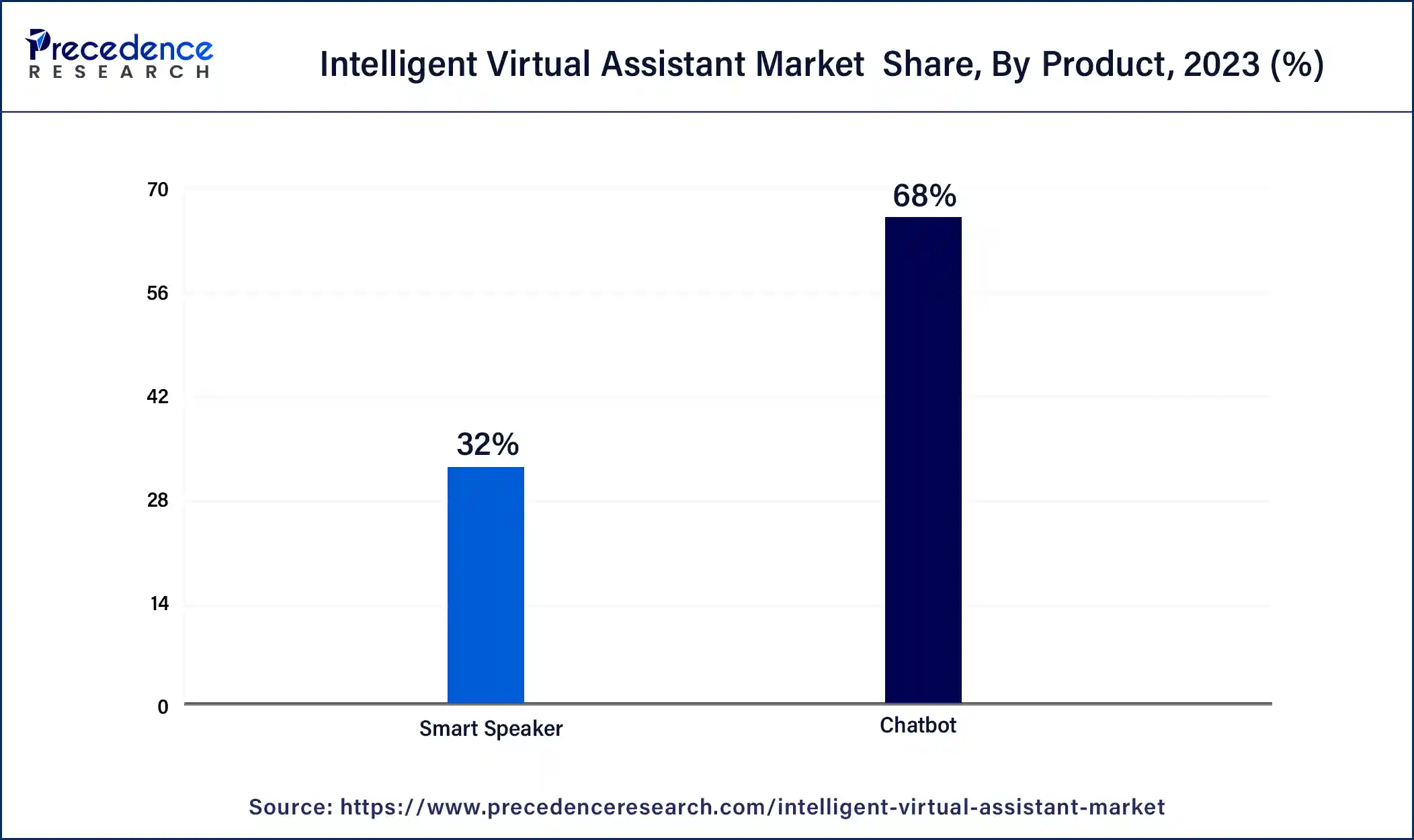
The smart speakers segment is anticipated to expand at a significant CAGR of 32.8% during the projected period. Smart speakers are voice-activated devices equipped with virtual assistants, providing hands-free interaction and access to various services. Trends in smart speakers include improved voice recognition accuracy, expanded language support, and integration with smart home devices. As these devices evolve, they're becoming central to smart home ecosystems, offering users voice-controlled access to music, information, and home automation, fostering a more connected and convenient lifestyle.
Technology Insights
Based on the technology, the text-to-speech segment held the largest market share of 61% in 2024. Text-to-Speech (TTS) technology in intelligent virtual assistants (IVAs) involves the conversion of written text into spoken words. The current trend in TTS is marked by continuous advancements in natural language processing, resulting in more lifelike and expressive virtual voices. These developments aim to create a more engaging and human-like interaction between users and virtual assistants.
On the other hand, the automatic speech recognition segment is projected to grow at the fastest rate over the projected period. Automatic speech recognition technology enables IVAs to convert spoken language into written text. The latest trend in ASR is the improvement of accuracy and speed, allowing virtual assistants to better understand and respond to spoken commands or queries. Ongoing innovations aim to enhance the overall effectiveness and efficiency of voice-based interactions in IVAs.
Application Insights
The consumer electronics segment had the highest market share of 32% in 2024 based on the application. intelligent virtual assistants (IVAs) in consumer electronics refer to voice-activated assistants integrated into smart devices like smart speakers, smartphones, and smart home systems. The trend in this application involves the growing integration of IVAs into various consumer electronics to enable voice commands for tasks such as setting reminders, playing music, and controlling smart home devices. Improved voice recognition technology and expanded functionalities contribute to a more seamless and intuitive user experience in consumer electronics.
The healthcare segment is anticipated to expand at the fastest rate over the projected period. In healthcare, intelligent virtual assistants are designed to assist both healthcare professionals and patients. They provide information, schedule appointments, offer medication reminders, and answer health-related queries. The trend in healthcare IVAs includes increased adoption for tasks like appointment scheduling, telehealth consultations, and delivering personalized health information. The integration of AI-driven virtual assistants in healthcare aims to enhance operational efficiency, improve patient engagement, and provide timely and accurate information, contributing to better overall healthcare outcomes.
Regional Insights
U.S. Intelligent Virtual Assistant Market Size and Growth 2025 to 2034
The U.S. intelligent virtual assistant market size is estimated at USD 6.98 billion in 2025 and is predicted to be worth around USD 49.93 billion by 2033, at a CAGR of 24.59% from 2024 to 2034.

North America has held the largest revenue share 39% in 2024. The intelligent virtual assistant (IVA) market is thriving in North America, driven by the widespread adoption of cutting-edge technologies and the dominant presence of major technology companies. The region is experiencing a notable rise in the integration of IVAs across diverse industries, with a specific focus on enhancing customer service applications. This emphasis on customer service applications is contributing significantly to improvements in operational efficiency and overall user experience across various sectors in the North American market.
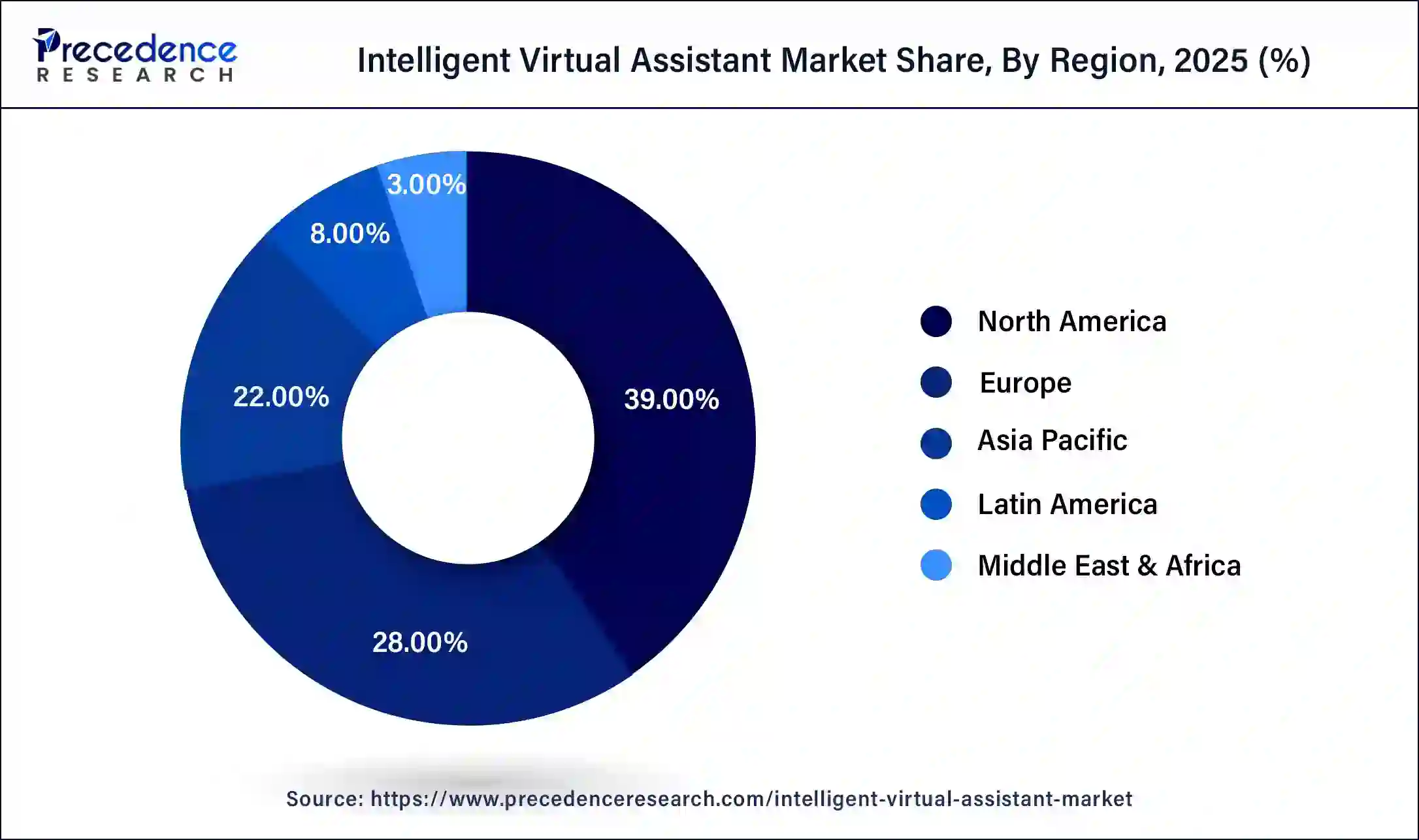
Asia Pacific is estimated to observe the fastest expansion. In Asia Pacific, the IVA market is undergoing rapid expansion, driven by the continuous development of digital infrastructure and a surging demand for automation in diverse business processes. The region benefits from a growing tech-savvy population, coupled with substantial investments in artificial intelligence technologies, fostering a dynamic and thriving market landscape.Bar Chart 485624
In Europe, the intelligent virtual assistant (IVA) market is witnessing steady growth, marked by increasing recognition of the benefits IVAs bring to businesses. The region is characterized by a rising implementation of IVAs in sectors like finance, healthcare, and retail, aiming to optimize operations and elevate customer engagement. Europe's evolving technological landscape and the drive for enhanced operational efficiency contribute to the expanding adoption of IVAs across industries in the European market.
Why did the U.S. Dominated the North American Intelligent Virtual Assistant Market?
The U.S. dominated the North American market with the early adoption of AI and natural language processing technologies. Companies like Amazon and Microsoft have invested heavily in developing smart assistants for personal and business use. Growth in the market was also bolstered by the increasing adoption of AI chatbots in retail and healthcare. Additionally, the interest in smart devices driven by voice and significant R&D spending helped maintain the country's leadership position.
Why did China dominate the Asia-Pacific intelligent virtual assistant market?
China was the leader in the Asia-Pacific market largely due to large-scale investments in AI and government funding. Companies such as Baidu, Alibaba, and Tencent developed and advanced both speech recognition and voice-driven capabilities. The growth of AI chatbots was boosted by the widespread adoption of virtual assistants in smart homes, cars, and customer service. Moreover, China had a large digital population and strong support for local-language development, enabling it to dominate the market and to promote global tech partnerships to advance AI.
Why did Europe experience notable growth in the intelligent virtual assistant market?
Europe experienced notable development in its intelligent virtual assistant market, driven by stringent data privacy regulations and increased interest in ethical AI products. The European region dedicated attention towards improving user experience via the use of multilingual intelligent virtual assistants and privacy-focused technology. Demand for intelligent virtual assistants increased due to higher levels of enterprise adoption in finance, retail, and automotive segments. While many European countries contributed to growth, the United Kingdom and Germany were among the leading countries in the European intelligent virtual assistant market.
The UK Intelligent Virtual Assistant Market Trends
The UK has been the leading country in Europe's intelligent virtual assistant market with a rich history of early adoption of AI and voice technologies. As organizations in the UK increasingly integrate intelligent virtual assistants into finance and e-commerce, as well as public administration, early adoption has resulted in market leadership. The UK has a high level of digital infrastructure, including organizations where information is managed electronically and work has been completed by intelligent virtual assistants, leading to the establishment of a market ecosystem. Universities in the UK also partner with technology organizations to develop advanced AI models used for intelligent virtual assistants.
What made Latin America grow at a steady rate in the intelligent virtual assistant market?
Latin America experienced steady growth in the intelligent virtual assistant market as smartphone ownership and digital adoption grew. Companies in the retail, telecom, and banking sectors began leveraging chatbots and voice assistants to improve engagement with customers. The growth was facilitated by the expansion of cloud services and the availability of inexpensive AI tools. Countries such as Brazil and Mexico showed high potential as companies began investing in local language virtual assistants to cater to a larger audience and improve the efficiency of customer service.
Brazil Intelligent Virtual Assistant Market Trends
Brazil was the leader in the Latin American intelligent virtual assistant market, driven by positive digital transformation and the rapid expansion of e-commerce in the region. Companies in the banking and telecom sectors adopted AI chatbots to engage customers. With the backing of the government and partnerships with top global technology companies, AI development and adoption increased sharply in Brazil. Portuguese language assistants were also popular among consumers, as they provided a pathway for companies to improve accessibility. The growing prevalence of smartphone ownership and the increased adoption of automation in businesses resulted in a positive environment for growth.
Why did the Middle East & Africa grow considerably in the intelligent virtual assistant market?
The growth of the intelligent virtual assistant market in the Middle East and Africa has been significant, driven by rising smart device adoption and fast-paced digital transformation. Government investments in AI and smart city initiatives significantly increased the demand for voice-driven technologies across industries. The UAE and South Africa spearheaded growth within the region, while other industries in education, banking, and public services exhibited opportunities for growth.
The UAE Intelligent Virtual Assistant Market Trends
The UAE is leading the regional market in the Middle East through government AI initiatives and digital readiness; smart city initiatives such as Dubai's AI Plan helped bolster the adoption of virtual assistants within government and customer service. Financial services and telecommunications have used AI chatbots to deepen engagement with their clients. The UAE's high levels of internet penetration, multilingual capability, and investments in innovation centers positioned the UAE as a regional hub to develop intelligent virtual assistants and as a large international launchpad for AI, smart, and intelligent solutions.
Intelligent Virtual Assistant Market Companies
- Google LLC
- Microsoft Corporation
- IBM Corporation
- Nuance Communications, Inc.
- Apple Inc.
- Amazon.com, Inc.
- Samsung Electronics Co., Ltd.
- Baidu, Inc.
- Oracle Corporation
- SAP SE
- Facebook, Inc.
- Inbenta Technologies Inc.
- Creative Virtual Ltd.
- Artificial Solutions International AB
- Verint Systems Inc.
Recent Developments
- In 2022, eGain Corporation announced the availability of a pre-built connector for IBM Watson Assistant in collaboration with IBM. The connector utilizes eGain's BYOBTM (Bring Your Own Bot) architecture, simplifying the integration of Watson Assistant with the eGain platform without requiring coding skills, providing a user-friendly solution for business users.
- In 2022, IBM and TD Securities partnered to develop an AI-powered virtual assistant leveraging IBM Watson Assistant. The virtual assistant is designed to assist consumers with inquiries related to the TD Precious Metals digital shop, offering support for frequently asked questions and enhancing the overall purchasing experience through streamlined interactions.
Segments Covered in the Report
By Product
- Chatbot
- Smart Speaker
By Procedure
- Automatic Speech Recognition
- Text to Speech
- Text-based
- Others
By End User
- BFSI
- Consumer Electronics
- Automotive
- Healthcare
- Education
- Retail
- IT & Telecom
- Travel & Hospitality
- Others
By Geography
- North America
- Europe
- Asia-Pacific
- Latin America
- Middle East and Africa
For inquiries regarding discounts, bulk purchases, or customization requests, please contact us at sales@precedenceresearch.com
Frequently Asked Questions





Ask For Sample
No cookie-cutter, only authentic analysis – take the 1st step to become a Precedence Research client