




List of Contents


What is the Energy-based Aesthetic Devices Market Size?
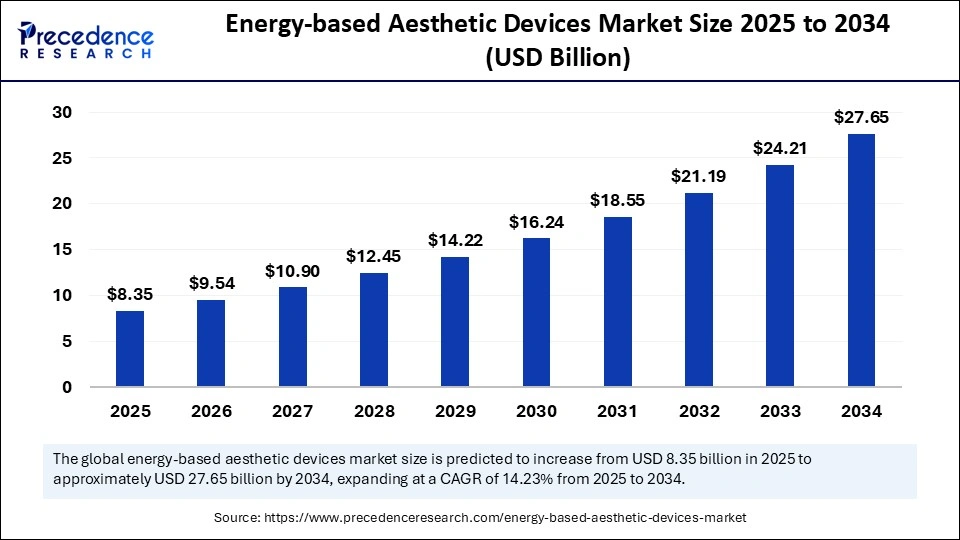
The global energy-based aesthetic devices market size is accounted at USD 8.35 billion in 2025 and predicted to increase from USD 9.54 billion in 2026 to approximately USD 27.65 billion by 2034, representing a CAGR of 14.23% from 2025 to 2034.
Market Highlights:
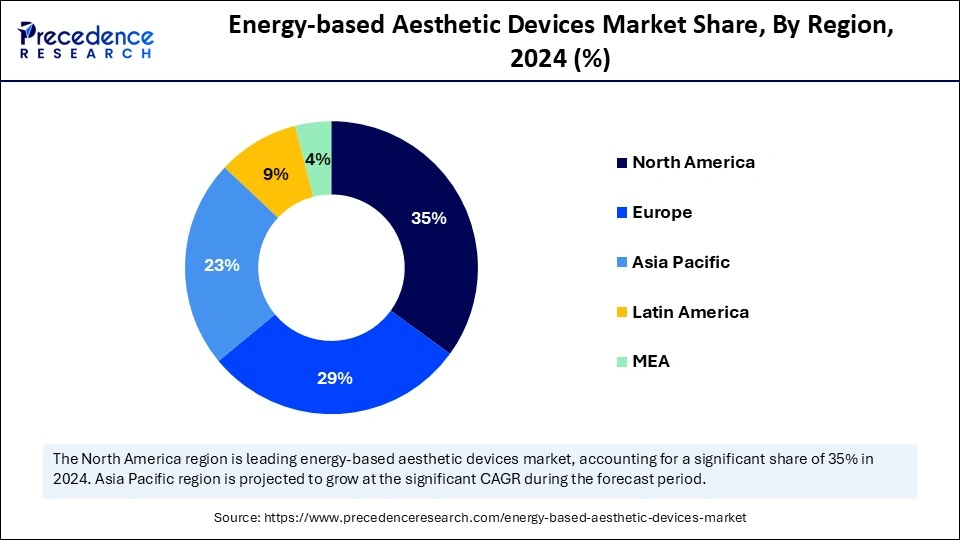
- North America led the market with largest share of 35% in 2024.
- Asia Pacific is observed to be the fastest growing during the forecast period.
- By device type, the laser-based devices segment led the market with 40% share in 2024.
- By device type, the radiofrequency-based device segment is observed to be the fastest growing segment during the forecast period.
- By application, the skin rejuvenation segment led the market with 35% share in 2024.
- By application, the body contouring segment is observed to be the fastest growing during the forecast period.
- By end-user, the clinics segment led the market with 45% in 2024.
- By end-user the medical spas segment is observed to be the fastest growing during the forecast period.
- By technology, the non-invasive segment led the market with 50% of market share in 2024.
- By technology, the minimally invasive technologies segment is observed to be the fastest growing.
Market Size and Forecast
- Market Size in 2024: USD 7.31 Billion
- Market Size in 2025: USD 8.35 Billion
- Forecasted Market Size by 2034: USD 27.65 Billion
- CAGR (2025-2034): 14.23%
- Largest Market in 2024: North America
- Fastest growing- Asia Pacific
Market Overview
Energy-based aesthetic devices are medical/beauty devices that use various forms of energy such as laser, light (including intense pulsed light IPL), radiofrequency (RF), ultrasound, and sometimes combinations thereof to produce controlled, therapeutic effects in skin and underlying tissues. These effects include stimulating collagen, reducing pigmentation, tightening skin, removing unwanted hair or fat, contouring the body, improving texture, treating vascular or pigmented lesions, acne, etc.
These devices are typically used in dermatology and plastic surgery clinics, medspas, beauty centers, and increasingly for at?home use. The appeal lies in non?invasive or minimally invasive treatments that offer aesthetic improvements with reduced downtime compared to surgical methods.
The global market for energy-based aesthetic devices is experiencing robust growth, driven by rising consumer demand for non-invasive beauty treatments and technological innovations. These devices are extensively used in dermatology clinics, plastic surgery centers, medspas, and increasingly for home-based treatments.
Role of Artificial Intelligence in Energy-based Aesthetic Devices Market:
Artificial Intelligence (AI) is playing a transformative role in the energy-based aesthetic devices market, enhancing both the technological capabilities of devices and the clinical outcomes of treatments. As demand rises for personalized, non-invasive cosmetic procedures, AI is increasingly integrated into systems to improve precision, safety, user experience, and treatment efficacy.
Modern energy-based systems use AI-powered sensors to monitor skin response in real time. For example, during RF or laser treatments, AI can detect skin temperature, impedance, or hydration levels and dynamically adjust energy output to prevent overheating or under-treatment. This ensures higher safety and treatment consistency, even for less experienced users.
Energy-Based Aesthetic Devices Market Outlook
- Industry Growth Overview: The market is poised for substantial growth between 2025 and 2034. This is driven by the increasing demand for minimally invasive cosmetic procedures, rising consumer awareness of aesthetic treatments, and rapid technological advancements in energy-based devices with strong demand in both dermatology clinics and medical spas (medspas).
- Global Expansion: Leading players are expanding their geographical presence, with North America currently the largest market due to high consumer awareness and disposable incomes. There is strong potential for market expansion in emerging regions, such as Asia-Pacific and Latin America, driven by rising beauty consciousness, rising disposable incomes, and growing medical tourism, which will ensure proper adoption and skill development.
- Major Investors:Significant investment from established medical aesthetic firms and venture capital funds is flowing into the sector, attracted by strong market growth and innovation potential. Key players like Cynosure, Lumenis, Alma Lasers, Merz Pharma, and InMode are heavily investing in R&D, strategic acquisitions, and partnerships to dominate the market.
- Startup Ecosystem: The startup ecosystem is maturing, with innovation focused on developing advanced, multi-functional, and user-friendly devices, including AI-driven treatment personalization and portable home-use devices. Emerging firms are attracting funding by offering specialized solutions and novel technologies, such as advanced fractional lasers and radiofrequency microneedling, with enhanced efficacy and safety with minimal downtime
Latest Trends in the Market
- Growth in Hybrid and Multi-Energy Platforms: Devices combining two or more technologies (e.g., RF with ultrasound or laser with IPL) are gaining traction for offering multi-layered treatments in one system.
Surge in Non-Invasive and Minimally Invasive Procedures: Consumers prefer treatments that are effective but involve no surgery, less pain, and faster recovery. - Personalized Aesthetic Solutions: Devices are increasingly equipped with AI-based diagnostics, skin analysis, and customizable settings to tailor treatments to individual skin types and concerns.
- Rise of Home-Use Devices: Portable, user-friendly energy-based devices designed for personal use are expanding the consumer market beyond professional clinics.
- Advanced Safety and Comfort Features: Innovations such as integrated cooling, real-time temperature monitoring, and adjustable pulse settings enhance user safety and comfort.
- Influence of Lifestyle and Social Media: Aesthetic consciousness driven by online presence, digital media, and the “Zoom effect” is increasing the frequency and demand for cosmetic procedures.
Market Scope
| Report Coverage | Details |
| Market Size in 2025 | USD 8.35 Billion |
| Market Size in 2026 | USD 9.54 Billion |
| Market Size by 2034 | USD 27.65 Billion |
| Market Growth Rate from 2025 to 2034 | CAGR of 14.23% |
| Dominating Region | North America |
| Base Year | 2024 |
| Forecast Period | 2025 to 2034 |
| Segments Covered | Device Type, Application, End-User, Technology, and Region |
| Regions Covered | North America, Europe, Asia-Pacific, Latin America, and Middle East & Africa |
Market Dynamics:
Market Driver
Rising Demand for Non-Invasive Aesthetic Treatments
The global surge in demand for non-invasive and minimally invasive aesthetic procedures is a major driver of the energy-based aesthetic devices market. Consumers today increasingly prioritize treatments that require little to no downtime, pose minimal risks, and deliver visible results quickly. Energy-based devices such as lasers, radiofrequency, and ultrasound offer precisely these benefits, making them highly appealing for procedures like skin tightening, body contouring, hair removal, and wrinkle reduction.
Market Restraint
High Cost of Advanced Devices and Treatments
Despite strong demand, the high capital cost of acquiring energy-based aesthetic devices remains a key restraint for smaller clinics and emerging practitioners. State-of-the-art devices often come with price tags ranging from $40,000 to over $150,000, depending on the technology and functionality. Additionally, operational costs such as maintenance, consumables, and staff training further raise the barrier to entry.
Market Opportunity
Integration of AI and Smart Technology in Devices
The integration of artificial intelligence (AI) and smart technologies presents a major opportunity to revolutionize the energy-based aesthetic devices market. AI enhances treatment precision, safety, and personalization by enabling real-time skin analysis, dynamic energy adjustment, and predictive outcomes. These smart capabilities can reduce the risk of complications, improve user experience, and expand the market to less experienced operators and at-home users.
Additionally, smart devices with cloud-based connectivity can collect treatment data, provide remote diagnostics, and enable digital consultations, features that align well with modern digital healthcare trends. Manufacturers who adopt AI-driven innovation can differentiate their offerings and create high-value products with recurring revenue from software updates or cloud services.
Segmental Insight
Device Type Insights
By device type, the laser-based devices segment led the market with 40% share in 2024.Laser devices are widely used for a variety of cosmetic applications such as skin resurfacing, hair removal, pigmentation treatment, and vascular lesion management. Their precision, efficacy, and long-term results make them a preferred choice among dermatologists and aesthetic practitioners. Continuous advancements in laser wavelengths, cooling mechanisms, and fractional technology have further enhanced their clinical outcomes and safety across diverse skin types.
By device type, the radiofrequency-based device segment is observed to be the fastest growing during the forecast period.RF devices are gaining rapid popularity due to their ability to deliver non-invasive skin tightening, wrinkle reduction, and cellulite treatment with minimal discomfort and downtime. These devices stimulate collagen production by heating the deeper layers of the skin, offering natural-looking and long-lasting results. Their increasing use in both facial and body treatments, combined with growing patient preference for low-risk procedures, is expected to drive strong market growth.
Application Insights
By application, the skin rejuvenation segment led the market with 35% share in 2024. Skin rejuvenation continues to be a key driver of the energy-based aesthetic devices market, fueled by the rising demand for anti-aging treatments and younger individuals seeking preventive care. Energy-based treatments, particularly lasers and IPL, are widely used to address wrinkles, sun damage, texture irregularities, and enlarged pores. The appeal lies in noticeable improvements with minimal invasiveness, making these procedures a staple in aesthetic practices.
By application, the body contouring segment is observed to be the fastest growing during the forecast period. The increasing demand for non-surgical fat reduction and body sculpting procedures is propelling the growth of body contouring applications. Technologies like RF, ultrasound, and cryolipolysis are being integrated into multifunctional devices to help shape and tone the body without surgery. Lifestyle changes, growing fitness consciousness, and the influence of social media have accelerated interest in these treatments, especially among younger demographics.
End-User Insights
By end-user, the clinics segment led the market with 45% share in 2024. Clinics remain the largest end-user segment due to their access to advanced technologies, trained medical professionals, and strong patient trust in clinical expertise. Dermatology and cosmetic surgery clinics offer a wide range of energy-based treatments, from facial rejuvenation to body contouring, under medical supervision. Their ability to invest in high-end devices and deliver personalized care contributes to their dominant market share.
By end-user, the medical spas segment is observed to be the fastest growing during the forecast period. Medspas are rapidly gaining popularity as they offer a blend of luxury, convenience, and affordability for aesthetic procedures. These facilities are expanding globally, catering to clients who seek effective yet non-invasive treatments in a relaxed, non-clinical setting. The availability of trained aestheticians and adoption of compact, user-friendly energy-based devices has made medspas highly accessible and scalable, driving their fast-paced growth.
Technology Insights
By technology, the non-invasive segment led the market with 50% of market share in 2024. Non-invasive technologies such as laser therapy, IPL, and RF are in high demand due to their ability to deliver effective results with no incisions, anesthesia, or recovery time. These treatments are widely used for facial rejuvenation, pigmentation, and body shaping, offering a convenient option for busy individuals. The high safety profile, lower risk of complications, and increasing availability across both clinical and consumer settings support the segment's market leadership.
By technology, the minimally invasive technologies segment is observed to be the fastest growing. Minimally invasive energy-based devices, such as microneedling RF systems and subdermal laser treatments, are experiencing rapid growth due to their ability to offer deeper and more targeted results while maintaining relatively low recovery time. These technologies bridge the gap between non-invasive procedures and surgery, attracting patients looking for more intensive outcomes without the risks of full surgical intervention. As innovation continues, these devices are expected to see widespread adoption in both premium clinics and upscale medspas.
Regional Insights
U.S. Electric Grippers Market Size and Growth 2025 to 2034
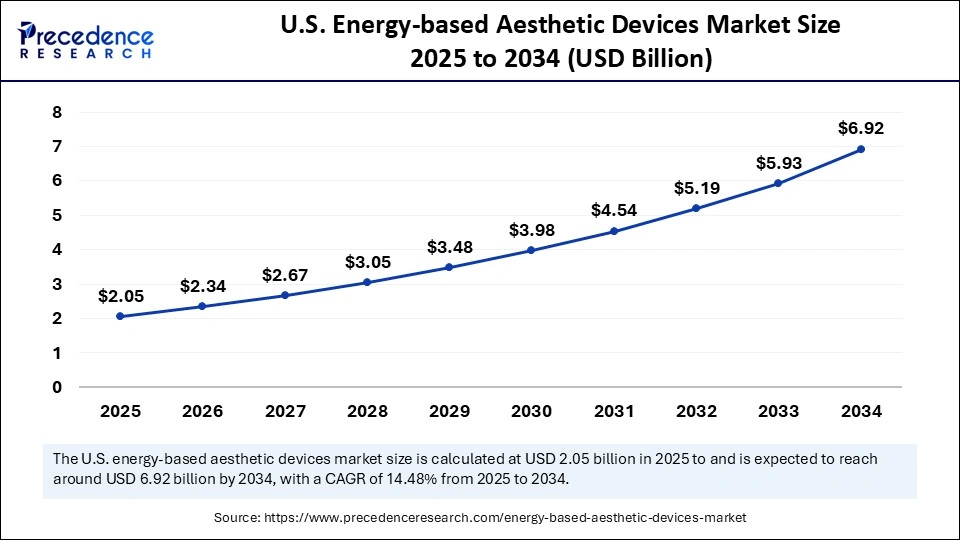
The U.S. energy-based aesthetic devices market size is exhibited at USD 2.05 billion in 2024 and is projected to be worth around USD 6.92 billion by 2034, growing at a CAGR of 14.48% from 2025 to 2034.
North America led the market with the largest share of 35% in 2024. This dominance is attributed to the region's well-established aesthetic industry, high disposable income, and strong presence of technologically advanced clinics and medspas. The U.S. has a particularly mature aesthetic landscape, with widespread acceptance of energy-based treatments for skin rejuvenation, fat reduction, and anti-aging. Additionally, regulatory approvals are relatively streamlined, and manufacturers often launch new technologies first in North America, further reinforcing its leadership.
U.S. Energy-Based Aesthetic Devices Market Trends
The U.S. dominates the North American energy-based aesthetic device market. It is the largest consumer and the main hub for innovation. Fueled by high demand, strong consumer acceptance, and significant R&D investments by US-based manufacturers, the market operates under the strict regulation of the FDA, setting worldwide standards for the industry.
What Makes Asia Pacific the Fastest-Growing Market for Energy-Based Aesthetic Devices?
Asia Pacific is observed to be the fastest growing during the forecast period. The region is witnessing explosive growth due to rising aesthetic awareness, improving healthcare infrastructure, and increasing disposable incomes, especially in countries like China, India, and South Korea. Medical tourism is also a significant growth driver, as patients from around the world seek cost-effective, high-quality treatments in Asia. The expanding middle-class population and cultural emphasis on beauty are expected to accelerate adoption of energy-based devices in both urban and semi-urban settings.
India Energy-Based Aesthetic Devices Market Trends
India is emerging as a key player in the Asia-Pacific market, driven by its growing middle class and rising consumer awareness. It is also developing its role as a regional manufacturing hub, supported by government initiatives to produce cost-effective, locally tailored solutions. Despite challenges in accessibility and training, this presents significant future growth opportunities.
How is Europe Contributing to the Energy-Based Aesthetic Devices Market?
Europe is a notable market for energy-based aesthetic devices, characterized by high awareness of aesthetic procedures, an aging population, and well-established healthcare systems. Strong regulatory environment and a focus on clinical efficacy and safety drive the market. There is high demand for minimally invasive or non-invasive procedures, including skin resurfacing and hair removal. The presence of major global players and a robust focus on research and development of innovative technologies like fractional laser and advanced ultrasound ensure continuous market growth.
Germany Energy-Based Aesthetic Devices Market Trends
Germany is a major contributor to the European energy-based aesthetic devices market, renowned for its high standards in medical technology and a preference for evidence-based treatments. The market is driven by a focus on quality, safety, and technological precision. While demand spans all age groups, there is a strong emphasis on effective anti-aging and skin health maintenance solutions, which is fostering the adoption of advanced laser and radiofrequency technologies.
How is the Opportunistic Rise of Latin America in the Energy-based Aesthetic Devices Market?
Latin America plays a major role in the global market, owing to its growing middle class, increased disposable incomes, and the rising influence of social media on beauty standards. There has been a notable increase in the number of aesthetic clinics and practitioners, particularly in Brazil and Mexico. The demand for non-invasive procedures such as body contouring, skin tightening, and hair removal is strong. Despite challenges related to the high cost of devices and the need for specialized training, the focus on medical tourism and the adoption of technologies like lasers and radiofrequency are expected to drive substantial growth and attract international investment.
Brazil Energy-Based Aesthetic Devices Market Trends
Brazil leads the Latin American market and ranks among the top globally in the field of aesthetic devices. The country boasts a high number of plastic surgeons and a culturally significant emphasis on personal appearance, which drives substantial demand for energy-based procedures such as body contouring and fat reduction. The market benefits from a large urban population and an increasing preference for non-surgical cosmetic interventions. Both local innovations and international players thrive in this competitive landscape, offering a wide range of lasers, RF, and ultrasound devices to a discerning consumer base.
What Potentiates the Growth of the Middle East and Africa Energy-Based Aesthetic Devices Market?
The market in the Middle East and Africa is growing steadily due to a young, affluent population, a strong cultural emphasis on aesthetics, and substantial investments in healthcare and medical tourism infrastructure. There is strong demand for advanced procedures like laser hair removal, skin rejuvenation, and fat reduction. Government initiatives promoting private healthcare and the presence of high-end clinics attract global manufacturers to the region, with the UAE and Saudi Arabia leading the adoption of the latest aesthetic technologies.
Saudi Arabia Energy-Based Aesthetic Devices Market Trends
In Saudi Arabia, the market is driven by a growing focus on improving the quality of life and healthcare services, alongside rising demand for non-invasive cosmetic procedures. There is a high adoption rate of advanced technologies, such as laser and light-based therapies, in luxury clinics. High disposable incomes and strong interest in cutting-edge aesthetic solutions among the female population fuel the market, attracting significant investment from global aesthetic technology companies.
Value Chain Analysis
- Research and Development & Technology Innovation
Focuses on innovating new energy modalities (lasers, radiofrequency) to enhance efficacy and safety.
Key Players: InMode Ltd., Hologic, Inc., Cutera, Candela Corporation, and Solta Medical. - Clinical Trials and Regulatory Approval
New devices undergo rigorous testing to demonstrate safety and effectiveness for specific aesthetic indications and secure regulatory clearance.
Key Players: IQVIA, Parexel, Charles River Laboratories, Syneos Health. - Manufacturing and Production
Involves high-precision manufacturing of complex devices and associated consumables with strict quality control.
Key Players: Cynosure (Hologic Inc.), Lumenis Ltd., Alma Lasers (Sisram Medical), Cutera, Inc.
Distribution and Supply Chain Management
Global distribution to clinics and spas, managing logistics for equipment and high-margin consumables.
Key Players: Candela Corporation, Merz Aesthetics, Sinclair, Skinnovation Private Limited. - Service Delivery and Application
Treatments are performed by certified medical professionals in healthcare facilities.
Key Players: Dermatology clinics, medical spas, plastic surgeons, and aesthetic nurses. - Patient Support, Marketing, and Post-Treatment Care
Focuses on consumer awareness, marketing, patient education, and financial transaction management for elective procedures.
Key Players: Marketing teams, patients/consumers, and patient financing providers like CareCredit.
Top Companies in the Energy-based Aesthetic Devices Market and Their Offerings
- Cynosure, Inc.: PicoSure Pro (picosecond laser for tattoo/pigmentation), Elite iQ (hair removal/skin treatments), Potenza (RF microneedling).
- Lumenis Ltd.: Stellar M22 (multi-application platform for skin conditions), LightSheer Quattro (diode laser hair removal), UltraPulse Alpha (ablative CO2).
- Cutera, Inc.: Secret DUO (dual non-ablative fractional technologies for skin resurfacing), plus general hair removal and body sculpting devices.
- Alma Lasers: Alma PrimeX (ultrasound/RF body contouring), Soprano Titanium (hair removal), and Alma Harmony multi-platform systems.
- Candela Medical:Wide range of lasers and energy-based systems for hair removal, wrinkle reduction, and vascular/pigmented lesion treatments.
Other Key Players
- Syneron Medical Ltd.
- Fotona d.d.
- Sciton, Inc.
- Aerolase Corporation
- Lutronic Corporation
- Hologic, Inc.
- Venus Concept
- BTL Industries
- Lynton Lasers
- EMMED Medical
- Asclepion Laser Technologies
- DEKA M.E.L.A. Srl
- Solta Medical
- Apogee Medical GroupQuanta System S.p.A.
Recent Developments
- Alma Hybrid™ Platform – March 2025:Alma Lasers launched the Alma Hybrid™, a multi-technology device that combines CO? laser, 1570 nm fiber laser, and trans-epidermal drug delivery. It offers advanced skin resurfacing and rejuvenation solutions, designed to treat complex skin concerns through synergistic energy delivery.
- FoLix Laser System – June 2024: The FoLix system was introduced as a non-invasive laser treatment for hair restoration. Using fractional laser technology, it stimulates the scalp to promote hair regrowth naturally and safely, targeting individuals experiencing early to moderate hair thinning.
Energy-Based Aesthetic Devices Market Segmentation
By Device Type
- Laser-based Devices
- CO2 Laser
- Diode Laser
- Nd:YAG Laser
- Alexandrite Laser
- Radiofrequency (RF)-based Devices
- Monopolar RF
- Bipolar RF
- Multipolar RF
- Ultrasound-based Devices
- High-Intensity Focused Ultrasound (HIFU)
- Low-Intensity Focused Ultrasound (LIFU)
- Light-based Devices
- Intense Pulsed Light (IPL)
- LED-based Devices
- Pulsed Light Devices
- Cryolipolysis Devices
- Cryolipolysis for Body Contouring
- Cryolipolysis for Facial Contouring
By Application
- Skin Rejuvenation
- Anti-aging Treatments
- Wrinkle Reduction
- Skin Tightening
- Hair Removal
- Permanent Hair Reduction
- Body Contouring
- Fat Reduction
- Cellulite Reduction
- Scar Treatment
- Acne Scar Treatment
- Surgical Scar Treatment
- Stretch Marks Treatment
- Tattoo Removal
- Pigmentation Treatment
- Age Spots Treatment
- Sun Spots Treatment
By End-User
- Clinics
- Dermatology Clinics
- Cosmetic Surgery Clinics
- Hospitals
- Home Use Devices
- Consumer Devices
- Medical Spas
- Beauty Centers
- Luxury Beauty Centers
By Technology
- Non-invasive Technologies
- Needle-free RF
- Optical RF Technology
- Minimally Invasive Technologies
- Injectable RF
- Laser RF Technology
By Regional
- North America
- Europe
- Asia-Pacific
- Latin America
- Middle East & Africa
For inquiries regarding discounts, bulk purchases, or customization requests, please contact us at sales@precedenceresearch.com
Frequently Asked Questions





Ask For Sample
No cookie-cutter, only authentic analysis – take the 1st step to become a Precedence Research client