
The global dairy products market size surpassed USD 496.2 billion in 2023 and is estimated to hit around USD 640.8 billion by 2030 growing at a CAGR of 3.2% from 2022 to 2030.
Dairy products are foods derived from the milk of animals such as cows, goats, and sheep. Milk, cheese, yogurt, butter, cream, ice cream, and other products fall under this category. Dairy products are high in nutrients such as calcium, protein, and micronutrients and are consumed by individuals around the globe. These nutrients aid in the rebuilding and repair of muscular tissue, the development and maintenance of healthy teeth and bones, and the overall health of an individual's neurological system. Moreover, protein, zinc, selenium, and vitamins A and D are present in each cup of milk to maintain a healthy immune system.
The global food market is changing rapidly, particularly in emerging countries. This shift is based on rising consumer living standards, which are viewed as elements influencing altering lifestyles and global purchase patterns. In the past decade, the growth of the working population has increased at an alarming rate resulting in hectic schedules, an increase in the workload, and tedious commuting. The increased work pressure has forced individuals to compromise their eating habits and shift towards unhealthy packaged foods to fulfil their hunger.
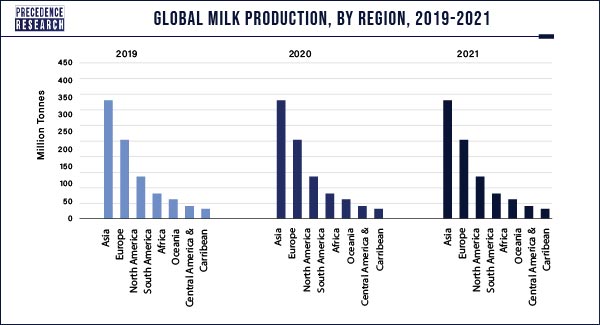
Currently, the rise in awareness of eating healthy foods among individuals has increased the demand for fresh vegetables and dairy products. The rise in demand for dairy products has encouraged cattle owners to increase the production of milk to cater to the market demand. From the year 2019 to 2021 the average growth rate for milk production was 1.36%, and in the upcoming years, the average growth rate for milk production is expected to touch 2%.
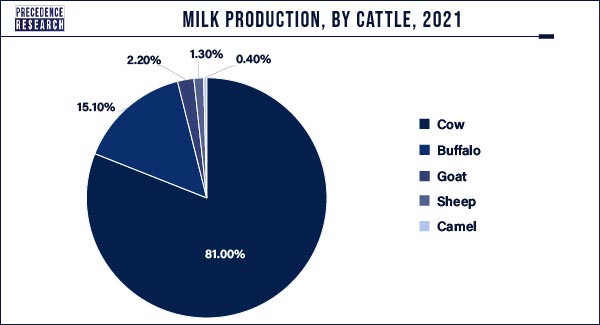
Milk and dairy products are produced and consumed in approximately every nation in the world, and in the majority of them, they rank among the top five agricultural commodities in terms of production quantity and value. Whole fresh cow milk accounts for 81% of worldwide milk output, followed by buffalo milk (15.1%), goat milk (2.2%), sheep milk (1.3%), and camel milk (0.4%).
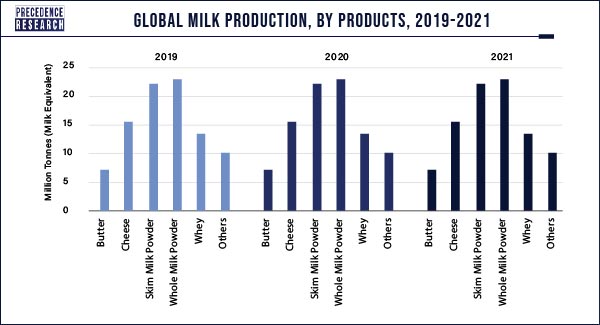
Milk and dairy products make up around 14% of worldwide agricultural commerce. Whole milk powder (WMP) and skimmed milk powder (SMP) represent the most traded agricultural products worldwide as a proportion of output exchanged, whereas fresh dairy goods are the least traded agricultural commodity, accounting for less than 1% of production traded.
The dairy products industry is highly competitive and subject to rapid technological change, which can pose risks to investors. It is important for investors to conduct thorough research and analysis before making any investment decisions. The top dairy products companies across the globe includes Arla Foods amba, Nestlé S.A., Danone S.A., Groupe Lactalis SA, Fonterra Co-operative Group Limited, Dairy Farmers of America Inc., Royal FrieslandCampina N.V., Gujarat Cooperative Milk Marketing Federation Ltd. (Amul), Chobani Inc, Yili Group, Saputo Inc., China Mengniu Dairy Company Limited and many more.
Strengths
Weaknesses
Opportunities
Threats
This SWOT analysis is not exhaustive, and there may be other factors that could impact the global dairy products industry in the foreseeable future. Additionally, the impact of the COVID-19 pandemic on the industry cannot be overlooked, as it has led to significant disruptions and changes in consumer behavior.
There are several upcoming innovations in dairy products that are being developed by various companies. Here are some examples:
Sports drinks are beverages designed specifically for athletes to use instead of water to increase energy and hydration levels. Conventional sports drinks are high in sugar and artificial additives. Consumers seek healthier products with reduced sugar content as their health worries grow.
The launch of sports-based milk products is projected to usher in a new healthy dairy product category. The sports drink has everything an athlete requires: carbs, electrolytes, calcium, vitamin D, and others. It also includes two proteins for muscle repair, casein and whey. Milk as a post-exercise rehydration drink is not a novel notion. Yet, with consumers' growing attention to health, this sector has grown up and is witnessing exciting advancements.
GoodSport Nutrition developed a new shelf-stable hydration beverage including a dairy permeate in 2019 and filed a provisional patent for it. They won the 2021 Breakthrough Award for Dairy Ingredient Innovation in the area of "innovative milk-derived or whey-derived dairy ingredient products" a few years later. GoodSport, their product, received the prize. According to their claims, GoodSport "rescues and upcycles" nutrient-rich milk. It also has three times the amount of electrolytes and 33% less sugar than standard sports drinks.
Concerns about the population's diminishing cognitive health have grown since the pandemic's emergence. The workforce's poor work-life balance, students are overwhelmed by study pressure, health professionals, women workforce, and others are eventually turning to functional meals to assist them to unwind and de-stress from their daily routine. In this arena, dairy firms are continually innovating.
Lactalis is already making strides in this approach. It contains Pronativ® protein, which is high in alpha-lactalbumin. Alpha-lactalbumin includes the amino acid tryptophan, which has been shown to improve sleep and, as a result, mental health. Pronativ contains up to 40% more Tryptophan than a classic serum protein. Pronativ has up to 40% more Tryptophan than a traditional serum protein. Pronativ is also higher in Cysteine and an excellent source of protein that may be used in formulations meant to maintain healthy mental health.
Lactose intolerance is characterized by a reduced capacity to digest lactose, a sugar present in milk and other dairy products. According to the National Institute of Health (NIH), lactose intolerance in children is caused by mutations in the LCT gene, which leads to lifelong intolerance, Furthermore, lactose intolerance in adults is caused by a decrease in the function of the LCT gene, which implies that people may have an increasing difficulty digesting lactose as they advance in age.
According to National Center for Biotechnology Information (NCBI), lactose intolerance affects around 65% of the adult human population. Lactose intolerance causes bloating, nausea, vomiting, and diarrhea prompting many to seek other alternatives available in the market. The increased concern about lactose intolerance in newborns and adults is acting as a restraint in the growth of the dairy product market. The growing number of lactose-intolerant individuals throughout the globe is negatively affecting the sales and demand of dairy products which are high on lactose.
Dairy waste comprises milk, milk products, and other dairy processing wastes that do not exceed relevant quality requirements, have been contaminated, or are otherwise inappropriate for human consumption, or livestock feed.
Milk, milk products and all dairy processing wastes must be properly disposed of when they have been discarded, do not meet applicable quality standards, have become contaminated, or otherwise have become unusable for human consumption, animal feed, or any other beneficial use. Milk that cannot be sold to a processor may be recycled by the farmer in the same manner used for manure. Waste from milk processing, including but not limited to raw milk, processed milk, wash water, and disinfectants, is considered industrial process wastewater and may not be discharged to septic systems, or to waters of the state through field tiles, direct dumping or any other method.
| Type of Product | Waste Water Volume (Average Range in Kg) |
| Milk | 100-5400 |
| Condensed Milk | 1000-3000 |
| Butter | 800-6550 |
| Milk Powder | 1500-5900 |
| Cottage Cheese | 800-12400 |
| Milk (Canned) | 320-1870 |
| Natural Cheese | 200-5850 |
Waste management policies of the government can have a significant impact on the global dairy industry in several ways:
The dairy market is constantly evolving and there are several driving forces that will shape its future. Here are some of the key driving forces that are likely to have a significant impact on the dairy products market in the future:
In short, technological advancements, changing consumer behavior, globalization, growth of online e-commerce, and economic factors are likely to be the key driving forces shaping the future of the dairy market. Manufacturers that can adapt to these changes and innovate new products that meet evolving consumer needs are likely to succeed in this rapidly changing market.
View Full Report@ https://www.precedenceresearch.com/dairy-products-market
You can place an order or ask any questions, please feel free to contact at sales@precedenceresearch.com | +1 650 460 3308

Aditi, Vice President at Precedence Research, brings over 15 years of expertise at the intersection of technology, innovation, and strategic market intelligence. A visionary leader, she excels in transforming complex data into actionable insights that empower businesses to thrive in dynamic markets. Her leadership combines analytical precision with forward-thinking strategy, driving measurable growth, competitive advantage, and lasting impact across industries.

Aman Singh with over 13 years of progressive expertise at the intersection of technology, innovation, and strategic market intelligence, Aman Singh stands as a leading authority in global research and consulting. Renowned for his ability to decode complex technological transformations, he provides forward-looking insights that drive strategic decision-making. At Precedence Research, Aman leads a global team of analysts, fostering a culture of research excellence, analytical precision, and visionary thinking.

Piyush Pawar brings over a decade of experience as Senior Manager, Sales & Business Growth, acting as the essential liaison between clients and our research authors. He translates sophisticated insights into practical strategies, ensuring client objectives are met with precision. Piyush’s expertise in market dynamics, relationship management, and strategic execution enables organizations to leverage intelligence effectively, achieving operational excellence, innovation, and sustained growth.

All over the world, the escalating burden of chronic disease presents a significant challenge to modern healthcare syste...
19 Nov 2025
Popular commitments among diverse life companies are to step into the massive venture capital market to strengthen their...
18 Nov 2025
Viral vector gene therapies are gaining traction, with the rise in genetic and rare disorders, recent FDA approvals, and...
14 Nov 2025




 Request Consultation

