




List of Contents


What is the Single Cell Sequencing Market Size?
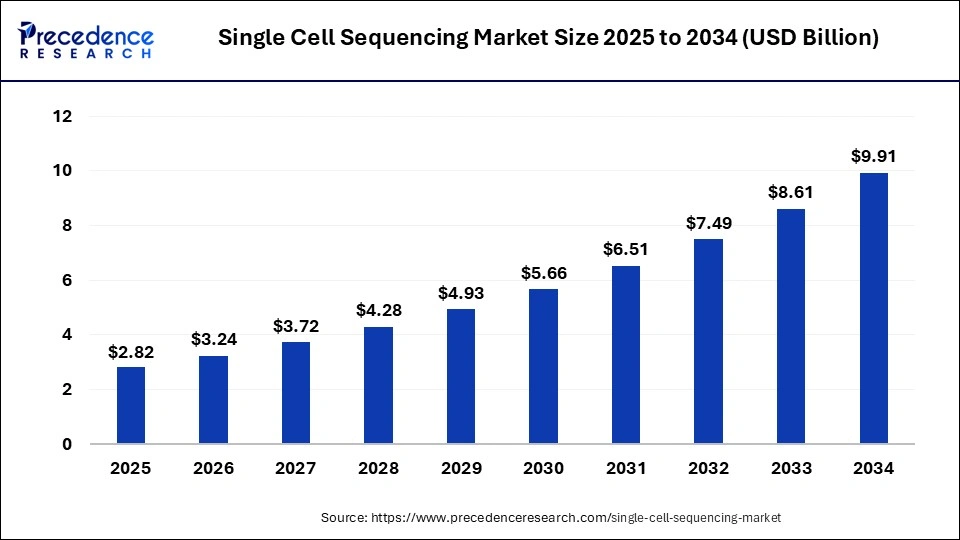
The global single cell sequencing market size is valued at USD 2.82 billion in 2025 and is predicted to increase from USD 3.24 billion in 2026 to approximately USD 9.91 billion by 2034, expanding at a CAGR of 15% from 2025 to 2034.Technological advances in the field of genomics are the key factor driving market growth. Also, the increasing incidence of genetic diseases coupled with the collaboration among academic institutions can fuel market growth soon.
Single Cell Sequencing Market Key Takeaways
- North America dominated the global single cell sequencing market in 2024.
- Asia Pacific is expected to grow at the fastest rate over the studied period.
- By product, the consumable segment dominated the market in 2024.
- By product, the instruments segment is expected to grow at the fastest rate over the forecast period.
- By technology, the PCR segment led the global market in 2024.
- By technology, the sequencing segment is expected to grow at the fastest rate during the projected period.
- By application, the oncology segment dominated the market by holding the largest share in 2024.
- By application, the immunology segment is anticipated to grow at the fastest rate over the forecast period.
Advanced Sequencing Platforms Driving Single-Cell Genomics Innovation
The single cell sequencing market covers the applications of transcriptomic and genomic techniques to analyze isolated single cells. The access to advanced sequencing platforms like long-read technologies, enabled scientists and researchers to create robust and inexpensive sequence data. This technique enabled the identification and characterization of the cells and offered detailed insights into all types of cells.
How is AI Innovation Impacting the Market?
Artificial Intelligence is extensively used in the single cell sequencing market, especially for the classification and identification of pathogens. AI technology can rapidly process NGS data and detect pathogens in samples in no time, which is important for the quick diagnosis of various diseases. Furthermore, AI algorithms can precisely classify pathogens based on the genomic data available, which is essential for controlling their progress and transmission.
- In January 2025, Nvidia partnered with Illumina to apply genomics and AI technologies to analyze and interpret multi-omics data in drug discovery, clinical research, and human health, the companies said in a collaboration of technology leaders announced early during the 43rd Annual J.P. Morgan Healthcare Conference.
Market Outlook
- Industry Growth - The industry is growing rapidly due to increasing demand for precision medicine, advancements in high-throughput sequencing technologies, rising applications in oncology and immunology research, and expanding investments in genomics and bioinformatics worldwide.
- Global Expansion- The global single-cell sequencing market is expanding as research institutions, biotech, and pharmaceutical companies worldwide adopt advanced sequencing technologies. Growth is driven by rising applications in precision medicine, cancer research, and genomics, particularly in North America, Europe, and the Asia-Pacific.
- Startup Ecosystem- The startup ecosystem is thriving, with emerging companies developing innovative sequencing platforms, single-cell analysis tools, and bioinformatics solutions. Focus on automation, multiomic profiling, and cost-effective technologies is driving research adoption and commercial growth globally.
Single Cell Sequencing Market Growth Factors
- The increasing funding in the biotechnology sector is expected to boost single cell sequencing market growth soon.
- Companies' growing emphasis on product development can propel market growth shortly.
- The ongoing launch of a cutting-edge SCGS solution will likely contribute to the single cell sequencing market expansion over the forecast period.
Market Scope
| Report Coverage | Details |
| Market Size by 2025 | USD 2.82 Billion |
| Market Size in 2026 | USD 3.24 Billion |
| Market Size in 2034 | USD 9.91 Billion |
| Market Growth Rate from 2025 to 2034 | CAGR of 15.00% |
| Dominating Region | North America |
| Fastest Growing Region | Asia Pacific |
| Base Year | 2025 |
| Forecast Period | 2025 to 2034 |
| Segments Covered | Product, Technology, Application, and Regions. |
| Regions Covered | North America, Europe, Asia-Pacific, Latin America, and Middle East & Africa. |
Market Dynamics
Drivers
Increasing application in precision medicine
The single cell sequencing market in precision medicine offers data on the genetic basis of disorder at the level of an individual cell. It also helps in developing individualized treatment plans, forecasting the risk associated with any disease, and detecting new therapeutic targets. In addition, it offers important data on the development and performance of immune cells in the field of immunology, thus optimizing the innovations in new immunotherapies.
- In March 2024, Curio Bioscience announced the commercialization of the world's first technology that spatially contextualizes single-cell sequencing data, leveraging a breakthrough invention called Slide-tags developed by the Broad Institute of MIT and Harvard and published in Nature this past December. The first stage of Curio's commercialization of this new product is called Curio Trekker.
Restraint
Uncertain reimbursement policies
The major factors impeding the market growth are the limited reimbursement policies and high investment requirements. The limited availability of bioinformatics solutions, along with the high cost associated with the single-cell genome sequencing process, can constrain the single cell sequencing market. Moreover, the increasing geriatric population and growing incidence of chronic conditions can hamper market growth shortly.
Opportunity
Innovations in sequencing technologies
The ongoing innovations in sequencing technologies have substantially impacted the growth of the single cell sequencing market. The launch of next-generation sequencing (NGS) platforms has allowed scientists to sequence big volumes of RNA and DNA at a rapid pace with less cost. Furthermore, the introduction of cutting-edge single-cell sequencing technologies like droplet-based microfluidics platforms has improved the abilities of single-cell genome sequencing.
- In February 2024,10x Genomics unveiled the next generation of its single-cell technology architecture that will power new assays of its Chromium platform at the Advances in Genome Biology and Technology (AGBT) General Meeting in Orlando, FL.
Segmental Insights
Product Insights
The consumable segment dominated the single cell sequencing market in 2024. The dominance of the segment can be attributed to the increasing preference by researchers for consumables in the single-cell analysis process and the growing need for associated consumables. Additionally, this segment is important for DNA/RNA sequencing, supporting DNA-based diagnostics and research, which is fuelled by the growing demand for cancer treatment and personalized medicine.
The instruments segment is expected to grow at the fastest rate over the forecast period. The growth of the segment can be credited to the fast evolution and acceptance of innovative instruments specially manufactured to align with the changing landscape of the healthcare sector. Also, the single-cell sequencing solution is created for analysis of gene expression in single cells, enabling researchers to know their functions.
- In October 2024, Illumina, Inc., a global leader in DNA sequencing and array-based technologies, unveiled its MiSeq™ i100 Series of sequencing systems, delivering unparalleled benchtop speed and simplicity to advance next-generation sequencing (NGS) for labs. The two new benchtop instruments, MiSeq i100 and MiSeq i100 Plus Systems will empower customers to unlock powerful insights.
Technology Insights
The PCR segment led the global single cell sequencing market in 2024. The dominance of the segment can be linked to the increasing collaborations among the different research institutes coupled with the initiatives taken by key market players. Moreover, It is a very critical technique that enables the fast amplification of a particular segment of DNA. PCR creates billions of copies of a special DNA segment.
- In December 2024, QIAGEN launched two new tools for customizing microbial analysis solutions: a first-of-its-kind Custom dPCR Microbial Assays design tool and QIAseq xHYB Custom Microbial Panels. The dPCR tool enables customized primer and probe design for bacterial, fungal, and viral targets.
The th0065 sequencing segment is expected to grow at the fastest rate during the projected period. The growth of the segment can be driven by ongoing developments in sequencing technologies. This is a statistical technique for detecting putative functional elements in various genomes, such as SNP frequency and GC content. In addition, the major advantage of sequencing is it provides a comprehensive analysis of a person's entire genome.
Application Insights
In 2024, the oncology segment dominated the single cell sequencing market by holding the largest share. The dominance of the segment is due to the increasing prevalence of colorectal, prostate, and breast cancers. Furthermore, the segment is growing because of increasing innovations in cancer research, like immunotherapy, precision medicine, and genetic testing. The surge in several R&D activities can soon influence market growth positively.
- In August 2024, Beckman Coulter Life Sciences, in partnership with Illumina, launched the 'promising new approach' to oncology research, delivering faster results with fewer touchpoints. The Illumina TruSightTM Oncology 500 DNA/RNA assay on the Biomek NGeniuS System from Beckman Coulter Life Sciences provides an innovative automated solution enabling comprehensive genomic profiling of tumor samples according to the companies.
The immunology segment is anticipated to grow at the fastest rate over the forecast period. The growth of the segment can be linked to the developments in single-cell sequencing technologies, including enhanced bioinformatics tools and droplet-based methods, which have made it convenient to process large amounts of individual cells swiftly. The increasing prevalence of autoimmune diseases like multiple sclerosis and rheumatoid arthritis can lead to market expansion further.
Regional Insights
North America's Stronghold on Single-Cell Sequencing
North America dominated the global single cell sequencing market in 2024. The dominance of the segment can be attributed to the increasing prevalence of cancer and chronic diseases and innovative product launches. Also, growing collaboration among key companies, along with the surging biotechnology and pharmaceutical industries, can fuel market growth further. Moreover, in North America, the US led the market owing to the numerous government initiatives and strong research and development facilities.
Why the U.S. Leads the Single-Cell Sequencing Revolution?
The U.S. market is growing due to high adoption of advanced genomics technologies, strong presence of leading biotech and pharmaceutical companies, and increasing investments in research and development. Rising applications in oncology, immunology, and precision medicine, along with supportive government funding and initiatives for genomics research, are driving demand. Additionally, access to cutting-edge sequencing platforms and bioinformatics tools is accelerating market expansion across research and clinical settings.
Aging Population Fuels Asia Pacific Single Cell Sequencing
Asia Pacific is expected to grow at the fastest rate in the single cell sequencing market over the studied period. The growth of the region can be credited to the growing geriatric population which is contributing to the growing incidence of chronic diseases. Furthermore, the significant growth in healthcare infrastructure, facilitated by the economic development in emerging economies like India and Indonesia, can soon boost market growth in the region.
- In August 2023, BioSkryb Genomics entered into a collaboration with Research Instruments to distribute BioSkryb's ResolveDNA and ResolveOME™ single cell amplification tools throughout Singapore and Southeast Asia.
China: Accelerating Genomic Innovation and Research
The China market is expanding due to growing investments in genomics research, rising government support for precision medicine, and increasing collaborations between academic institutions and biotech companies. Rapid adoption of advanced sequencing technologies, rising applications in cancer and immunology research, and expanding healthcare infrastructure are further fueling growth. Additionally, cost-effective manufacturing and increasing focus on translational research are driving market expansion across China.
Europe: Driving Precision Medicine and Genomic Research
The Europe market is expanding due to increasing investment in genomics research, growing adoption of precision medicine, and rising prevalence of chronic and genetic diseases. Supportive government initiatives, strong healthcare infrastructure, and collaborations between research institutions and biotech companies are driving growth. Additionally, advancements in high-throughput sequencing technologies and bioinformatics tools are enabling detailed cellular analysis, further accelerating market expansion across Europe.
What's Fueling the Surge of Single-Cell Sequencing in the UK?
The UK market is increasing due to strong government support for genomics initiatives, such as Genomics England, and growing adoption of precision medicine and personalized therapies. Rising research in oncology, immunology, and genetic disorders, along with advanced sequencing infrastructure and collaborations between academic institutions and biotech companies, is driving demand. Additionally, access to cutting-edge technologies and bioinformatics tools is further accelerating market growth in the UK.
Value Chain Analysis
R&D
- Aims to make single-cell sequencing more cost-effective, scalable, and easy to use.
- Addresses challenges such as high operational costs and complex data analysis.
- Supports broader adoption in research, clinical, and pharmaceutical applications.
Key players: 10x Genomics, Illumina, Danaher Corporation
Clinical Trials and Regulatory Approvals
- Clinical trials mainly focus on validating single-cell sequencing for drug discovery and development, rather than routine diagnostics.
- Regulatory approval for single-cell-based diagnostics faces technical and logistical challenges.
- The FDA has approved some single-cell analysis components for specific clinical applications, but no unified regulatory pathway exists for comprehensive single-cell diagnostic tests.
Key players: 10x Genomics, Illumina, Danaher Corporation, Promega Corporation
Formulation and Final Dosage Preparation
- Focuses on creating high-quality single-cell suspensions free from debris and cell aggregates.
- Ensures high cell viability to achieve accurate and reliable sequencing results.
Key players: 10x Genomics, Illumina, Danaher Corporation, Promega Corporation, and Bio-Rad Laboratories
Top Vendors and their Offerings
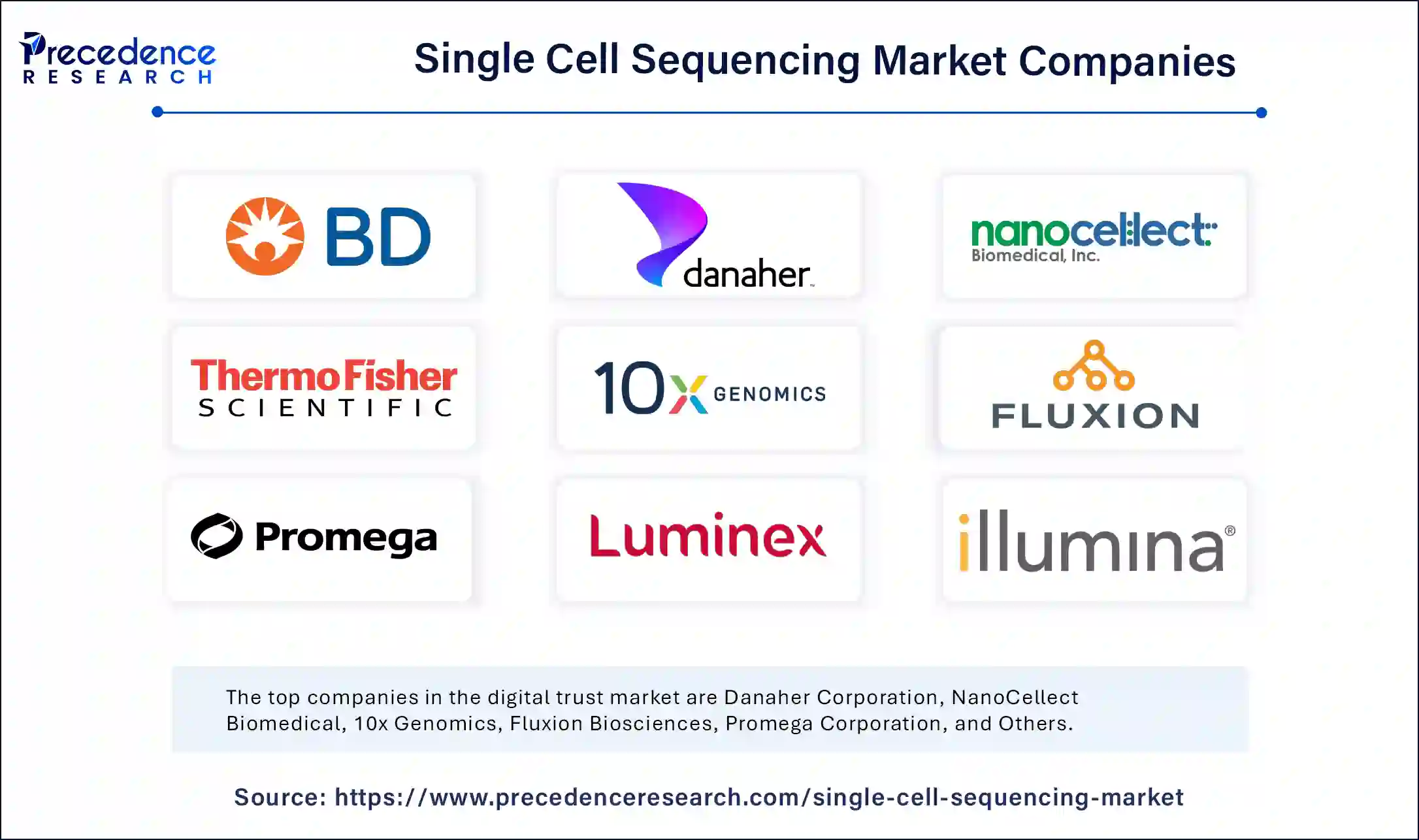
- Danaher Corporation: Provides instruments, reagents, and integrated solutions supporting single-cell sequencing workflows, enabling high-throughput, precise cellular analysis for genomics, immunology, and translational research applications.
- Promega Corporation:Offers sample preparation kits, enzymes, and reagents optimized for single-cell DNA/RNA extraction, library preparation, and sequencing, ensuring accuracy and efficiency in molecular and single-cell genomics research.
- Illumina:Supplies advanced NGS platforms, single-cell targeted sequencing solutions, and bioinformatics tools for high-resolution cellular profiling, supporting oncology, immunology, and precision medicine research.
- 10x Genomics:Develops single-cell sequencing and multiomic platforms that enable detailed cellular and transcriptomic profiling, providing insights into heterogeneity, gene expression, and cellular function in research and translational applications.
Other Major Companies
- Becton, Dickinson, and Company
- NanoCellect Biomedical
- Thermo Fisher Scientific, Inc.
- Fluxion Biosciences
- Luminex Corporation
- Bio-Rad Laboratories
- Cytek Biosciences
- Corning Incorporated
- Fluidigm Corporation
- Agilent Technologies, Inc.
Latest Announcement by Market Players
- In February 2024, Cell Microsystems announced a strategic partnership with OMNI Life Science (OLS), a renowned German cell biology company. This collaboration aims to introduce three revolutionary products - the CERO, CASY, and TIGR - to the United States and Canadian markets, marking a significant step in advancing life science research in North America.
- In January 2025, Illumina, Inc., a global leader in DNA sequencing and array-based technologies, announced a series of updates to its NovaSeq X Series, delivering the NovaSeq X single-flow-cell system alongside a cutting-edge software upgrade and new kits. The single-flow-cell NovaSeq X Sequencing System offers the same high-quality flow cells and speed as the NovaSeq X Plus Sequencing System.
Recent Developments
- In May 2024, SOPHiA GENETICS (Nasdaq: SOPH), a cloud-native healthcare technology company renowned for its leadership in data-driven medicine, announced a collaboration with Microsoft and NVIDIA. This partnership aims to utilize their combined expertise in technology and genomics to develop a streamlined and scalable whole genome sequencing (WGS).
- In February 2023, Thermo Fisher Scientific, Inc. unveiled the TrueMark STI Select Panel, a PCR test intended for the detection of Chlamydia trachomatis, Neisseria gonorrhoeae, Trichomonas vaginalis, and Mycoplasma genitalium, specifically for research purposes.
- In March 2023, Illumina, Inc. introduced Connected Insights, a cloud-based software designed for tertiary analysis of clinical next-generation sequencing data. This innovative tool aids in genomic profiling for advanced tumors and whole-genome sequencing for rare diseases, among other advanced applications.
Segments Covered in the Report
By Product
- Consumable
- Instruments
By Technology
- Sequencing
- PCR
By Application
- Immunology
- Oncology
By Geography
- North America
- Asia Pacific
- Europe
- Latin America
- Middle East and Africa
For inquiries regarding discounts, bulk purchases, or customization requests, please contact us at sales@precedenceresearch.com
Frequently Asked Questions





Ask For Sample
No cookie-cutter, only authentic analysis – take the 1st step to become a Precedence Research client