




List of Contents
What is the Personalized Genomics Market Size?
The global personalized genomics market size is valued at USD 12.57 billion in 2025 and is predicted to increase from USD 14.74 billion in 2026 to approximately USD 52.58 billion by 2034, expanding at a CAGR of 17.73% from 2025 to 2034. The market growth is attributed to the increasing demand for personalized healthcare solutions, driven by advancements in genomic technologies and the rising prevalence of chronic diseases.
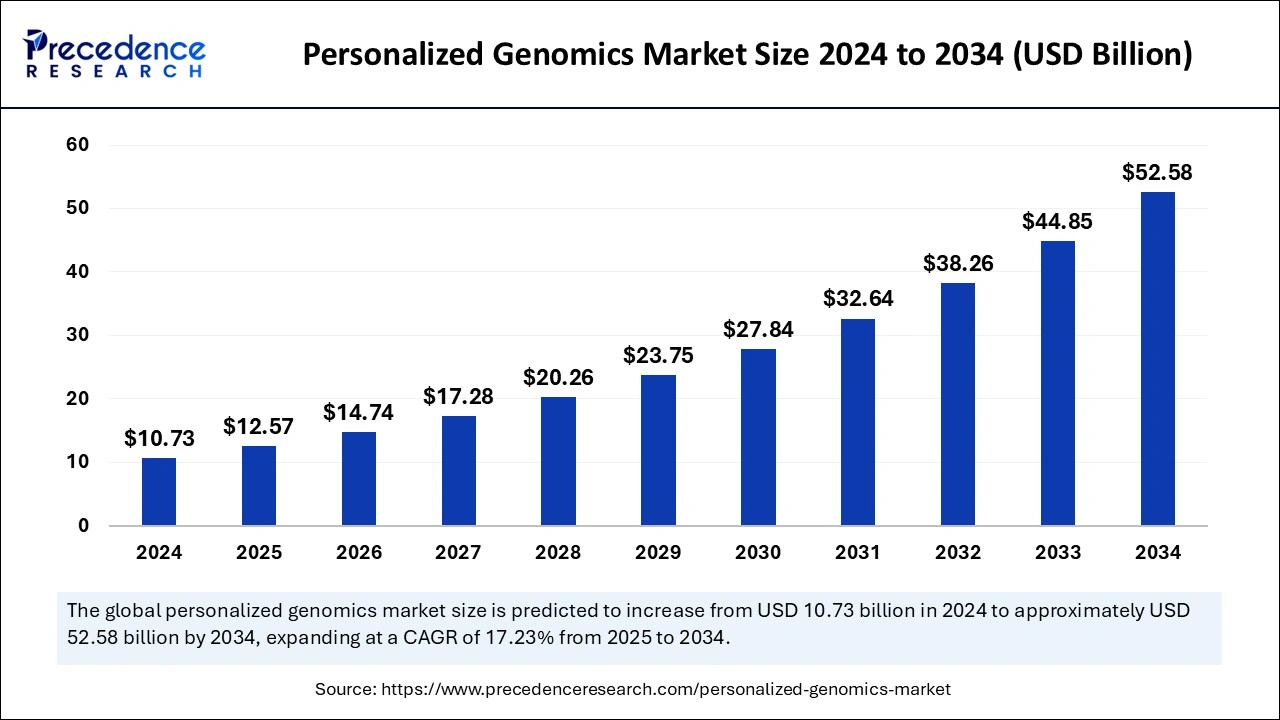
Personalized Genomics Market Key Takeaways
- North America dominated the personalized genomics market with the largest market share of 41% in 2024.
- Asia Pacific is projected to host the fastest-growing market in the coming years.
- By test type, the oncology testing segment has held a major market share of 41% in 2024.
- By test type, the cardiovascular testing segment is expected to grow at the fastest rate during the forecast period of 2025 to 2034.
- By technology, the sequencing-based tests segment accounted for a considerable share of the market in 2024.
- By technology, the PCR-based tests segment is anticipated to grow with the highest CAGR over the studied years.
- By application, in 2024, the precision medicine segment led the global market.
- By application, the wellness segment is projected to expand rapidly in the coming years.
- By end-user, the hospitals and clinics segment dominated the global market in 2024.
- By end-user, the pharmaceuticals and biotechnology segment is projected to grow at the fastest rate in the future years.
Impact of Artificial Intelligence (AI) on the Personalized Genomics Market
The use of artificial intelligence algorithms in genome sequencing operations enables scientists to conduct disease-related genetic variation detection at both faster and improved levels of precision. Machine learning technologies offer better biomarker discovery abilities, which leads to early disease detection capabilities and allows the creation of targeted treatment strategies. The use of AI-driven data analytical systems streamlines big genomic research by improving data processing of complex datasets with fewer mistakes and better efficiency. Through genetic profile analysis, AI enables the production of patient-specific medical treatments.
Personalized Genomics: Transforming Healthcare Through Precision Medicine
The personalized genomics market expansion is propelled by the rising need for personalized medicine, as precision treatments that apply to specific genetic profiles are becoming more popular. Healthcare providers continue to use genomic data to develop personalized therapies that help treat cancer, cardiovascular conditions, and rare inherited disorders. Genomic sequencing advances have enabled doctors to detect diseases at early stages, thus enabling targeted clinical interventions.
Drug development efforts from pharmaceutical businesses leverage genetic science to produce medication based on biomarkers, which results in better treatment outcomes. The adoption of genetic testing receives support from regulatory agencies, which leads to programs that promote genetic testing adoption. The growth of the personalized genomics market is further facilitated by healthcare providers transitioning from standardized treatments to personalized medical solutions.
- According to the 2024 report by The Personalized Medicine Coalition, personalized medicines accounted for over one-third of new drug approvals by the U.S. Food and Drug Administration (FDA) in 2023, marking the fourth consecutive year of this trend.
Personalized Genomics Market Growth Factors
- Increasing healthcare awareness about genetic predispositions to diseases is boosting the demand for personalized genomics.
- Advancements in next-generation sequencing technologies are making genetic testing faster and more affordable.
Rising prevalence of chronic diseases like cancer, diabetes, and heart disease is driving the need for personalized treatments. - Improved healthcare policies and reimbursements for genetic testing are facilitating wider adoption of personalized genomics.
- Increasing the availability of genetic data through large-scale research projects enables more precise treatment options.
- Growing interest in preventive healthcare is fueling demand for genetic testing as a proactive measure for disease risk assessment.
- Integration of genomics with AI and machine learning is enhancing the accuracy and speed of genomic data analysis for personalized healthcare solutions.
Market Outlook
- Industry Growth- The industry is rapidly evolving, driven by increasing demand for tailored medical treatments, growing availability of genomic data, and technological breakthroughs like next-generation sequencing and AI-powered analytics, all of which are making personalized healthcare more accessible globally.
- Global Expansion- The global market is expanding as healthcare providers, research institutions, and pharmaceutical companies adopt precision medicine solutions. Growing awareness of genetic testing, advancements in sequencing technologies, and international collaborations are driving market growth across North America, Europe, and the Asia-Pacific.
- Startup Ecosystem- The startup ecosystem for personalized genomics is thriving, with emerging companies developing AI-powered genomic testing, data analytics, and consumer health platforms. These ventures are backed by accelerator programs like Illumina Accelerator that provide funding, lab access, and commercialization support, driving innovation in precision medicine and genetic services.
Market Scope
| Report Coverage | Details |
| Market Size in 2034 | USD 52.58 Billion |
| Market Size in 2025 | USD 12.57 Billion |
| Market Size by 2026 | USD 14.74 Billion |
| Market Growth Rate from 2025 to 2034 | CAGR of 17.23% |
| Leading Region | North America |
| Fastest Growing Market | Asia Pacific |
| Base Year | 2024 |
| Forecast Period | 2025 to 2034 |
| Segments Covered | Test Type, Technology, Applications, End-user, and Regions |
| Regions Covered | North America, Europe, Asia-Pacific, Latin America, and the Middle East & Africa |
Market Dynamics
Driver
Rising demand for personalized medicine
Growing demand for personalized medicine is anticipated to drive the personalized genomics market as precision treatments tailored to individual genetic profiles gain traction. Medical professionals nowadays are using genomic information to create individualized treatment approaches for cancer patients alongside cardiovascular disease patients and those with unusual genetic disorders.
- In 2023, the NHS started offering liquid biopsies to English women who have particular breast cancer genetic mutations to enable access to treatment drugs such as improve outcomes for patients.
Genomic sequencing improvements enable medical experts to make fast disease diagnoses, which allows them to deliver precise intervention treatments. Furthermore, the global rise of genomic medicine services demonstrates the utilization of individualized healthcare solutions, which will further fuel the market in the coming years.
- Scientists from Stanford University and UK-based Genomics proved in 2024 that genetic screening helps identify diseases early, which results in a 24.5% reduction in preventable early deaths by enabling timely intervention.
Restraint
High cost of genomic sequencing
The personalized genomics market growth is hampered due to the high cost of genomic sequencing, limiting accessibility for individuals and healthcare providers in low- and middle-income regions. The high price of genomic sequencing acts as an obstacle to market expansion, as it prevents individuals and healthcare providers in low- and middle-income areas from accessing these services. Hong Kong's diagnostic laboratories face greater financial pressures from investing in advanced sequencing technologies along with bioinformatics tools.
The adoption of genetic testing remains limited because of patient reluctance to spend out-of-pocket costs when insurance does not cover expenses. Biotech firms, together with research organizations, experience difficulty balancing the reduction of operational expenses with precise genomic analysis outcomes. The cost expenses for genomic data storage infrastructure, together with processing requirements, arise as obstacles to widespread acceptance.
Opportunity
High adoption of direct-to-consumer (DTC) genetic testing
High adoption of direct-to-consumer genetic testing is expected to create significant opportunities for the personalized genomics market, as individuals seek deeper insights into their ancestry, health risks, and wellness traits. DNA testing solutions provided by companies have seen increased demand as people know more about their genetic disease risk factors, which include cancer, cardiovascular diseases, and metabolic conditions. The combination of declining sequencing expenses and better accessibility drives increased market entry, which motivates people to adopt proactive health practices. Better regulations have recognized features that ensure the safe, ethical performance of DTC testing methods, which builds consumer confidence in these testing services.
- The U.S. Food and Drug Administration (FDA) released a final rule for laboratory-developed tests in 2024, which applied to various genetic testing products available for consumer use.
Test Type Insights
The oncology testing segment held a dominant presence in the personalized genomics market in 2024 due to the increasing prevalence of cancer and the demand for precision medicine. Medical professionals now use genomic information to create individualized treatment approaches for cancer patients alongside cardiovascular disease patients and those with unusual genetic disorders.
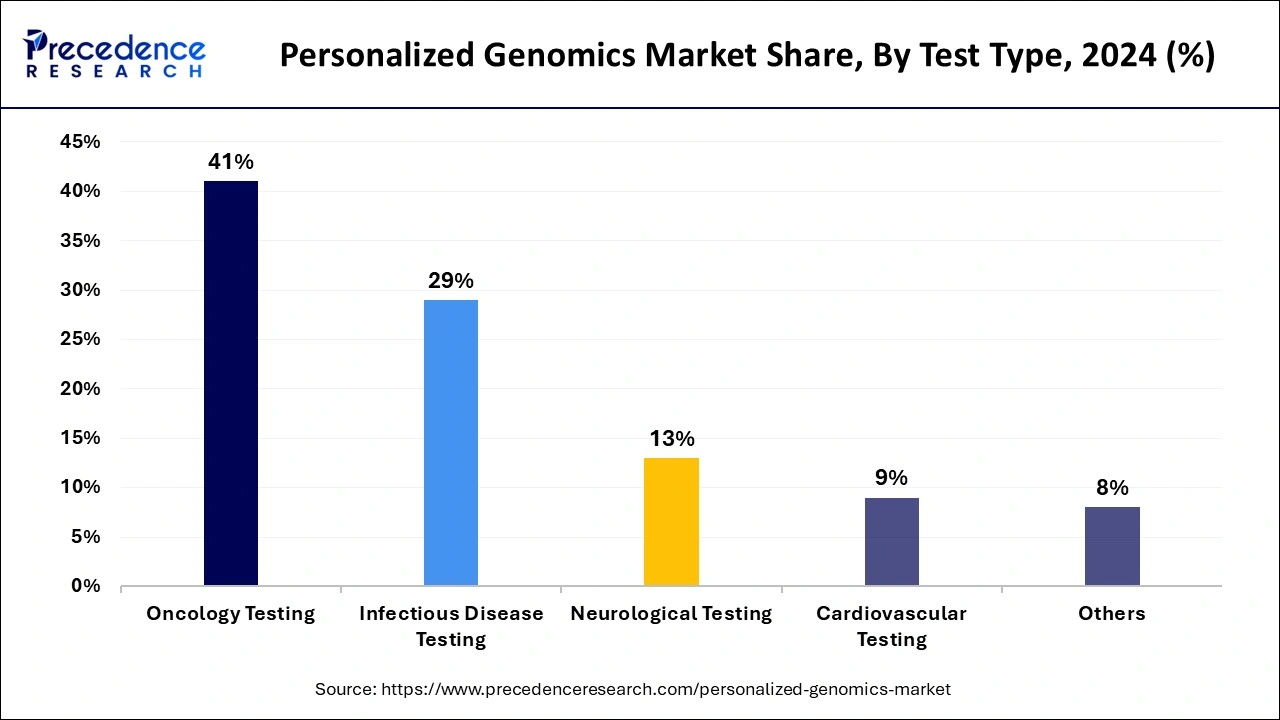
The cardiovascular testing segment is expected to grow at the fastest rate during the forecast period of 2025 to 2034, owing to the growing number of heart diseases. According to the CDC report, in 2022, 702,880 people died from heart disease. Research in coronary artery disease genomic risk prediction accelerates early detection services coupled with prevention methods.
Technology Insights
The sequencing-based tests segment accounted for a considerable share of the personalized genomics market in 2024, which was largely driven by advancements in next-generation sequencing (NGS). Genomic testing chooses NGS because the technology provides strong accuracy and fast results while analyzing the complete genome system. Scientific advancements in whole genome sequencing and exome sequencing permit customized disease therapy approaches while helping detect diseases earlier through biological assessments. Moreover, their decreasing technology cost resulted in major price drops in the past few years.
The PCR-based tests segment is anticipated to grow with the highest CAGR over the studied years, owing to their precise identification of genetic mutations, which aid in infectious disease and inherited disorder diagnosis. PCR (Polymerase Chain Reaction) technology accomplishes specific DNA sequence amplification and remains exceptionally sensitive when quantifying minimal genetic substance levels. This technology holds critical importance in viral infection testing, which includes COVID-19, and operates as a vital component of molecular diagnostic procedures. The increasing demand for genetic-based infectious disease testing of HIV and Hepatitis viruses.
Application Insights
In 2024, the precision medicine segment led the global personalized genomics market. The healthcare industry demands custom-made medical solutions at an increasing rate. Precise treatment decisions in oncology and rare genetic disorders, along with cardiovascular diseases, became prominent due to the quick genomic application expansion in the clinical care marketplace. The dominance of precision medicine remains strong, as various pharmaceutical corporations and healthcare entities choose to utilize genomic information while developing individualized patient therapeutics that generate better results.
- The National Institutes of Health (NIH) revealed in 2023 that treatment success rates improved with personalized genomic data, particularly in cancer treatment, because genomic mutational analysis drives medicine selection.
The wellness segment is projected to expand rapidly in the coming years, as customers are shifting to know about the genetic makeup that affects their wellness and health traits. More individuals are using genomic tests to determine their likelihood of developing obesity, diabetes, heart disease, and other lifestyle-linked disorders. The growth of consumer demand combined with improved genomic testing tools designed for public use will probably accelerate opportunities for genomics in personal wellness applications.
- According to a 2024 publication by the American Society of Human Genetics (ASHG), a significant percentage of consumers want wellness genetic testing services because approximately 40% plan to use genomic data for healthcare decisions.
End-User Insights
The hospitals and clinics segment dominated the global personalized genomics market in 2024 due to its expanded presence in medical facilities for diagnosis and treatment determination. The field of healthcare utilizes genomic testing more extensively in both oncology and cardiology departments, along with facilities that handle rare diseases to deliver individualized treatment options. The adoption of NGS and PCR-based testing in hospital sites has created a greater need for personalized genomic services in medical facilities.
The pharmaceuticals and biotechnology segment is projected to grow at the fastest rate in the future years, as they support drug development and meet growing requirements for specific treatments. Pharmaceutical and biotech industries expect increasing demand for genomic testing as the expanding use of genomic data is used to discover new biomarkers for diseases, including cancer, along with various neurological and autoimmune conditions.
- According to the FDA's report on New Drug Therapy Approvals for 2023, approximately 36% of the novel drugs approved that year were classified as "first-in-class" targeted therapies. In total, this amounts to about 20 out of the 55 novel drugs that received approval in 2023.
Regional Insights
U.S. Personalized Genomics Market Size and Growth 2025 to 2034
The U.S. personalized genomics market size is exhibited at USD 3.87 billion in 2025 and is projected to be worth around USD 16.47 billion by 2034, growing at a CAGR of 17.44% from 2025 to 2034.
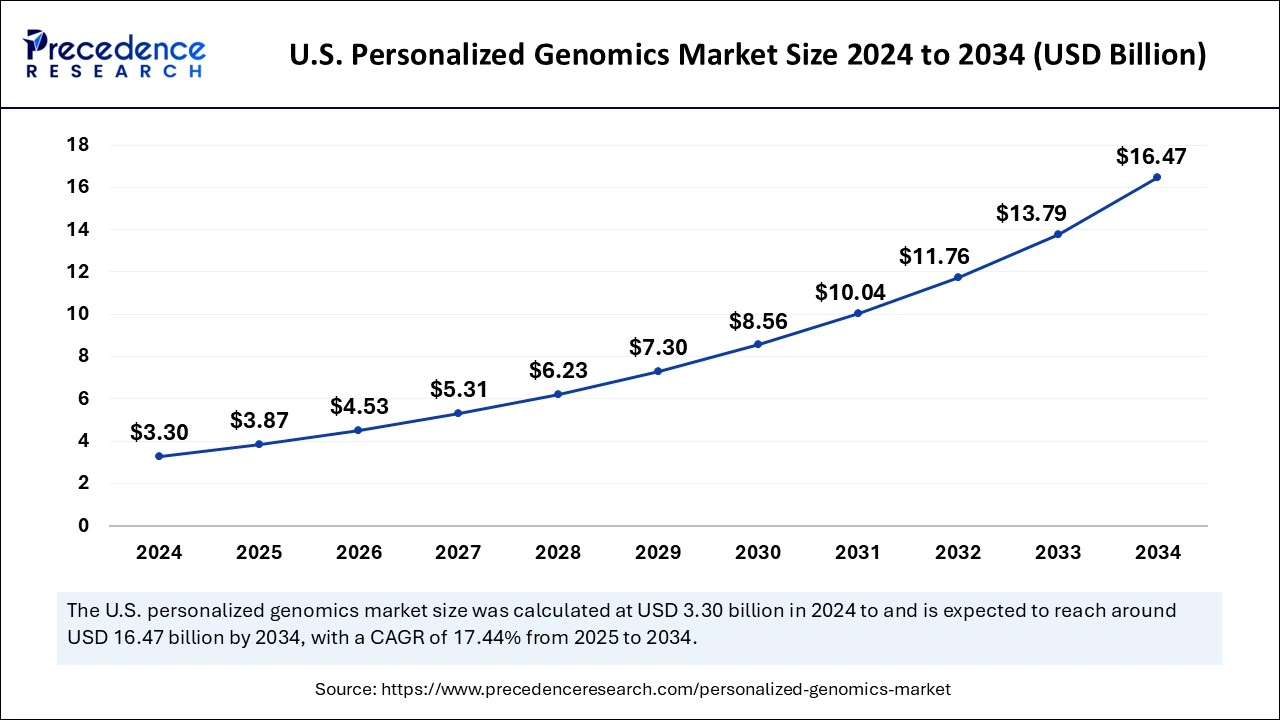
How the U.S. is Driving Growth in Personalized Genomic and Precision Healthcare?
The U.S. market is growing due to increasing demand for precision medicine and tailored therapies. Advances in genomic sequencing and bioinformatics enable early disease detection and targeted interventions for cancer, cardiovascular, and rare genetic disorders. Strong investments by pharmaceutical companies, supportive regulatory initiatives, and growing adoption of genetic testing in clinical and research settings further drive market expansion, positioning the U.S. as a leader in personalized genomics.
North America held the dominant share of the personalized genomics market in 2024 due to the robust adoption across healthcare facilities and research and clinical domains. The United States leads worldwide genomic research and personalized medicine through institutional support from the National Institutes of Health (NIH) and Centers for Disease Control and Prevention (CDC). The clinical-sector implementation of genetic testing at hospitals and clinics and growing government genomics funding.
- According to the report, the National Institutes of Health (NIH) is awarding USD 5.4 million in first-year funding to establish a new program that supports the integration of genomics into learning health systems.
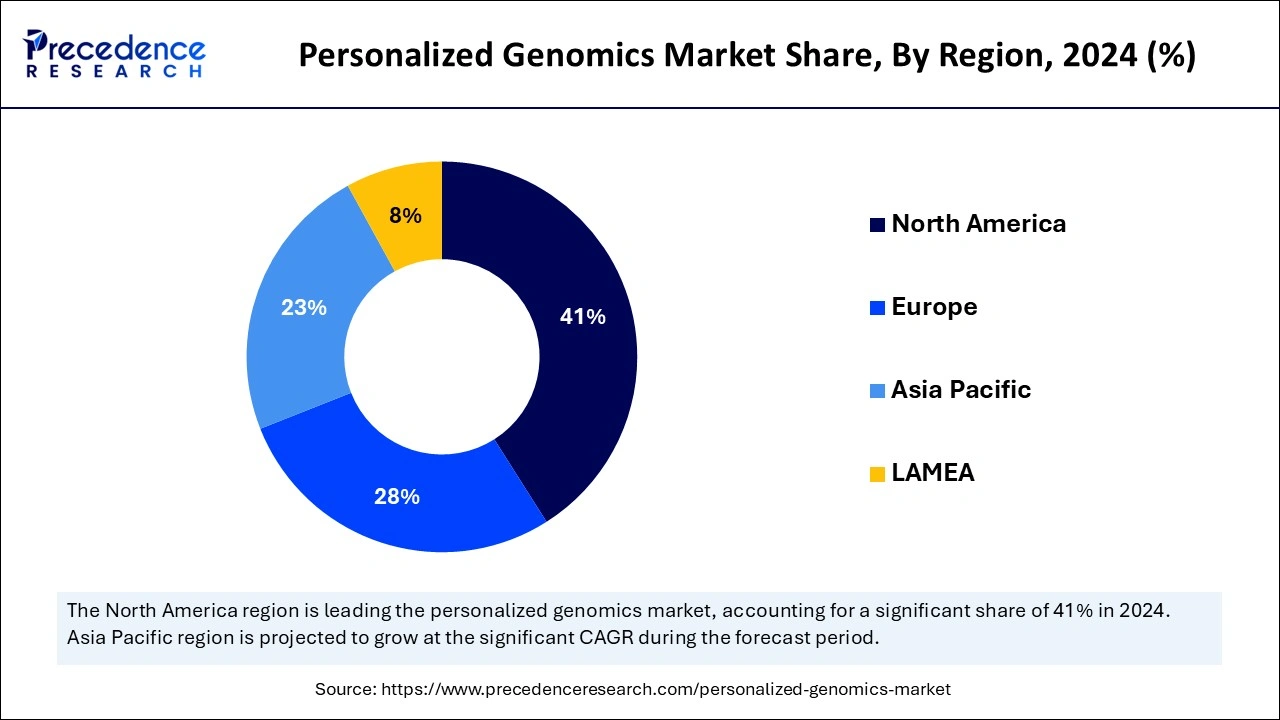
Asia Pacific is projected to host the fastest-growing personalized genomics market in the coming years, owing to the healthcare industry's rapid growth and governance bodies increasing their genomics-related priorities. The governments of China, together with India and Japan, invest heavily in accelerating genomic research through their funding and public-private institution partnership programs. China's government views genomic research as vital for healthcare evolution; thus, it devotes substantial funds to genomic infrastructure development and next-generation sequencing technology implementations.
China Personalized Genomics Market: Accelerating Precision Medicine and Innovation
The China market is growing due to rising investments in precision medicine, expanding healthcare infrastructure, and increasing adoption of genetic testing for early disease detection. Government initiatives supporting genomics research, the growing prevalence of chronic and genetic disorders, and collaborations between biotech firms, hospitals, and research institutes are further fueling growth. Advances in sequencing technologies and data analytics are also enabling targeted therapies and personalized healthcare solutions across China.
Why Europe Emerging as a Leader in Personalized Genomics?
The Europe market is growing due to increasing adoption of precision medicine, supportive government policies, and rising investments in genomic research and healthcare infrastructure. The growing prevalence of chronic and genetic diseases, advanced sequencing technologies, and collaborations between biotech companies, research institutions, and healthcare providers are driving market expansion. Additionally, the demand for early disease detection, tailored therapies, and improved patient outcomes is fueling growth across Europe.
Why is the UK Personalized Genomics Market Experiencing Rapid Growth?
The UK market is expanding due to increasing focus on precision medicine and genetically-based healthcare solutions. Government initiatives like Genomics England, growing investments in sequencing technologies, and collaborations between research institutions and biotech companies are driving adoption. Rising prevalence of chronic and hereditary diseases, coupled with the demand for early disease detection and tailored therapies, is further fueling the growth of personalized genomics across the UK.
Value Chain Analysis
R&D
- Utilizes individual genetic information to develop tailored healthcare solutions and precision medicine.
- Advances in genomic sequencing, bioinformatics, and AI-driven data analysis are central to innovation.
- Supports drug discovery, biomarker identification, and targeted therapeutic development.
Key players: Illumina, Thermo Fisher Scientific, Invitae, Helix, and QIAGEN
Clinical Trials and Regulatory Approvals
- Use genetic information to determine patient eligibility, guide drug selection, and accelerate treatment development.
- Regulatory agencies like the FDA support approval of therapies based on molecular and genomic data.
- Challenges include standardizing data, demonstrating clinical utility, and navigating regulatory complexities.
- AI, machine learning, and innovative trial designs enhance data analysis and enable more individualized treatment strategies.
Key players: Illumina, Thermo Fisher Scientific, Invitae, Helix, QIAGEN
Patient Support and Services
- Provide genetic counseling, diagnostic guidance, and treatment planning for patients.
- Specialized clinics focus on conditions such as cancer and rare genetic disorders.
- Help patients interpret genetic information to predict disease risk, personalize therapies, and improve outcomes.
- Emphasize patient empowerment through informed, shared decision-making.
Key players: Illumina, Thermo Fisher Scientific, Invitae, Helix
Top Vendors and their Offerings
- Invitae Corporation: A medical genetics company offering broad genetic testing services and the “Invitae Digital Health” platform, which integrates genomic and clinical data to support decision making across cardiology, neurology, rare disease, women's health, and oncology.
- Helix: Provides an enterprise genomics platform with offerings such as the Helix Research Network and Precision Pathway for health systems, plus a marketplace for DNA-powered tests (including pharmacogenomics, ancestry, wellness), enabling scalable population and clinical genomics.
- Lonza Group: Through its Personalized Medicine / Cell & Gene Therapy division, Lonza offers development and manufacturing services and technologies to support the entire therapeutic value chain from research to clinical/ commercial for gene and cell-based personalized medicine.
- QIAGEN N.V.: Provides sample to insight solutions, including NGS, PCR/dPCR assays, bioinformatics, and interpretation platforms recently enhanced by acquiring AI-powered software to accelerate complex genomic testing in clinical labs.
- DNA Genotek Inc. (often referred to as part of GNA Genotek): Supplies high-quality sample collection and stabilization devices (e.g., saliva-based Oragene kits) and end-to-end services for human genomics, enabling large-scale personalized genomics research and diagnostics.
Personalized Genomics Market Companies
- 23andMe
- Bio-Rad Laboratories
- Color Genomics
- Genetic Technology Limited
- Genomic Health
- GNA Genotek
- Helix
- IlluminaInc
- Interleukin Genetics
- Invite
- Lonza
- Mapmygenome
- MyHeritage
- Myriad Genetics
- Nebula Genomics
- Pathway Genomics
- Qiagen
- Quest Diagnostics
- Thermo Fisher Scientific
- Veritas Genetics
- Xcode, and Others.
Latest Announcements by Industry Leaders
- January 2025 – NVIDIA
- Vice President of Healthcare at NVIDIA – Kimberly Powell
- Announcement - NVIDIA today unveiled new collaborations aimed at revolutionizing the USD 10 trillion healthcare and life sciences sector by speeding up drug discovery, advancing genomic research, and pioneering next-generation healthcare services through agentic and generative AI. Kimberly Powell, NVIDIA's vice president of healthcare, stated, "AI presents an extraordinary opportunity to advance healthcare and life sciences with tools that help providers detect diseases earlier and accelerate the discovery of new treatments."
Recent Developments
- In January 2025, in a major step towards self-reliance in genomics, Dr. Jitendra Singh, Union Minister of State (Independent Charge) for Science and Technology, announced that India is no longer dependent on foreign genomic data. The Minister also launched the ‘Framework for Exchange of Data Protocols (FeED)' and the Indian Biological Data Centre (IBDC) Portals, offering researchers access to 10,000 whole genome samples, strengthening global collaboration in genomics research.
- In September 2024, Chennai-based Neuberg Diagnostics, a global leader in advanced healthcare diagnostics, unveiled its innovative personalized genomics platform, “Geniee – Decode your DNA”. This launch marks a significant shift in the future of personalized healthcare, positioning Neuberg Diagnostics at the forefront of genetic testing and personalized medicine.
- In January 2025, Researchers from Trinity College and the Royal College of Surgeons in Ireland (RCSI) are spearheading the Irish component of the Genome of Europe project. The collaborative project involves 49 partner institutions across 27 European countries, with a total budget of nearly € 45 million, of which € 20 million is funded by the Digital Europe Programme.
Segments Covered in the Report
By Test Type
- Oncology Testing
- Infectious Disease Testing
- Neurological Testing
- Cardiovascular Testing
By Technology
- PCR-based Tests
- Microarray-based Tests
- Sequencing-based Tests
- Others
By Application
- Diagnostics
- Precision Medicine
- Wellness
- Reproductive Health
- Sports Nutrition and Healthy Lifestyle
- Others
By End User
- Hospitals and Clinics
- Research Centers
- Pharmaceutical and Biotechnology Companies
- Diagnostic Laboratories
- Others
By Regions
- North America
- Europe
- Asia Pacific
- Latin America
- Middle East and Africa
For inquiries regarding discounts, bulk purchases, or customization requests, please contact us at sales@precedenceresearch.com
Frequently Asked Questions





Ask For Sample
No cookie-cutter, only authentic analysis – take the 1st step to become a Precedence Research client