




List of Contents


What is Pain Management Devices Market Size?
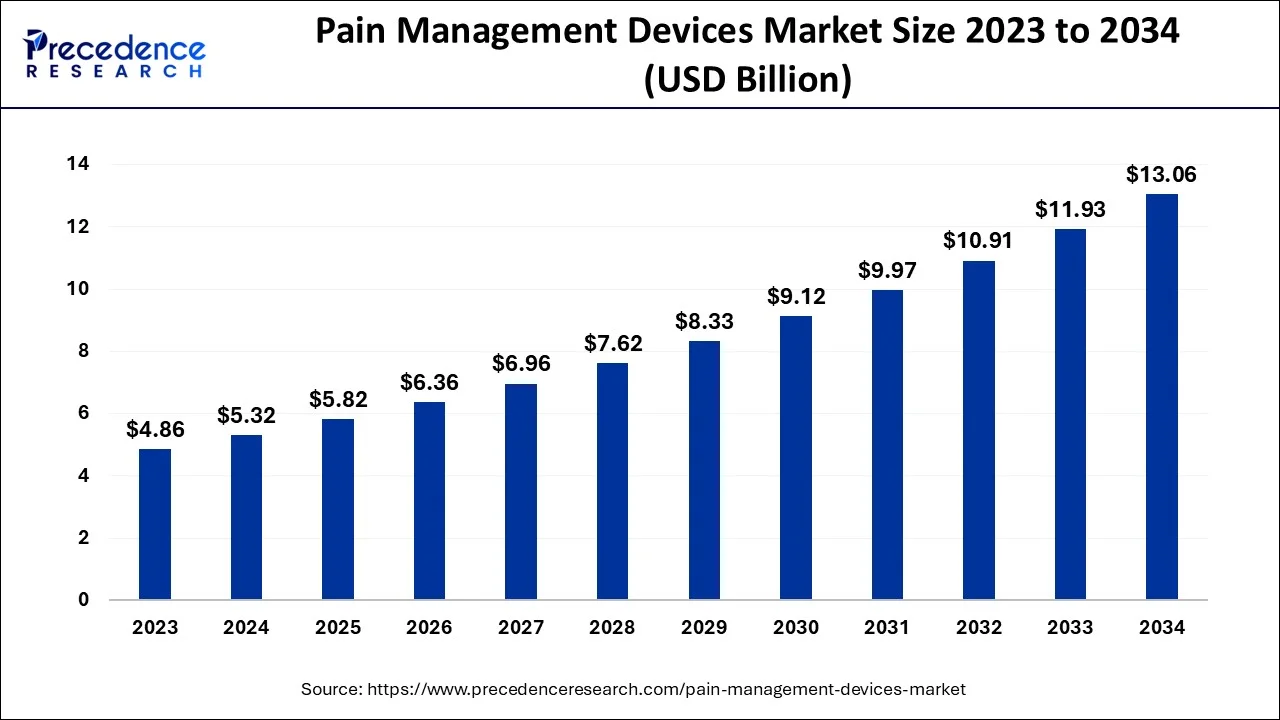
The global pain management devices market size accounted for USD 5.82 billion in 2025 and is anticipated to reach around USD 13.06 billion by 2034, expanding at a CAGR of 9.40% between 2025 and 2034.
Market Highlights
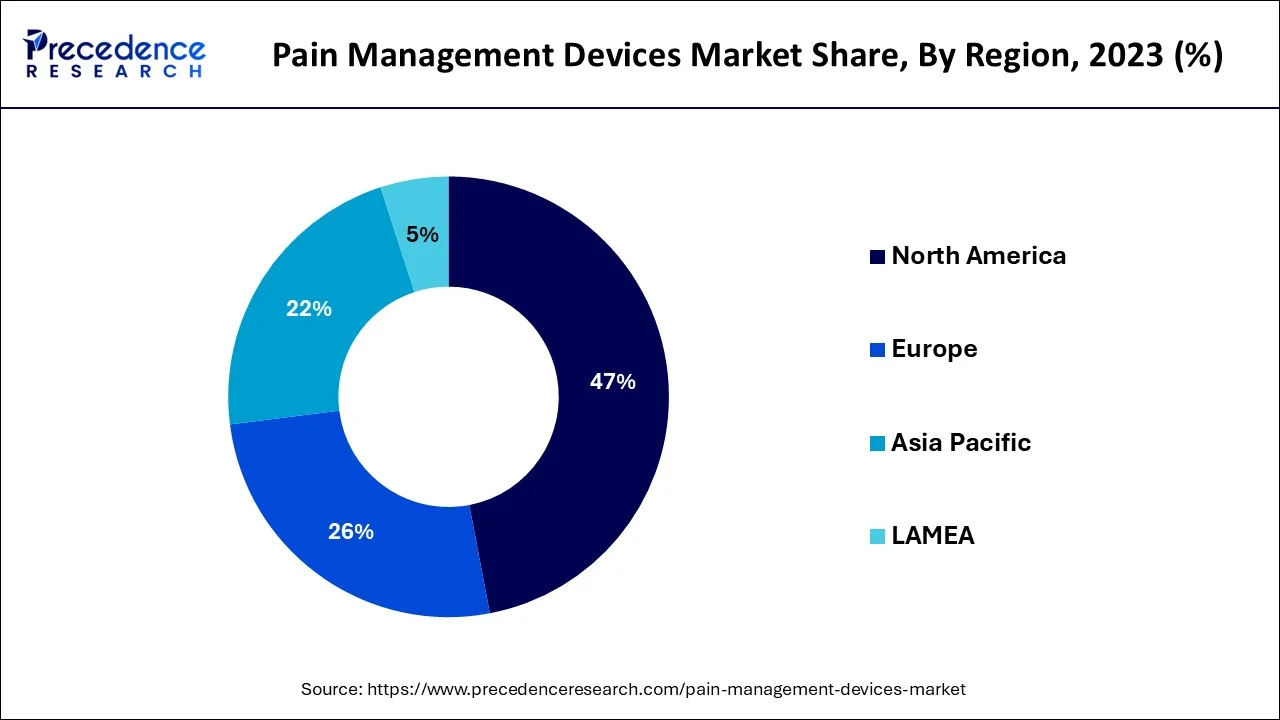
- North America dominated the market with the largest market share of 47% in 2024.
- By product type, the neuromodulation devices segment dominated the market in 2024.
- By application, the neuropathy segment led the market in 2024.
- By end users, the physiotherapy centers segment will gain a significant market share over the forecast period.
Market Size and Forecast
- Market Size in 2025: USD 5.82 Billion
- Market Size in 2026: USD 6.36 Billion
- Forecasted Market Size by 2034: USD 13.06 Billion
- CAGR (2025-2034): 9.40%
- Largest Market in 2024: North America
- Fastest Growing Market: Asia Pacific
Pain Management Devices Revolutionizing Chronic Pain Relief
Pain management is a discipline of medicine that aims to alleviate the suffering of chronic pain patients. The acute pain has a quick onset of action, whereas chronic pain lasts longer and necessitates treatment. The pain management devices are medical devices used to treat various types of pain, including cancer pain, neuropathic pain, and musculoskeletal pain.
Pain Management Devices Market Growth Factors
The pain management is a discipline of medicine that aims to alleviate the suffering of chronic pain patients. The acute pain has a quick onset of action, whereas chronic pain lasts longer and necessitates treatment. The pain management devices are medical devices used to treat various types of pain, including cancer pain, neuropathic pain, and musculoskeletal pain.
There are many different types of pain management devices in the market, such as analgesic infusion pumps, spinal cord stimulators, neurostimulation devices, and ablation devices. The increased geriatric population, the surge in consumer awareness about pain management devices, rise in prevalence of chronic pain, launch of innovative products, and increased research and development (R&D) are all driving the global pain management devices market growth during the forecast period.
The other factors that contribute to the pain management devices market growth includes an increase in the usage of pain management devices for the treatment of chronic pain, coupled with an increase in demand for pain management devices in emerging nations.
Due to the ageing population, there has been an increase in the use of pain management devices in recent years. The increased cancer incidences, the rising frequency of lifestyle-related diseases, and rising neuropathic disorders are only a few of the important drivers propelling the global pain management devices growth during the forecast period.
Furthermore, rising healthcare awareness and spending are driving the growth of pain management devices market. However, the adverse effects such as skin hypersensitivity and hyperpigmentation, as well as the availability of substitutes such as pain reliever drugs are limiting the growth of global pain management devices market.
The global pain management devices market would benefit from technological advancements in pain management devices. The high cost of manufacturing pain management devices, on the other hand could pose a threat to the growth of global pain management devices market during the forecast period.
The global pain management devices market has observed an increased in demand for spinal cord stimulation devices to treat chronic pain, refractory pain, and neuropathic pain. This factor will drive the market growth for pain management devices.
Market Outlook
- Industry Growth Overview: The market is growing rapidly, fuelled by the rising prevalence of chronic diseases, a rising elderly population, and a shift towards non-pharmacological treatments
- Sustainability Trends: Sustainability trends in the market emphasize creating more personalized, less invasive, and digitally integrated solutions, with a growing emphasis on home-based care.
- Global Expansion: Developed markets like North America and parts of Europe have favourable reimbursement and insurance coverage policies that minimize patient out-of-pocket costs, hence boosting the adoption of advanced pain management devices.
- Major investors: Major investors in the market include established companies like Medtronic, Boston Scientific, and Abbott Laboratories, along with others such as Stryker, Becton Dickinson and Company, and Baxter International.
- Startup Ecosystem: The pain management devices startup ecosystem is dynamic and growing, focused heavily on non-opioid, technology-driven solutions.
Market Scope
| Report Coverage | Details |
| Market Size in 2025 | USD 5.82 Billion |
| Market Size in 2026 | USD 6.36 Billion |
| Market Size by 2034 | USD 13.06 Billion |
| Growth Rate from 2025to 2034 | CAGR of 9.40% |
| Largest Market | North America |
| Base Year | 2024 |
| Forecast Period | 2025to 2034 |
| Segments Covered | Product Type, Application, End User, and Region |
| Regions Covered | North America, Europe, Asia-Pacific, Latin America and Middle East & Africa |
Segment Insights
Product Type Insights
Based on theproduct type, the neuromodulation devices dominate the market with revenue share of 60% in 2024. The rising prevalence of chronic ailments, as well as the limits of pharmaceutical medications in efficiently treating these diseases, has paved the way for new neuromodulation techniques. The functional capabilities of various nerves in the human body, as well as the consequences of electrical stimulation of these nerves for the treatment of various illnesses, are continually being investigated. As a result, new approaches and technology for detecting and treating chronic illnesses have emerged.
On the other hand, the radiofrequency (RF) ablation devices segment is expected to grow at rapid pace during the forecast period. The rise in the prevalence of cardiovascular disorders such as atrial fibrillation, the incidence of patients suffering from pain and cancer, and the need for minimally invasive procedures are all driving the growth of radiofrequency (RF) ablation devices segment. The utilization of ultrasonic ablation technology in radiofrequency (RF) ablation devices is also helping to boost their demand in the market.
Application Insights
Based on the application, the neuropathy held largest revenue share of 32% in 2024. The growth of the segment can be attributed to the rising prevalence of the target group as well as increased industry initiatives for the growth and development of the pain management devices market.
On the other hand, the cancer segment is expected to grow at rapid pace during the forecast period. The rising number of cancer cases has resulted in a rise in the demand for pain management devices to relieve the pain produced by nerve compression, which is primarily caused by tumor compression and other variables that vary depending on the stage of disease.
End User Insights
Based on the end user, the physiotherapy centers dominate the pain management devices market during the forecast period. The pain management devices are highly used in physiotherapy centers. The rehabilitation, health promotion, and injury prevention are all aspects of physiotherapy. The treatment requires high quality of pain management devices.
On the other hand, the hospitals and clinics is expected to grow at rapid pace during the forecast period. The pain management devices are used in the hospitals and clinics on a large scale. The cancer patients need regular checkups. The cancer specialists use pain management devices tremendously for the treatment of various kind of cancers.
Regional Insights
U.S. Pain Management Devices Market Size and Growth 2025to 2034
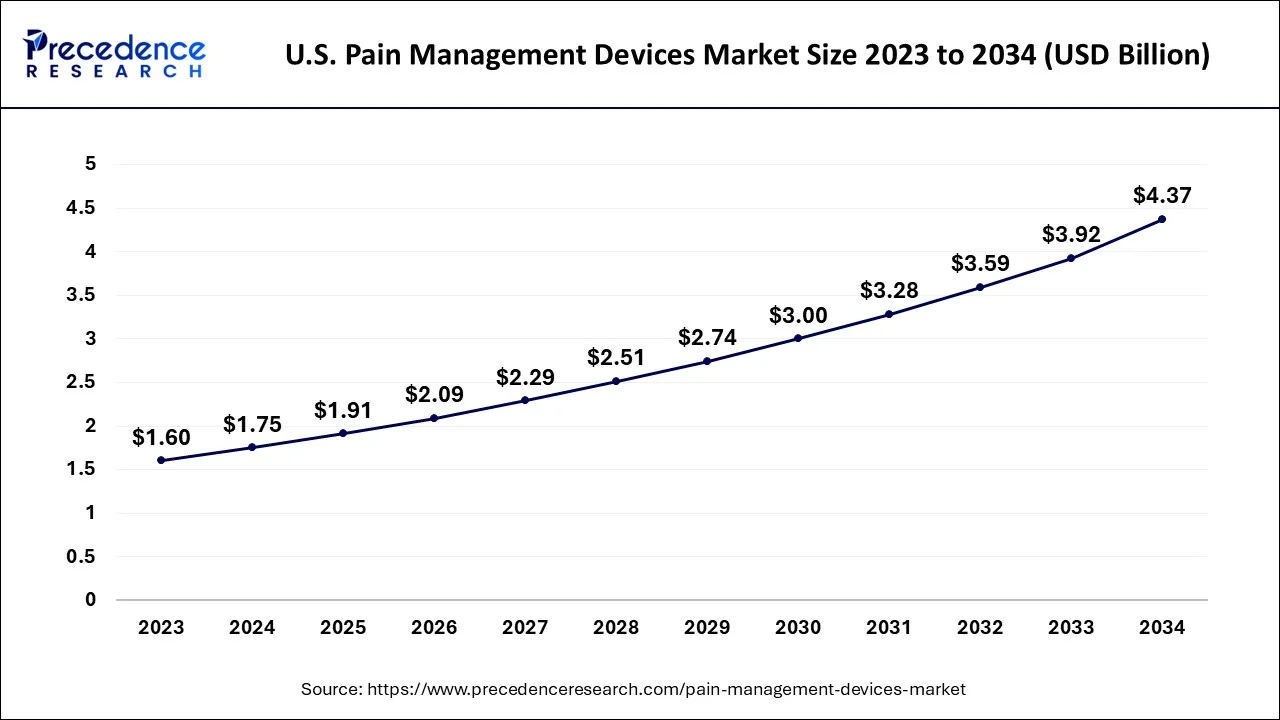
The U.S. pain management devices market size is calculated at USD 1.91 billion in 2025 and is predicted to be worth around USD 4.37 billion by 2034, growing at a CAGR of 9.58% from 2025 to 2034.
Key Growth Factors for the U.S Pain Management Devices Market
The growth of the market in the U.S. is boosted by the growing incidence of chronic pain due to increasing aging populations and chronic diseases, with a focus on drug-free alternatives to opioids, and continuous product innovation.
Based on the region, the North America segment accounted revenue share of 47% in 2022. The factors such as favorable healthcare facilities and infrastructure are driving the growth of pain management devices market in North America region. In addition, the rising government initiatives are also contributing towards growth of market in this region.
Technological Innovation: The Future of Pain Relief in Germany
Rapid Innovation in technology, such as radiofrequency ablation, neuromodulation, and wearable pain management devices, is fuelling the market expansion in the country. These advancements lead to more user-friendly and effective devices, driving market growth further.
On the other hand, the Europe is estimated to be the most opportunistic segment during the forecast period. This is attributed to the rise in investments in research and development (R&D) for advanced technological solutions in healthcare industry. Moreover, the market is highly influenced by several trade agreements in the region.
The Chronic Pain Epidemic: Rising Disease Prevalence
Asia Pacific is expected to grow at a notable CAGR over the forecast period. The growth of the region can be driven by the growing incidence of chronic diseases and lifestyle-related conditions, which lead to chronic pain. New clinical studies and product launches are establishing the efficacy and safety of cutting-edge radiofrequency ablation devices.
Value Chain Analysis of the Pain Management Devices Market
- Feedstock procurement
Feedstock procurement is the comprehensive process of sourcing and acquiring all the necessary raw materials, components, and sub-assemblies required to produce medical devices used to alleviate pain.
- Chemical Synthesis and Processing
It primarily involves the design, creation, and refinement of chemical components, such as drugs and advanced biomaterials, used within or in conjunction with devices to improve pain relief, efficacy, and safety.
- Packaging and Labelling
It involves designing and creating protective barriers to ensure the device remains sterile, safe, and functional from production to the point of use.
- Regulatory Compliance and Safety Monitoring
It refers to the adherence to a stringent set of laws, regulations, and standards established by national and international bodies.
- Key Players' Offering
Key players in the market, such as Medtronic, Boston Scientific, and Abbott, offer a wide range of products like neurostimulation devices, spinal cord stimulators, and drug-infusion pumps.
Pain Management Devices Market Companies
- Nevro Corporation
- LivaNova
- SPR Therapeutics
- Boston Scientific Corporation
- Abbott
- DJO Global LLC
- Medtronic
- Omron Healthcare Inc.
- Smiths Medical
- Melsungen AG
Key Companies & Market Share Insights
- To increase their market reach, the key market players have launched a number of strategic activities, including technology innovation, partnerships, regional growth, and mergers and acquisitions. Medtronic, for example, announced the commercial introduction of the InterStim Micro Neurostimulator, a Food and Drug Administration (FDA) approved neurostimulator, in August 2020.
Segments Covered in the Report
By Product Type
- Electrical Stimulation Devices
- TENS
- Others
- Radiofrequency (RF) Ablation Devices
- Neuromodulation Devices
- Spinal Cord Stimulators
- Deep Brain Stimulators
- Sacral Neurostimulators
- Others
- Infusion Pumps
- Intrathecal Infusion Pumps
- External Infusion Pumps
By Application
- Musculoskeletal
- Brain
- Cancer
- Neuropathy
- Others
By End User
- Physiotherapy Centers
- Hospitals and Clinics
- Others
By Region
- North America
- Europe
- Asia-Pacific
- Latin America
- Middle East & Africa
For inquiries regarding discounts, bulk purchases, or customization requests, please contact us at sales@precedenceresearch.com
Frequently Asked Questions





Ask For Sample
No cookie-cutter, only authentic analysis – take the 1st step to become a Precedence Research client