




List of Contents


What is the Melanin Market Size?
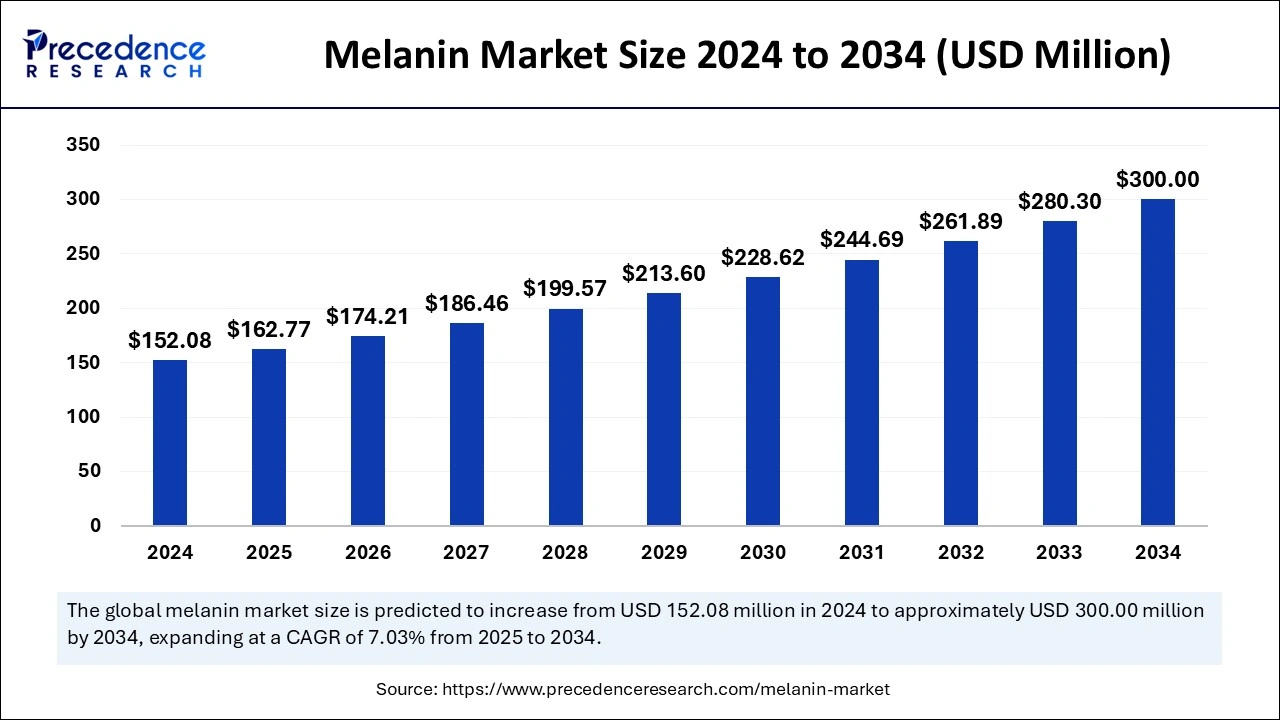
The global melanin market size is valued at USD 162.77 million in 2025 and is predicted to increase from USD 174.21 million in 2026 to approximately USD 300 million by 2034, expanding at a CAGR of 7.03% from 2025 to 2034. The increasing demand for natural ingredients for UV protection and skin treatment in cosmetics andskin care products drives the growth of the market.
Melanin Market Key Takeaways
- North America dominated the melanin market with the largest market share in 2024.
- Asia Pacific is expecting substantial growth in the market during the predicted period.
- By type, the eumelanin segment led the global market in 2024.
- By type, the pheomelanin segment is expecting notable growth during the forecast period.
- By application, the pharmaceutical industry segment has held a major market share in 2024.
- By application, the beauty industry segment will witness substantial growth during the predicted period.
Market Overview
Melanin is a substance that is naturally present in the human body and produces eye, skin, and hair. The amount of melanin present in the body describes the color or pigmentation of eyes, hair, and skin. The higher amount of melanin produced in the body causes darker hair, eyes, and skin. The melanin, which is naturally present in the body, solely depends upon the ancestral population and genetics. Melanin mainly works as the natural barrier against UV rays and keeps genetic material safer in cells by restricting harmful UV rays into the inner layer of skin.
How Can Artificial Intelligence (AI) Impact the Melanin Market?
The emergence of artificial intelligence in dermatology helps in revolutionizing the overall diagnostic procedures and operations. The AI algorithms are used in dermatology operations for rapid data processing to provide real-time insights about and more reliable data diagnosis. AI in the melanin market can help in a wide range of dermatological applications, including pigmentary skin lesions and malignancy, psoriasis, acne, autoimmune disorders, allergic contact dermatitis, ulcer evaluation and prediction, and robotics.
- In October 2024, OSAZ, a growing beauty-tech startup founded by engineers, scientists, and entrepreneur Osazomon Imarenezor, transformed the beauty industry with its data-driven approach to skincare in collaboration with Techstars.
Market Outlook
- Industry Growth Overview: The global melanin market is growing rapidly, fueled by increasing demand in cosmetics, pharmaceuticals, and advanced materials. Key drivers include heightened consumer focus on sun protection, inclusive skincare for melanin-rich skin, and a shift towards bio-based ingredient sourcing. The market is also driven by rising consumer demand for inclusive skincare across diverse skin tones and growing pharmaceutical and cosmetic applications of melanin's protective properties.
- Global Expansion: Emerging regions, particularly in Asia-Pacific and Latin America, present significant opportunities for the melanin market due to rising awareness of skincare diversity and increasing consumer demand for inclusive, melanin-rich formulations. Additionally, the expanding beauty and pharmaceutical sectors in these regions are driving demand for melanin-based ingredients in sun protection, anti-aging, and skincare products.
- Major investors:Major investors in the market include global beauty‑care giants like L'Oréal and Unilever that are funding inclusive skincare ventures and advanced ingredient platforms tailored to melanin‑rich skin. Venture‑capital firms are also backing startups focused on bio‑derived, high‑purity melanin production and pigmentation technologies.
- Startup Ecosystem: The melanin market's startup ecosystem is thriving with biotech ventures developing lab‑grown or microbial‑sourced melanin and inclusive skincare brands customizing formulations for melanin‑rich skin tones. Strategic alliances with major cosmetics companies and shorts also fuel innovation and market entry.
Melanin Market Growth Factors
- Rising awareness in population: The increasing awareness regarding melanin products and their benefits to the skin and overall health of the human body is accelerating the demand for the market.
- Increasing demand for natural ingredients: The increasing demand for natural ingredients and products in the formulation of cosmetics and pharmaceutical products, owing to their benefits, is driving the growth of the melanin market.
- Increasing demand from industries: The rising adoption of melanin in a wide range of industries, such as pharmaceutical, beauty, food, and beverages, drives the growth of the segment.
- Increasing healthcare infrastructure: The rising healthcare and pharmaceutical sector worldwide and the demand for natural ingredients and products boost the demand for the market.
Market Scope
| Report Coverage | Details |
| Market Size in 2025 | USD 162.77 Million |
| Market Size in 2026 | USD 174.21 Million |
| Market Size in 2034 | USD 300.00 Million |
| Market Growth Rate from 2025 to 2034 | CAGR of 7.03% |
| Dominating Region | North America |
| Fastest Growing Region | Asia Pacific |
| Base Year | 2024 |
| Forecast Period | 2025 to 2034 |
| Segments Covered | Type, Application, and Regions. |
| Regions Covered | North America, Europe, Asia-Pacific, Latin America, and Middle East & Africa. |
Market Dynamics
Drivers
Benefits associated with melanin
The increasing awareness regarding the benefits associated with melanin ingredients in a wide range of industries drives the growth of the melanin market. The increasing adoption of melanin ingredients by the leading skincare and beauty brands is due to the increasing demand for UV protection skincare products. Melanin is also used in food and beverage products as a natural colorant and preservative ingredient in the food products for enhanced safety and reduced toxicity. Melanin provides several health benefits and promoting effects like immunomodulatory and antioxidant activities.
Restraint
Side effects
The side effects associated with melanin products in some cases, such as burning, local itching, and moderate hyperemia with the topical use of melanin, are limiting the adoption of ingredients and restraining the growth of the melanin market.
Opportunity
Wide range of applications in melanin
Melanin is highly used in a wide range of applications, including medicinal, biotechnological, and environmental aspects, due to the availability of physicochemical properties, biological features, and chemical structure, which make it used in different everyday applications. The melanin market has different applications such as anti-inflammatory activity, free radical scavenging, digestive system protection, anti-cancer activity, antivenom, interference with drugs and metals, antiviral feature, antimicrobial action, neuroprotective agent, UV X-and Y-rays protective, radioprotective therapy and others.
Type Insights
The eumelanin segment led the global melanin market in 2024. Eumelanin is a significant type of melanin that is responsible for the darker color of hair, skin, and eyes. Eumelanin is present in different proportions in black and brown hair. The increasing demand for beauty and skincare products drives the demand for eumelanin for skin enhancements, driving the demand for the segment. The increasing pollution level and global warming are driving the demand for efficient skin care products that protect against solar radiation, and pollution drives the development of eumelanin-based beauty and skincare products.
The pheomelanin segment is expecting notable growth during the forecast period. Pheomelanin is another type of melanin that is specially used in the making of cosmetics products for lighter-skinned people with red hair. Pheomelanin is the melanin pigment that is present in human body parts such as pinkish lips and other pinkish parts of the body. The people having equal amounts of pheomelanin and eumelanin are red.
Application Insights
The pharmaceutical industry segment dominated the melanin market in 2024. The increasing adoption of melanin in the formulation of different types of drugs that provide protection against solar radiation and other skin disorders is driving the demand for the segment. The biological melanin pigment is widely used in biological systems. It provides special properties and functions in general health. Biological melanin is used as an anti-inflammatory, immunomodulatory, and other medication.
The beauty industry segment will witness substantial growth during the predicted period. The increasing demand for melanin for the development of beauty products helps protect the skin from solar radiation and other environmental factors that boost the demand for melanin from the beauty industry. Melanin is used in the making of different beauty products like sunscreen, flesh or grey color pigments, and other products.
Regional Insights
What Made North America the Dominant Region in the Melanin Market?
North America held a significant share of the melanin market in 2024. The growth of the market is attributed to the rising infrastructural development in the cosmetics and skincare industry, and the greater availability of the major market players in countries like the United States and Canada is causing the increased demand for melanin. The increasing blend of melanin in different beauty products for people of different skin tones is further boosting the demand for the market. Additionally, melanin and other related types of melanin are increasingly important in the formulation of different drugs and medication treatments.
- In the United States, there are 4,218 cosmetics and beauty products manufacturing businesses in 2023, an increase of 2.3% in 2022.
- The beauty industry revenue reached USD 579.2 billion in 2022 and USD 579.22 billion in 2023.
U.S. Melanin Market Analysis
In the U.S., the market is driven by the rising consumer demand for inclusive skincare products that cater to diverse skin tones and promote sun protection. Additionally, there is a growing focus on melanin's potential in pharmaceuticals and cosmetics, with increasing interest in its bioactive properties for addressing skin pigmentation and anti-aging concerns
What Potentiates the Growth of the Melanin Market in Asia Pacific?
Asia Pacific is expecting substantial growth in the melanin market during the predicted period. The growth of the market is attributed to the rising population, and the demand for skincare and beauty products drives the demand for melanin. The increasing cosmetics and skincare industry in countries like India, China, Japan, and South Korea, with increasing demand for natural products and ingredients, is accelerating the demand for the market across the region.
Japan Melanin Market Analysis
Japan is the major contributor to the market in Asia Pacific, driven by its advanced skincare and cosmetic industries, which focus heavily on pigmentation concerns and skin protection. The country's strong emphasis on research and innovation, along with a high demand for products catering to diverse skin tones and anti-aging, positions Japan as a leader in the growing melanin market.
How Big is the Success for Europe in the Melanin Market?
Europe has achieved significant success in the melanin market due to its strong regulatory framework for natural and high-purity ingredients, well-developed cosmetic and pharmaceutical industries in countries such as Germany and France, and rising consumer demand for inclusive skincare and bio-based pigments. Germany leads the market because of its focus on sustainably sourced ingredients. Local brands and biotech companies are launching innovative formulations with microencapsulated melanin and clean-label claims, while consumer interest in transparency, dermatological validation, and eco-friendly packaging continues to grow.
How Crucial is the Role of Latin America in the Melanin Market?
Latin America plays a crucial role in the market because of its diverse consumer base with higher melanin-rich skin populations, increasing awareness of inclusive skincare, growing use of bio-based ingredients, and expanding cosmetic and pharmaceutical industries that boost demand for melanin-based formulations and personalized products. Brazil leads the market due to its large, diverse population with a high proportion of melanin-rich skin, increasing consumer awareness of inclusive skincare, and government support for bio-based ingredient innovation, which is driving widespread adoption of melanin-based products.
How Big is the Opportunity for the Growth of the Melanin Market in the Middle East and Africa?
The Middle East and Africa (MEA) presents a substantial opportunity in the melanin market, driven by growing awareness of skincare suited to melanin‑rich skin tones, rising incomes among youth populations, expansion of e‑commerce and retail infrastructure, and increasing demand for inclusive, climate‑adapted formulations in Gulf and African markets. In the UAE, there is a high demand for inclusive skincare tailored for melanin-rich skin, clean-label products rooted in local traditions, sun protection, and tech-enabled personalization through AI diagnostics, which contribute to the market.
Value Chain Analysis
Research and Development (R&D)
This stage involves identifying bio-based melanin sources, developing formulations for cosmetics, pharmaceuticals, and advanced materials, and conducting preclinical testing for safety, efficacy, and stability.
- Organizations: Biotech firms such as Melanotech, Geltor, and Amyris; R&D divisions of major cosmetics companies like L'Oreal and Unilever; and academic and industrial research labs focusing on pigmentation and bio-based ingredients.
Clinical Trial and Regulatory Approval
Conducting human patch tests, safety assessments, and clinical studies for topical, oral, or injectable melanin-based products; submission of data to regulatory authorities for approval.
- Organizations: Contract research organizations (CROs) like Parexel and ICON plc; regulatory agencies, including the U.S. FDA, European Medicines Agency (EMA), and national cosmetic regulatory bodies.
Patient Support and Service
Post-launch support through customer education on product usage, dermatological guidance, feedback collection, and integration of digital platforms for personalized skincare solutions.
- Organizations:Cosmetics and dermatology clinics, e-commerce customer support teams, online skincare platforms, and brand-led educational initiatives like L'Oreal's digital skincare consultations.
Melanin Market Companies
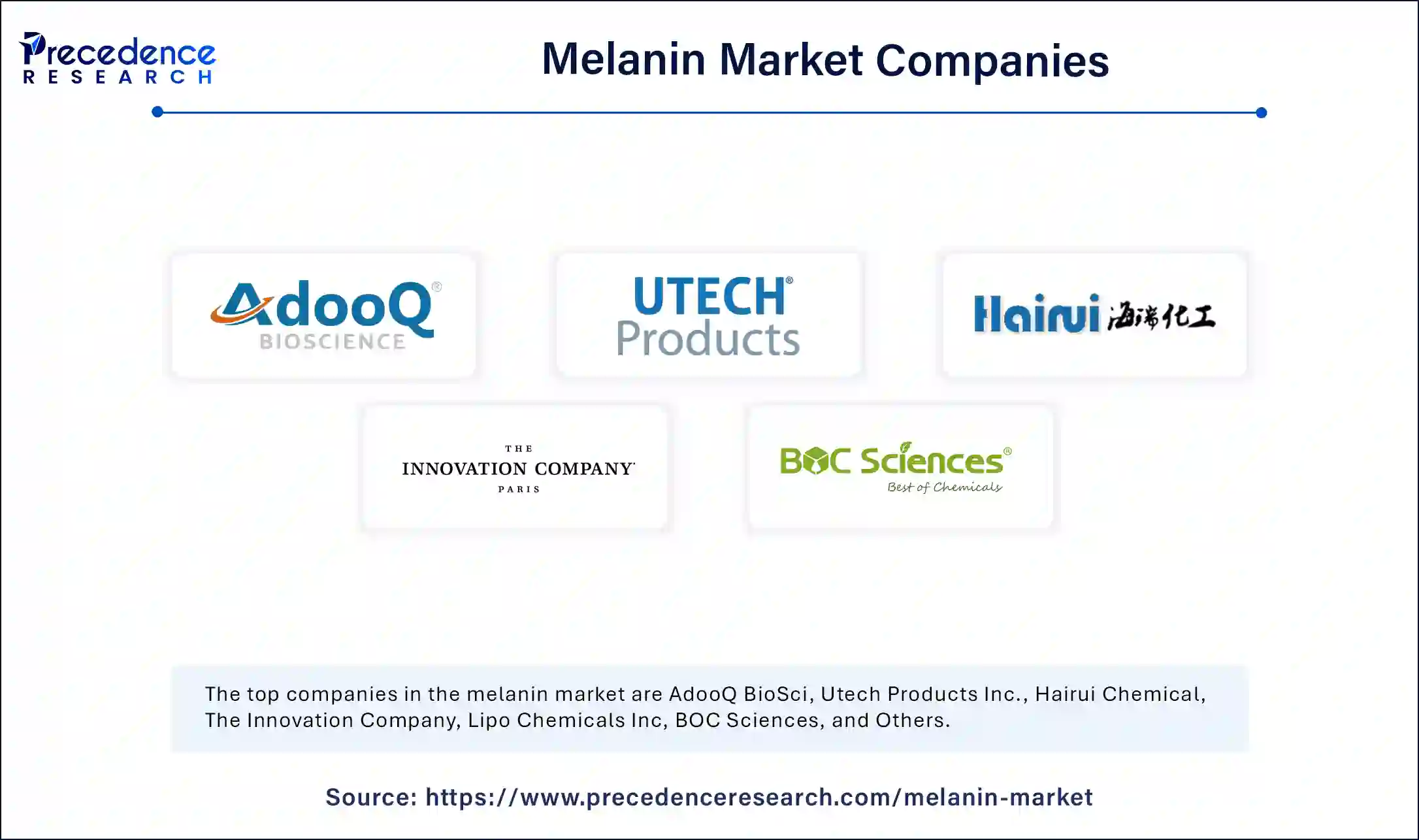
- AdooQ BioScience: Supplies high‑purity melanin derivatives used in biomedical research and assays, supporting functional pigment and analytical applications.
- Hubei Xinkang Pharmaceutical Chemical Co., Ltd.: Manufactures melanin‑related compounds for pharmaceutical and industrial uses, providing cost‑efficient bulk supply.
- Utech Products Inc.: Focuses on cosmetic‑grade melanin for skincare formulations, catering to brands integrating melanin into topical products.
- Hairui Chemical: Provides synthetic or semi‑synthetic melanin powders for research and industrial applications, with emphasis on purity and supply scale.
- The Innovation Company: Engages in R&D of melanin‑based actives and specialty ingredients, often collaborating with cosmetics and dermatology brands.
- Lipo Chemicals Inc.:Provides specialty ingredients for the cosmetics and personal care industries, including those that enhance skin pigmentation, sun protection, and skin tone evenness.
- BOC Sciences: Offers a broad portfolio of melanin variants and derivatives for research, analytical, and industrial uses, facilitating access to specialized grades
Latest Announcement by Industry Leaders
- In June 2024, Lipo Chemicals launched Lipomulse, a new multi-functional emulsifier for the increasing demand for sophisticated but compatible ingredients in the growing market.
Recent Developments
- In February 2025, CHOSEN (India) unveiled a strategic rebrand and launched India's first "Melanin Lab", a dedicated research hub focusing on high‑performance formulations for melanin‑rich skin tones. The initiative emphasizes scientific precision, inclusivity, and tailored skincare solutions.
- In May 2025, L'Oreal Paris introduced its Bright Reveal Serum powered by its active ingredient Melasyl in the GCC, first shown at Dubai Derma on 14 April 2025. This molecule, developed after 18 years of research and over 120 scientific studies, intercepts melanin precursors to prevent visible dark spots while respecting all skin tones.
- In October 2024, Mibelle launched the MintyBrightTM Nu dried apple mint leaves extracted or Mentha suaveolens. The organization extends its existing range of beauty with functional ingredients that target collagen repair and hair growth.
- In January 2025, Melanin Creatives, a leading interior design brand, launched the physical class offering, an identified platform to streamline representation, longstanding gaps in diversity, and professional development within the creative and design industry.
Segments Covered in the Report
Type Insights
- Eumelanin
- Pheomelanin
- Neuromelanin
Application Insights
- Pharmaceuticals
- Beauty Industry
- Others
By Geography
- North America
- Asia Pacific
- Europe
- Latin America
- Middle East and Africa
For inquiries regarding discounts, bulk purchases, or customization requests, please contact us at sales@precedenceresearch.com
Frequently Asked Questions
Tags





Ask For Sample
No cookie-cutter, only authentic analysis – take the 1st step to become a Precedence Research client