




List of Contents


What is Industrial Enzymes Market Size?
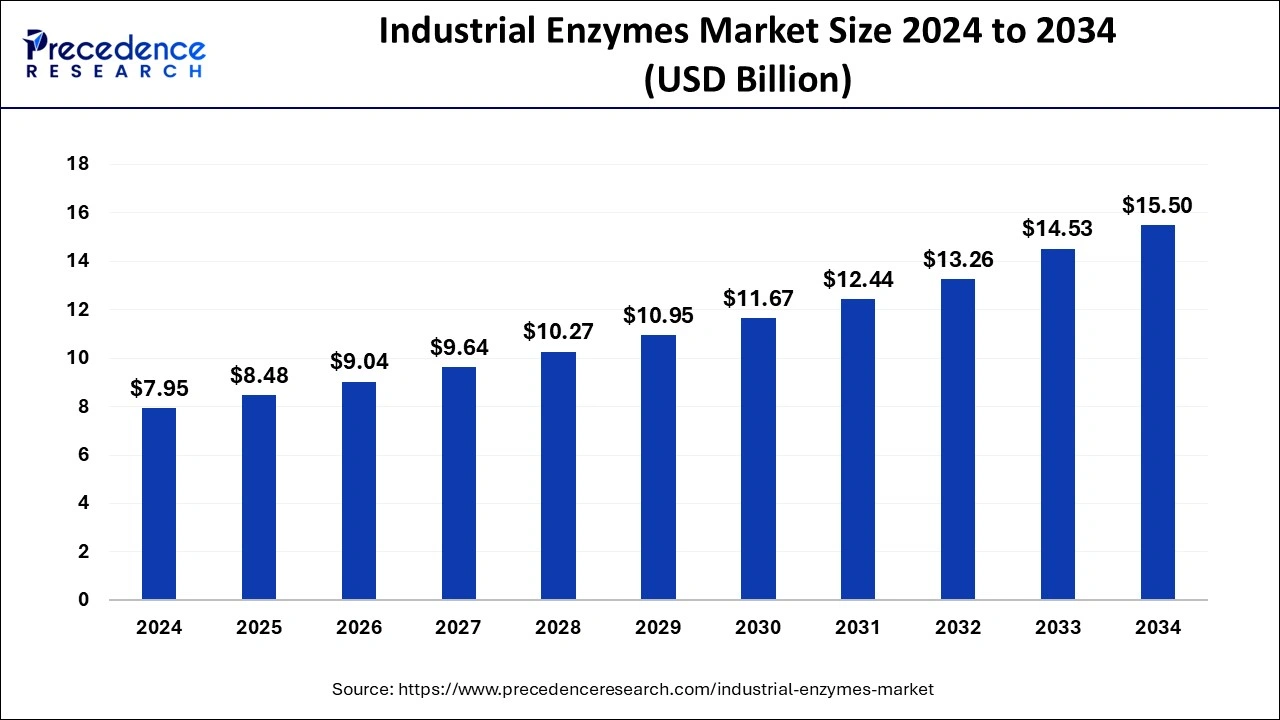
The global industrial enzymes market size accounted for USD 8.48 billion in 2025 and is predicted to reach around USD 15.50 billion by 2034, growing at a CAGR of 6.90% from 2025 to 2034.
Market Highlights
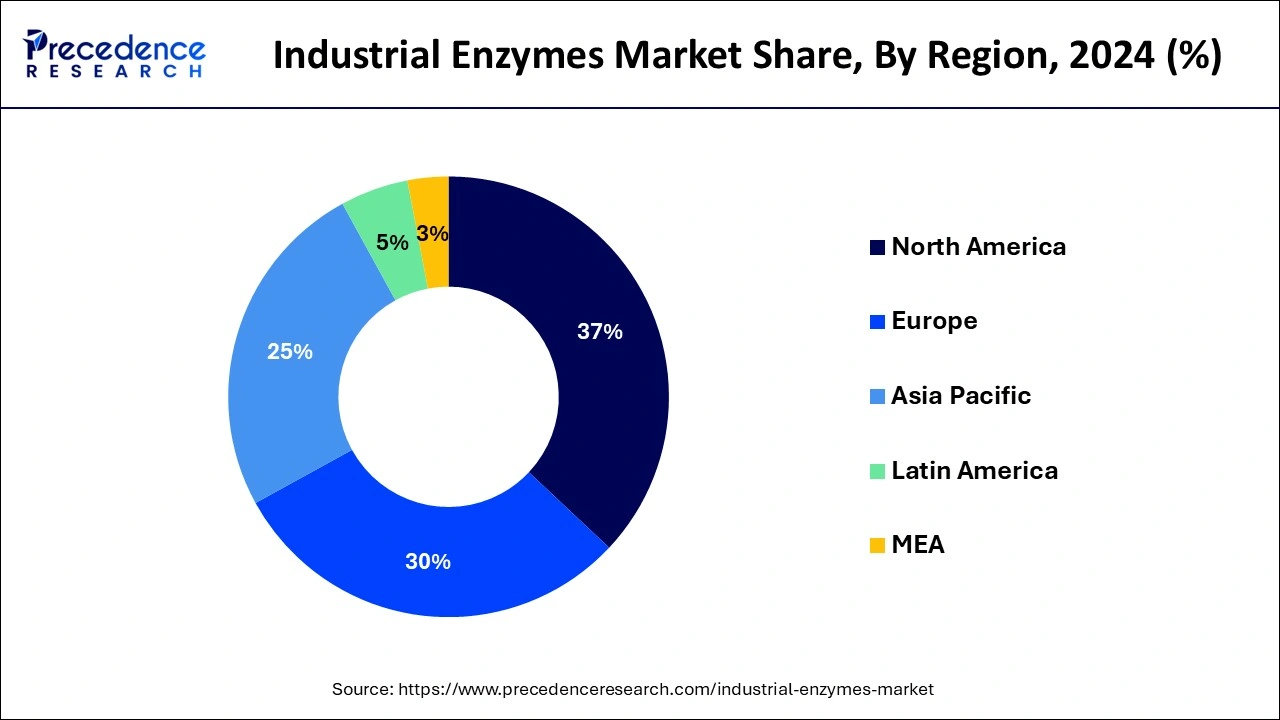
- North America led the global market with the highest market share of 37% in 2024.
- By Product, the carbohydrases product segment has held the largest market share of 48% in 2024.
- By Source, the microorganisms segment had the biggest market share of 82% in 2024.
- By Application, the food & beverages segment contributed more than 23% of revenue share in 2024.
Market Size and Forecast
- Market Size in 2025: USD 8.48 Billion
- Market Size in 2026: USD 9.04 Billion
- Forecasted Market Size by 2034: USD 15.50 Billion
- CAGR (2025-2034): 6.90%
- Largest Market in 2024: North America
- Fastest Growing Market: Asia Pacific
Industrial Enzymes Market Growth Factors
Industrial Enzymes market growth is driven by rising product demand from end-use industries such as biofuel, domestic cleaning, animal feed, and food & beverage. The market is expected to be fueled by growing demand for carbohydrase and proteases in food and beverage applications, particularly in Asia Pacific's expanding economies like China, India, and Japan. Furthermore, increased industrialization and improvements in the nutraceutical sector might be ascribed to growth in developed economies. Such factors have boosted product demand significantly.
The need for Industrial Enzymes is predicted to develop in the animal feed and nutraceutical industries, propelling the industry ahead. Furthermore, as consumer awareness of health improves, so does demand for functional foods, which will drive up product demand in the coming years. High sensitivity of enzymes to temperature and pH, as well as item handling security issues, are among the industry's challenges. These variables are expected to have an immediate impact on market growth. The increased usage of their products in a variety of end-use industries, such as food and beverages, animal feed, biofuels, and diagnostics, is expected to benefit key players key players.
Consumers are increasingly demanding higher-quality goods with more natural flavor and taste. As a result of this trend, the necessity for flavored and pleasant processed foods based on industrial enzyme applications arose. These enzymes function as catalysts in metabolic reactions by breaking down vitamins and minerals and converting complex compounds to simpler molecules. These attributes is estimated to fuel the market growth.
Market Outlook
- Industry Growth Overview: The industrial enzymes market is projected to expand rapidly from 2025 to 2034 due to a strong shift toward eco-friendly manufacturing practices and increased investments in enzyme production technology. The rising demand for enzymes from the food and beverages, biofuels, and pharmaceutical industries also contributes to market growth.
- Sustainability Trends: There is a strong emphasis on water and energy efficiency, replacing harsh chemicals. As a result, the demand for clean-label and natural products is rising in the food & beverages, animal feed, nutraceuticals, and personal care & cosmetics industries. Moreover, supportive government policies are actively driving sustainable industrial practices and bio-based technological adoption.
- Major Investors: Major investors in the industrial enzymes market include Novozymes, BASF SE, Kerry Group plc, and Advanced Enzyme Technologies, among others. They contribute by driving research and development, promoting sustainable and bio-based technologies, and pursuing strategic mergers and acquisitions to expand product portfolios and market reach.
Market Scope
| Report Highlights | Details |
| Market Size in 2025 | USD 8.48 Billion |
| Market Size in 2026 | USD 9.04 Billion |
| Market Size by 2034 | USD 15.50 Billion |
| Growth Rate from 2025 to 2034 | CAGR of 9.60% |
| Largest Market | North America |
| Base Year | 2024 |
| Forecast Period | 2025 to 2034 |
| Segments Covered | Product, Source, Application, Region |
| Regions Covered | North America, Europe, Asia-Pacific, Latin America, and Middle East & Africa |
Segment Insights
Product Insights
The carbohydrases product segment leads the industrial enzymes market accounting for more than 48% revenue share in 2024, and is expected to grow significantly during the forecast period. Carbohydrase enzymes are used in a variety of applications, such as pharmaceuticals, animal feed, and food and drinks. Carbohydrases are primarily used as a catalyst for the conversion of carbohydrates, such as fructose and glucose, into sugar syrup, which is then used in the pharmaceutical food, and beverage sectors.
Protease is another well-known product that is used in the food, pharmaceutical, detergent, animal feed, chemical, and photography industries for protein breakdown, catalytic hydrolysis of protein peptides to amino acids, and a variety of other uses. Serine, threonine, cysteine, aspartate, papain, glutamic acid, and metalloproteases are the most common forms of proteases.
Consumer awareness of deteriorating nutrition levels has boosted worldwide protein consumption, which is likely to boost demand for proteases in the food industry during the forecast period. Furthermore, the pharmaceutical, detergent, and chemical end-use sectors are predicted to increase in emerging nations such as China, India, and Brazil, boosting segment growth over the projection period.
Source Insights
Based on the Source, the Industrial Enzymes Market is divided into Plants, Animals, and Microorganisms. The microorganisms source segment has accounted for more than 82% of revenue share in 2024 and is expected to grow significantly during the forecast period. Bacterial, fungal, and yeast enzymes are the three types of microorganism-based enzymes. Phenol oxidases, esterases, and hydrolases are among the industrial enzymes derived from mushrooms. Bacillus is the most common source of bacterial enzymes. Detergents, pharmaceuticals, and the food and beverage industries use the bulk of industrial enzymes. Due to its increasing use in a variety of end-use industries, fungi-based products are a popular choice. Fungal enzymes have a wide range of applications since they are used in the manufacturing and preparation of a wide range of foods, including beer, soy sauce, dairy products, processed fruits, and baked goods.
In addition to fruits and vegetables, industrial enzymes can be found in a variety of foods. Plant-based foods are high in enzymes and can be ingested without the need to be processed or cooked. Bromelain is in high demand since it is utilized as an anti-inflammatory agent, aids in protein digestion, and aids in wound debridement. Plant-based foods are in high demand because they alleviate stress on the small intestine by speeding up digestion.
The pancreas and stomach of cattle and swine are the most common sources of animal-based. These only work within a narrow pH range, rendering them useless in the gastrointestinal tract. In an acidic (low pH level) environment, these enzymes become unsteady, resulting in their death before the required function is completed. As a result, animal-based enzymes are supplied to the body within a protective enteric coating that can withstand stomach acidity.
Application Insights
Based on the Application, the food & beverages application segment leads the industrial enzymes market accounting for more than 23% of revenue share in 2024 and is estimated to grow significantly in the upcoming years. Industrial enzymes are essential in the production of nutrient-dense foods and beverages. Cheese processing, fruit and vegetable processing, fats and oils processing, grain processing, protein processing, and other food processing sectors such as baking, dairy, cereal extraction, and brewing require customized solutions and unique enzyme products. Food and beverage manufacturers can use specialized enzyme solutions to improve the quality of their end goods, increase yield, optimize resources, minimize prices, reduce pollution, and reduce waste.
Amylases, lipases, and proteases are commonly utilized in detergent formulations, making detergents the second-largest application segment. Protease enzymes are most commonly found in laundry detergents. They assist in the removal of protein stains such as grass, blood, eggs, and human perspiration. Amylases are frequently used to remove deposits from starchy foods including spaghetti, mashed potatoes, custards, gravies, oatmeal porridge, and chocolate. Laundry detergents and chlorine-free dishwashing detergents both include these enzymes. Lipases are also commonly used to remove greasy stains such as salad oil, frying fats, butter, lipstick, difficult stains on collars and cuffs, and sauces.
Enzymes are also important in the conversion of cellulosic biomass to cellulosic ethanol. The rising rate of fossil fuel depletion, as well as the growing need for green alternatives is expected to boost demand for biofuels, which will drive product demand over the projection period. Lipases, phospholipases, and cellulases are the most common enzymes employed in the biofuel industry.
Regional Insights
U.S. Industrial Enzymes Market Size and Growth 2025 to 2034
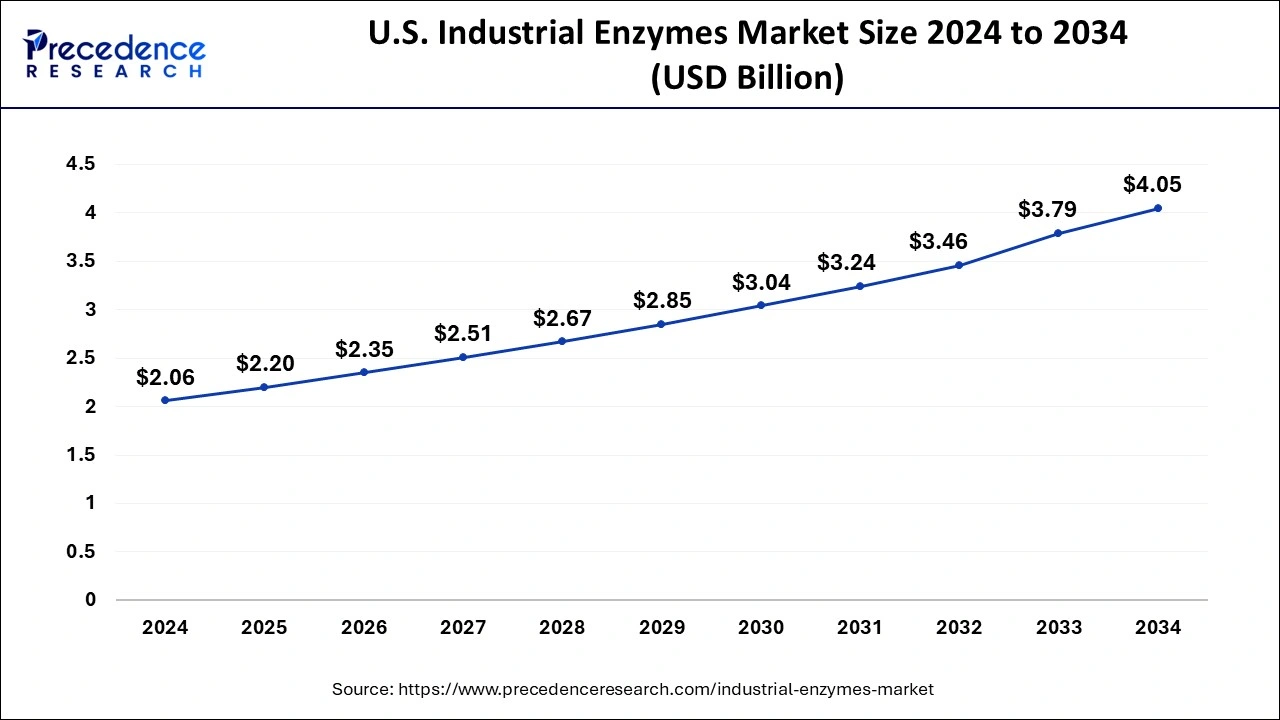
The U.S. industrial enzymes market size reached USD 2.20 billion in 2025 and is projected to grow to USD 4.05 billion by 2034, growing at a CAGR of 7.00% between 2025 to 2034.
Bioeconomy and Sustainability Driving North America
North America leads the market accounting for more than 37% revenue share in 2024 and is anticipated to grow remarkable during the forecast period. Because of the strong presence of several end-use industries, such as food and beverage, pharmaceuticals, laundry detergent, and personal care and cosmetics, as well as the high scope for research and development activities in the region's major countries, North America is a prominent regional market for enzymes.
How is the Notable Rise of the U.S. in the North American Industrial Enzymes Market?
The U.S. is a major contributor to the market in North America driven by the increasing adoption of sustainable and eco-friendly manufacturing processes across industries such as food & beverages, textiles, and biofuels. U.S. government agencies promote bio-based products, including enzymes, through funding and initiatives. They also support the decarbonization of manufacturing and emphasize energy efficiency. The U.S. maintains a strong presence in the biotechnology sector with solid R&D and manufacturing.
As one of the primary producers of medicinal, pharmaceutical, and cosmetics products, Europe emerged as the second-largest consumer. The presence of major pharmaceutical and cosmetic businesses such as Novartis AG, Sanofi, Hoffmann-La Roche Ltd., GlaxoSmithKline plc., AstraZeneca, Bayer AG, Novo Nordisk A/S, Merck KgaA, Unilever, New Avon Company, and Henkel AG & Co. in the region is projected to drive enzyme demand.
The region's rapidly growing population and textile industry are likely to fuel the demand for enzymes in textile processing. In addition, Europe is a major producer of automobiles, train coaches, aeronautical equipment, and aircraft. As a result, the region's industrial sector is predicted to increase significantly in the future, boosting product demand for wastewater treatment over the projection period
France Industrial Enzymes Market Analysis
In France, the industrial enzymes market is expanding, driven by a strong food & beverage industry that demands enzyme-based solutions for improved texture, yield, and sustainability. Many French biotechnology startups focus on enzyme technology, supported by government funding to grow the biotech ecosystem. The national strategy for industrial biotechnology offers a framework to develop bio-based products and expand the sector.
How is the Opportunistic Rise of Asia Pacific in the Market?
Asia Pacific is expected to grow significantly in the industrial enzymes market in the upcoming period due to the expanding food and beverage industry, growth in biofuel production, and supportive government policies. Governments provide grants and implement policies to promote eco-friendly agricultural practices and sustainable manufacturing. India is leading the market due to favorable government policies and growing consumer demand for natural and clean-label products are encouraging the integration of enzymes into industrial applications.
The Indian government launched the BioE3 policy to promote the use of industrial enzymes by enhancing local R&D and manufacturing in the region. The Government of India is committed to establishing the Biofoundries and Biomanufacturing Hubs across India under the BioE3 framework.
What Potentiates the Growth of the South America Industrial Enzymes Market?
The market in South America is expected to grow in the coming years due to a rapid shift toward sustainable practices and the growing demand for processed foods and animal feed. Many South American countries, such as Brazil, Colombia, Peru, and Chile, have introduced new chemical management regulations that support sustainable production processes driven by enzymes. The the region's expanding food & beverage, textile, and biofuel industries, which increasingly rely on enzyme technologies for efficiency, sustainability, and cost reduction, further supports market growth.
How is Brazil Stepping Forward in the Industrial Enzymes Market?
Brazil is a key player in the market in South America. The country has launched a new industrial policy, including development goals and measures through 2033. Brazil also benefits from policies and incentives supporting biofuels. The national industrial policy aims to enhance technological progress and long-term sustainability across various industrial sectors.
What Factors Contribute to the MEA Industrial Enzymes Market Growth?
The market in MEA is expected to grow steadily in the coming years, thanks to favorable regulations, government initiatives, and a shift toward sustainable practices. The Industrial Development Bureau (IDB) and the Abu Dhabi Department of Economic Development (ADDED) are dedicated to developing and regulating the industrial sector. Saudi Arabia has issued over 1,300 new industrial licenses in 2024. There is a strong focus on localizing advanced industrial solutions. The Advanced Manufacturing and Production Center aims to boost industrial investment opportunities and adopt new manufacturing technologies, supporting market growth.
Industrial Enzymes Market Value Chain Analysis
- R&D
This stage includes enzyme discovery and design, strain development, bioprocess development and optimization, scale-up and manufacturing, and testing and commercialization of applications.
Key Players: Novonesis, BASF SE, International Flavors & Fragrances (IFF)/DuPont, dsm-firmenich, Associated British Foods plc, Advanced Enzyme Technologies Limited. - Raw Material Sourcing
This stage involves sourcing microbial strains, fermentation substrates, nutrients, and other feedstocks required for enzyme production.
Key Players: Kerry Group plc, Novozymes, BASF SE, Advanced Enzyme Technologies Limited. - Production & Manufacturing
This stage covers fermentation, enzyme purification, formulation, quality control, and large-scale production of industrial enzymes.
Key Players: Novozymes, DuPont (Danisco), Amano Enzyme, BASF SE, DSM-Firmenich. - Distribution & Logistics
This stage ensures the storage, transportation, and timely delivery of enzymes to industrial users across food, pharmaceuticals, textiles, and biofuels sectors.
Key Players: BASF SE, DSM, Chr. Hansen, Novozymes.
Industrial Enzymes Market Companies
- BASF SE: Develops and manufactures industrial enzymes for food, feed, detergents, and biofuel applications with a focus on sustainability and innovation.
- Novozymes: A global leader in enzyme production, providing solutions for agriculture, food & beverages, bioenergy, and household care industries.
- DuPont Danisco: Offers specialty enzymes and probiotics for food, beverage, and industrial applications, emphasizing high-performance and customized solutions.
- DSM; Novus International: Supplies enzymes for animal nutrition, feed additives, and biotechnological applications, enhancing efficiency and sustainability in the agricultural sector.
- Associated British Foods plc: Produces enzymes primarily for food processing and baking applications, improving product quality and manufacturing efficiency.
- Chr. Hansen Holding A/S: Focuses on enzymes and cultures for food, dairy, and pharmaceutical industries, emphasizing natural and clean-label solutions.
- Advanced Enzyme Technologies: Specializes in innovative enzyme formulations for food, feed, and industrial sectors in emerging and global markets.
- Lesaffre; Adisseo: Provides enzymes and biotechnological solutions for animal nutrition and feed efficiency, promoting sustainable livestock production.
- Enzyme Development Corporation: Develops specialty enzymes for niche industrial applications, including diagnostics, pharmaceuticals, and specialty chemicals.
Segments Covered in the Report
By Product
- Carbohydrases
- Amylases
- Cellulase
- Others
- Proteases
- Lipases
- Polymerases & Nucleases
- Others
By Source
- Plants
- Animals
- Microorganisms
By Application
- Food & Beverages
- Detergents
- Animal Feed
- Biofuels
- Textiles
- Pulp & Paper
- Nutraceutical
- Personal Care & Cosmetics
- Wastewater
- Others
By Region
- North America
- Europe
- Asia-Pacific
- Latin America
- Middle East & Africa
For inquiries regarding discounts, bulk purchases, or customization requests, please contact us at sales@precedenceresearch.com
Frequently Asked Questions





Ask For Sample
No cookie-cutter, only authentic analysis – take the 1st step to become a Precedence Research client