




List of Contents


What is the Glucose Biosensors Market Size?
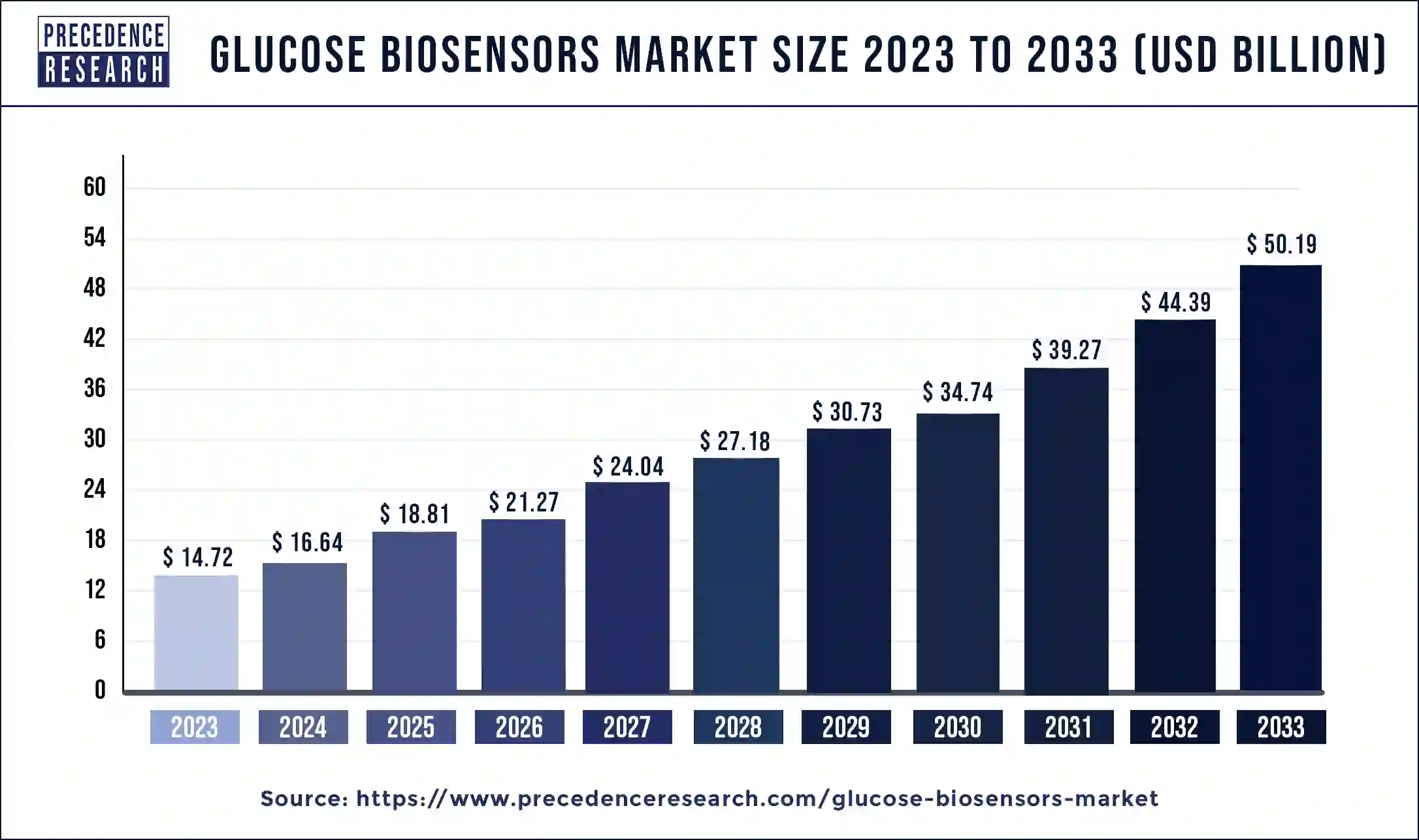
The global glucose biosensors market size is estimated at USD 10.71 billion in 2025 and is expected to hit around USD 23.08 billion by 2034, growing at a CAGR of 8.91% from 2025 to 2034. The rising number of diabetes cases due to the rise in the geriatric population and the changing lifestyle preferences are driving the growth of the market.
Key Takeaways
- North America dominated the market with the largest share of 34% in 2024.
- Asia Pacific is expected to witness the fastest rate of expansion during the forecast period.
- By type, the self-monitoring blood glucose segment dominated the market in 2024.
- By technology, the electrochemical biosensors segment dominated the market in 2024.
- By technology, the optical biosensors segment is expected to grow at a substantial rate in the market during the forecast period.
- By end-use, the home care segment dominated the market with the largest share in 2024.
- By end-use, the hospitals segment is expected to grow as the second largest segment of the market during the forecast period.
Glucose Biosensors Market Overview
The glucose biosensors market refers to the industry involved in the development, manufacturing, and distribution of devices used for measuring glucose levels in biological samples, particularly blood. These devices, known as glucose biosensors, play a crucial role in the management of diabetes mellitus by enabling individuals to monitor their blood glucose levels regularly. Glucose biosensors typically consist of two main components: a biological recognition element (such as an enzyme) that reacts specifically with glucose and a transducer that converts the biochemical signal into a measurable electrical signal. The transducer may utilize various technologies, including electrochemical, optical, or thermal methods, to detect and quantify glucose levels accurately.
Growth Factors
- The rising prevalence of diabetes patients due to the rising geriatric population is driving the growth of the glucose biosensors market.
- The increasing cases of diabetes patients due to unhealthy lifestyles, improper sleeping habits, excess consumption of junk food, smoking, and alcohol consumption by the population is driving the growth of the market.
- The rising investments in technological advancements in the healthcare sector are driving the growth of the glucose biosensors market.
- The favorable government policies for diabetes controlling measures and the growing diabetes awareness campaign in the rural areas are driving the growth of the glucose biosensors market.
Glucose Biosensors Market Scope
| Report Coverage | Details |
| Global Market Size in 2025 | USD 10.71 Billion |
| Global Market Size in 2026 | USD 11.66 Billion |
| Global Market Size by 2034 | USD 23.08 Billion |
| Growth Rate from 2025 to 2034 | CAGR of 8.91% |
| Base Year | 2024 |
| Forecast Period | 2025 to 2034 |
| Segments Covered | Type, Technology, End-Use and Region |
| Regions Covered | North America, Europe, Asia-Pacific, Latin America, and Middle East & Africa |
Glucose Biosensors Market Dynamics
Driver: Rising prevalence of diabetes
The increasing cases of diabetes patients around the world are driving the growth of the glucose biosensors market. As the incidence of diabetes continues to rise globally, there is a growing demand for glucose monitoring devices among diabetic patients. Glucose biosensors offer a convenient and non-invasive method for individuals to monitor their blood glucose levels regularly, enabling them to manage their condition effectively and reduce the risk of complications. Diabetes management requires continuous monitoring of blood glucose levels to ensure optimal glycemic control and prevent hyperglycemia or hypoglycemia. Glucose biosensors provide real-time measurements of blood glucose levels, allowing diabetic patients to make timely adjustments to their diet, medication, and lifestyle to maintain stable blood sugar levels.
Advances in biosensor technology have led to the development of innovative glucose monitoring devices with improved accuracy, sensitivity, and reliability. These next-generation biosensors offer features such as wireless connectivity, smartphone integration, and continuous glucose monitoring (CGM), enhancing the user experience and expanding the adoption of glucose monitoring devices among diabetic patients.
Restraint: Lack of product awareness
The lack of product awareness is observed to act as a restraint for the glucose biosensors market. Many potential users, including healthcare professionals and patients with diabetes, may not be fully aware of the availability and benefits of glucose biosensors. This lack of awareness limits market penetration and adoption rates, hindering the growth potential of glucose biosensor manufacturers. Inadequate product awareness may result in delayed diagnosis and treatment of diabetes, as patients and healthcare providers may not prioritize regular glucose monitoring. This can lead to poorer health outcomes, increased healthcare costs, and higher rates of diabetes-related complications.
Opportunity: Rising demand for non-invasive glucose biosensors
Non-invasive glucose biosensors eliminate the need for painful finger pricks, offering a more comfortable and convenient monitoring solution for individuals with diabetes. This can lead to improved patient compliance with glucose monitoring regimens and better long-term management of the condition. By eliminating the need for skin puncture, non-invasive glucose biosensors help reduce the risk of infection and skin irritation associated with traditional fingerstick methods. This can improve patient safety and reduce healthcare costs associated with treating complications.
The growing popularity of non-invasive glucose monitoring technologies is driving market expansion and innovation within the glucose biosensors market. Companies investing in research and development of non-invasive sensor technologies are poised to capture a larger share of the market and gain a competitive edge. Thereby, the factor is observed to offer lucrative opportunity for the glucose biosensors market.
Segments Insights
Type Insights
The self-monitoring blood glucose segment dominated the glucose biosensors market in 2024. The dominance of the segment is attributed to the rising awareness about diabetes monitoring and risks associated with the diseases, which are driving the demand for self-monitoring blood glucose devices. The self-monitoring offers personalization and convenience in usage. The devices record the level of glucose, identifying patterns, and fluctuation of glucose levels throughout the day in response to certain types of foods and activities.
Blood glucose is a portable hand-held machine called a glucose meter. Both the type of patients with type 1 diabetes and type 2 diabetes can measure their insulin levels as recommended by the physician. Most glucose meters require a drop of blood to check the insulin level from the finger of the patient through the pin-prick. All the data like time and blood glucose readings is stored in the device memory. The higher consumption of the glucose meter due to its easy-to-use and reliability properties is driving the demand for the self-monitoring blood glucose segment.
Technology Insights
The electrochemical biosensors segment dominated the glucose biosensors market in 2024.The growth of the segment is attributed to the reliability and technological advancements in the biosensors market. Electrochemical glucose biosensors provide real-time information about intestinal glucose levels. The electrochemical glucose biosensors are based on amperometric methods, which represent the most relevant group of glucose and comprise the enzymatic and non-enzymatic sensors. Electrochemical biosensors offer the transition of simple, one-step blood glucose testing and also provide remote blood sugar testing. Advancements like electrochemical glucose biosensors were rapidly adopted by people due to their accuracy and reliability.
The optical biosensors segment is expected to grow at a significant rate in the glucose biosensors market during the forecast period. The optical biosensors offer the benefits such as electrical-interference-free operations, remote sensing, and a faster reaction time all these factors are driving the growth of the segment. The optical biosensors use fiber optics to analyze illumination, absorption, light scattering, or refraction principles, which include absorptiometry, fluorescence, and surface plasmon resonance (SPR).
End-use Insights
The home care centers segment had the largest market share of 37% in 2024. The growth of the segment is attributed to the rising preference for testing blood glucose in homes in the developed and developing economies that are driving the growth of the segment. The availability of skilled nurses for home care is further propelling the segment's growth. The growing technological advancements in glucose biosensors such as remote self-monitoring blood glucose devices, and electrochemical glucose biosensors which give real-time results to patients anywhere outside the clinical settings are boosting the home care centers segment. Additionally, the rising number of the geriatric population having diabetes and women patients is increasing demand for the glucose biosensors in home care settings.
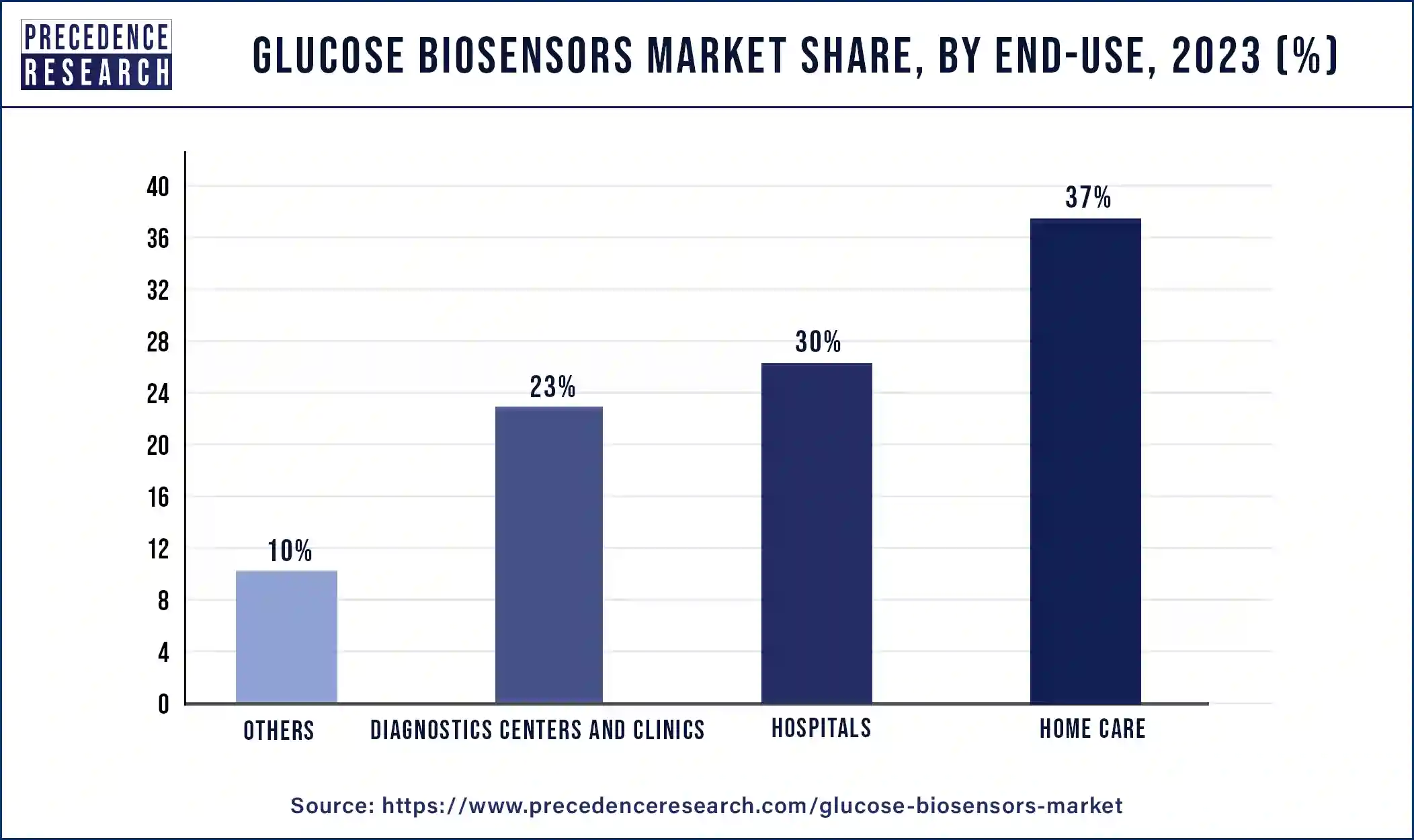
The hospital segment is expected to grow as the second largest segment in the glucose biosensors market during the forecast period. The growth of the segment is increasing due to the presence of skilled professionals for attending to and treating the patients. The growth of the segment is further driven by the rising investments in the healthcare infrastructure and the technologies associated with the healthcare facilities. The rising availability of quick and simple results and efficient workflow is driving the growth of the segment.
How Big is the U.S. Glucose Biosensors Market?
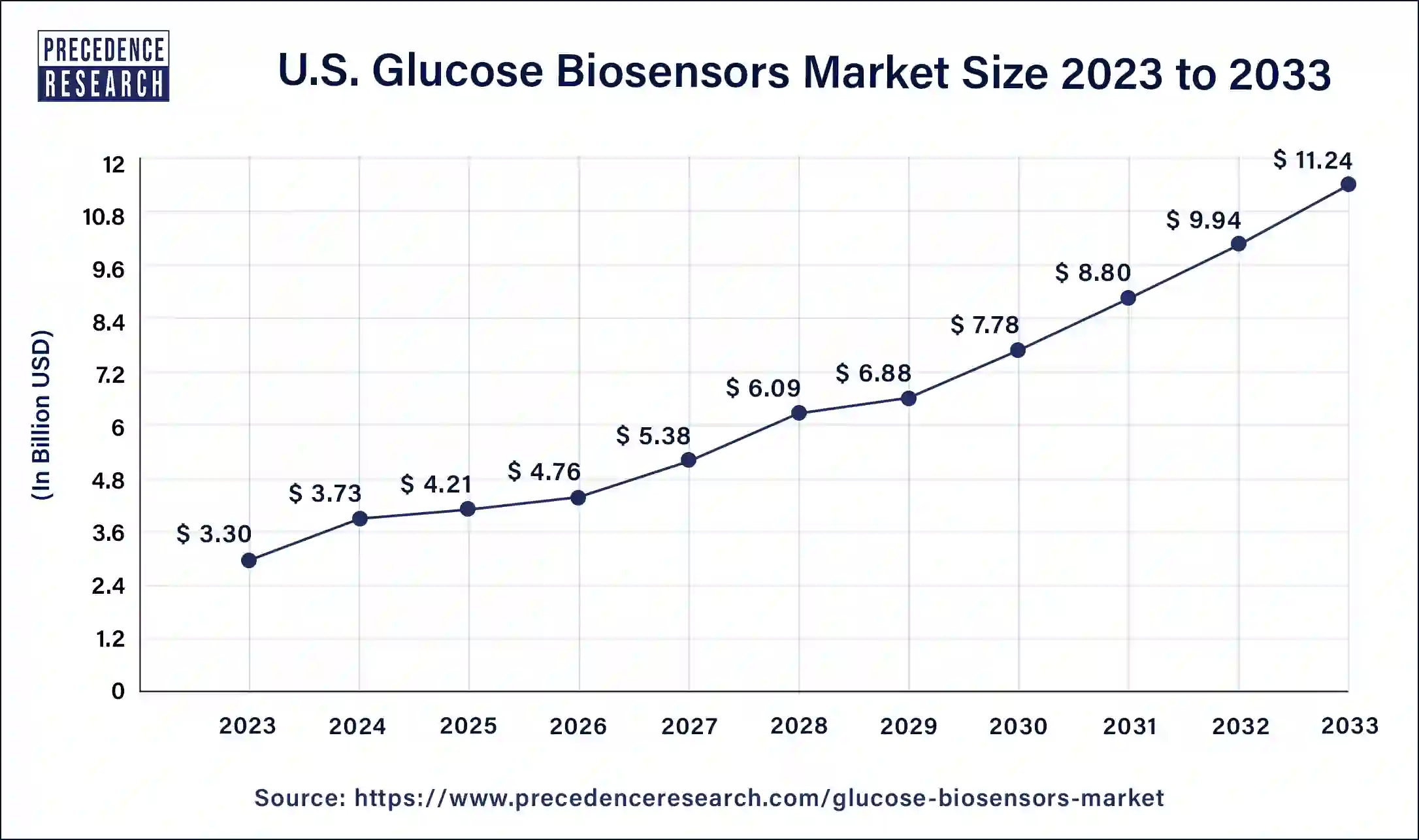
The U.S. glucose biosensors market size is expected to be worth USD 6.17 billion by 2034, increasing from USD 2.80 billion in 2025, accelerating a strong CAGR of 9.15% from 2025 to 2034.
North America dominated the glucose biosensors market with the largest share of 34% in 2024. The growth of the market in the region is increasing due to the increasing number of diabetic patients in the region due to the changing lifestyle and rising disposable income is resulting in the increased number of diabetic patients and the higher requirement for the regular diabetic monitoring for diabetes management, this becomes the major factor to promote the growth of the market in North America.
Additionally, the market in the region is observed to expand at a notable rate with considerable technological advancements and development of advanced healthcare devices. The rapid adoption of such products and devices from both healthcare settings and patients promotes the expansion of the glucose biosensors market. North America is a hub for technological innovation and research in the healthcare sector. The region is home to leading medical device manufacturers and research institutions that continually develop and commercialize advanced glucose biosensor technologies. These technological advancements contribute to the dominance of North America in the global market.
- 11.6% of the United States population is diabetic, or 38.4 million people have diabetes. 29.7 million People, including 29.4 million adults are diagnosed with diabetes and 8.7 million people are not diagnosed with diabetes.
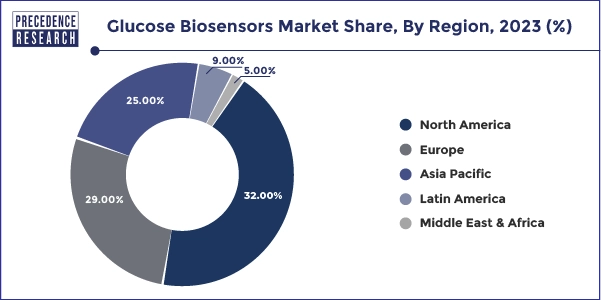
Asia Pacific is observed to become the second-largest marketplace with the majority of key players revolving in the glucose biosensors market. Many countries in Asia Pacific are investing in the expansion and modernization of healthcare infrastructure, including hospitals, clinics, and diagnostic laboratories. This expansion facilitates better access to healthcare services, including diabetes management and glucose monitoring, driving the demand for glucose biosensors. The glucose biosensors market in Asia Pacific benefits from ongoing technological advancements and innovations in sensor technology, miniaturization, and connectivity. These advancements have led to the development of more accurate, user-friendly, and affordable glucose monitoring devices, making them accessible to a wider population.
Glucose Biosensors Market Companies
- Abbott Laboratories
- Dexcom
- Ascenia Diabetes Care
- Nova Diabetes Care
- F. Hoffmann-La Roche Ltd.
- Sanofi
- GlySens Incorporated
- Trividia Health
- Bayer
- Lifescan
Recent Developments
- In February 2024, Afon, a UK-based company working on the development of non-invasive glucose sensors using RF (radio frequency) technology planned to launch the devices in early 2024.
- In February 2024, Health Minister Mark Holland announced the long-time awaited details of the federal government's pharmacare plan with the assurance of covering diabetes contraception and treatment. The government stated that the plan also supports Canadian diabetics for easy access to glucose test strips and syringes for the management of diabetes but struggling to afford them.
- In February 2024, Tandem Diabetes Care, Inc. a leading player in insulin delivery and diabetic technology announced the launch of the new Tandem Mobi, the smallest and durable automated insulin delivery system for diabetic patients.
Segments Covered in the Report
By Type
- Self-Monitoring Blood Glucose
- Continuous Glucose Monitoring
By Technology
- Electrochemical Biosensors
- Optical Biosensors
By End-Use
- Home Care
- Hospitals
- Diagnostics Centers and Clinics
- Other
By Geography
- North America
- Europe
- Asia-Pacific
- Latin America
- Middle East and Africa
For inquiries regarding discounts, bulk purchases, or customization requests, please contact us at sales@precedenceresearch.com
Frequently Asked Questions





Ask For Sample
No cookie-cutter, only authentic analysis – take the 1st step to become a Precedence Research client