




List of Contents
What is the Clinical Nutrition Market Size?
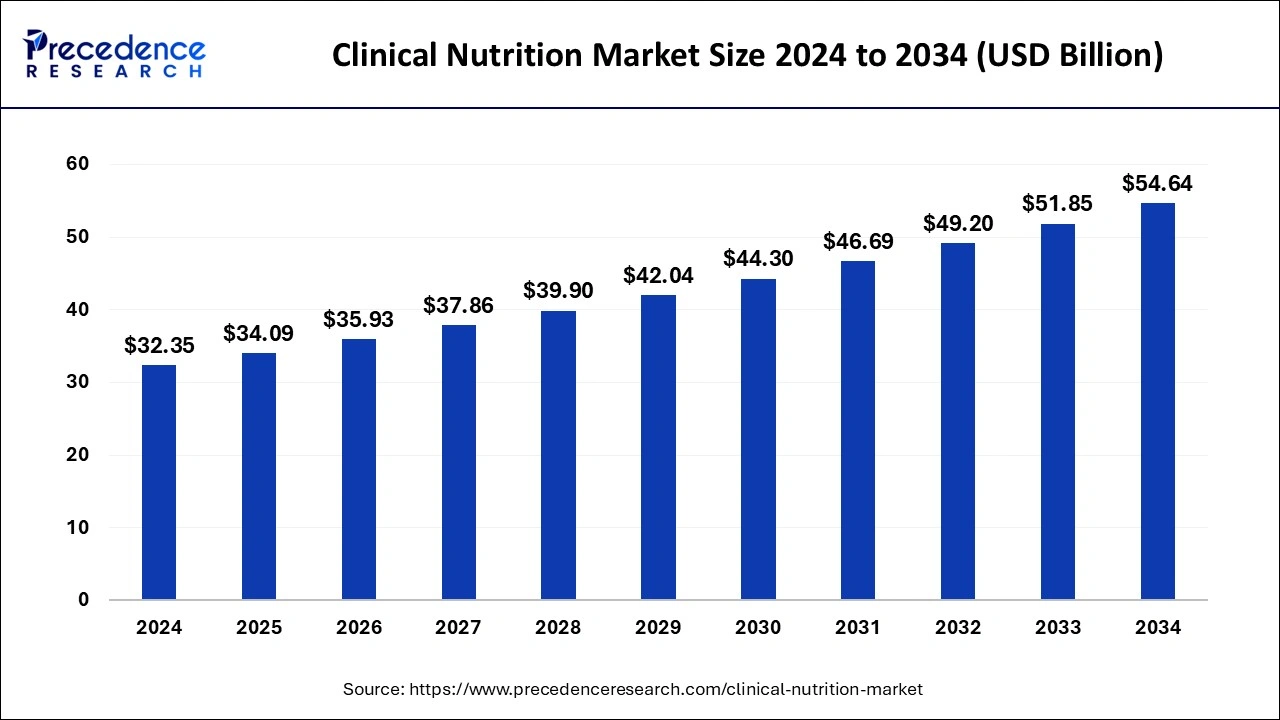
The global clinical nutrition market size is accounted at USD 34.09 billion in 2025 and predicted to increase from USD 35.93 billion in 2026 to approximately USD 54.64 billion by 2034, growing at a CAGR of 5.38% from 2025 to 2034. The increasing prevalence of chronic diseases, the rising geriatric population, and growing demand for personalized nutrition drive the growth of the market.
Clinical Nutrition Market Key Takeaways
- In terms of revenue, the clinical nutrition market is valued at $34.09 billion in 2025.
- It is projected to reach $54.64 billion by 2034.
- The clinical nutrition market is expected to grow at a CAGR of 5.38% from 2025 to 2034.
- North America dominated the global market with the largest market share of 32.62% in 2024.
- Asia Pacific is projected to expand at the notable CAGR during the forecast period.
- By route of administration, the oral segment contributed the highest market share in 2024.
- By route of administration, the parental segments is estimated to be the fastest-growing segment during the forecast period.
- By application, the metabolic disorders segment captured the biggest market share in 2024.
- By application, the cancer segment is expected to grow at a significant CAGR from 2025 to 2034.
- By end user, the pediatric segment has held the largest market share in 2024.
- By end user, the geriatric segments is predicted to be the fastest-growing segment during the forecast period.
Impact of Artificial Intelligence on the Clinical Nutrition Market
In the field of healthcare, AI evolved as a game-changer solution that helps analyze large data sets to find upcoming tendencies, adjust formulas, and foresee buyers' preferences. Supply chain management is one of the areas where healthcare companies turn to AI to increase effectiveness and decrease expenses. Artificial intelligence algorithms are widely used in nutritional deficiency detection, where they analyze the body condition and suggest the required diets. The capabilities of AI to analyze and store huge datasets are being used to develop new products according to consumer preferences. Additionally, AI accelerates the development of innovative nutritional products.
Market Overview
The nutrition of patients in the healthcare industry is referred to as clinical nutrition. The goal of clinical nutrition is to help patients maintain a good energy balance while also providing essential nutrients such as minerals, vitamins, and protein. Clinical nutrition has several advantages, including its effectiveness in treating diabetes and its ability to help people live better at any age. Clinical nutrition products are given to people who are unable to absorb or chew food products.
Clinical nutrition sales are driven by expanding product lines, a constant newborn birth rate, and an aging population. The rise in the incidence of chronic diseases, the number of patients using sophisticated clinical nutritional products, and the growing concern about malnutrition are driving the clinical nutrition market growth. Additionally, changing consumer preferences in food consumption, as well as rising demand for nutritional products, are likely to boost the growth of the market during the forecast period.
Clinical Nutrition Market Growth Factors
- The rising prevalence of gastrointestinal disorders is anticipated to drive the demand for specialized clinical nutrition products.
- Growing consumer awareness about the importance of nutrition in maintaining health is driving the growth of the global clinical nutrition market.
- Increasing integration of telehealth services to promote easy access to personalized nutritional consultations.
- High demand for clinical nutrition in outpatient care settings boosts market growth.
- Advancements in enteral feeding technologies support the efficient delivery of nutrition to patients.
- Increasing partnerships between healthcare providers and nutrition manufacturing companies enhance product accessibility.
- Rising emphasis on maternal and prenatal nutrition contributes to market expansion.
- Expanding government and NGO initiatives combatting malnutrition drive the adoption of clinical nutrition.
MarketScope
| Report Coverage | Details |
| Market Size in 2025 | USD 34.09 Billion |
| Market Size in 2026 | USD 35.93 Billion |
| Market Size by 2034 | USD 54.64 Billion |
| Market Growth Rate from 2025 to 2034 | CAGR of 5.38% |
| Largest Market | North America |
| Base Year | 2025 |
| Forecast Period | 2025 to 2034 |
| Segments Covered | Route of Administration, End User, Application, and Region |
| Regions Covered | North America, Europe, Asia-Pacific, Latin America and Middle East & Africa |
Market Dynamics
Drivers
Rising Awareness of Pediatric Nutrition
Heightened awareness about the importance of pediatric nutrition is likely to fuel the market's growth. Parents and healthcare providers increasingly prioritize balanced nutrition during critical growth phases to prevent stunting, underweight, and developmental delays. According to the NHI, the global goal to reduce stunting in children under five by 40% and decrease childhood wasting to below 5% by 2025 has driven the demand for tailored dietary products in impacted regions. This demand is majorly driven by subsidies and awareness campaigns set by governments of emerging economies with high birth rates for pediatric nutrition programs. Moreover, changing consumer patterns in terms of diet and the rising consumption of nutritional products boost the market.
Restraint
High Product Cost and Regulatory Challenges
High costs associated with clinical nutrition products are anticipated to restrain the market growth, particularly in low- and middle-income countries. Specific compounds, intricate technologies used, and rigorous quality control standards elevate production costs and, therefore, the end products' prices. These products are expensive, and not everyone can afford them. Furthermore, obstacles such as regulatory frameworks, a lack of reimbursement policies, and limited government sponsorships for clinical nutrition products hinder market growth.
Opportunity
Rise of E-commerce
E-commerce platforms allow nutrition manufacturing companies to expand consumer reach. Consumers increasingly prefer to purchase healthcare products online because of affordability, better options, and product variety with home delivery services. Thus, it is expected that the manufacturers' efforts to use digital marketing and data analytics for online sales management translate into a competitive advantage. E-commerce enhances the accessibility of products even in underserved regions.
Route of Administration Insights
Based on the route of administration, the oral dominates the clinical nutrition market during the forecast period. The increased focus on maintaining a robust immune system has resulted in an increase in demand for oral clinical supplements. The use of oral nutrition in combating malnutrition will contribute to the oral clinical nutrition segment growth.
On the other hand, the parental is expected to grow at rapid pace during the forecast period. The rising frequency of malnutrition among children, particularly in emerging and underdeveloped nations around the world, is one of the primary factors expected to boost demand for parental nutrition.
Application Insights
Based on the application, the metabolic disorders dominate the clinical nutrition market during the forecast period. The demand for clinical nutrition is increasing as the prevalence of metabolic diseases rises. Obesity, diabetes, malnutrition, and cardiovascular diseases contribute to increased hospitalization.
On the other hand, the cancer is expected to grow at rapid pace during the forecast period. Cancer is becoming more common, and people are becoming more aware of the importance of clinical nutrition in cancer treatment. Cancer is one of the top causes of death around the world
End User Insights
Based on the end user, the pediatric dominates the clinical nutrition market during the forecast period. This is attributed to the global incidence of malnutrition and related issues. Malnutrition is a major cause of high mortality and morbidity, particularly in developing and underdeveloped nations.
On the other hand, the geriatric is expected to grow at rapid pace during the forecast period. The geriatric population faces number of disorders. The geriatric population is above 65 years, who requires good amount of nutrition. This factor is driving the growth of the segment.
Regional Insights
U.S. Clinical Nutrition Market Size and Growth 2025 to 2034
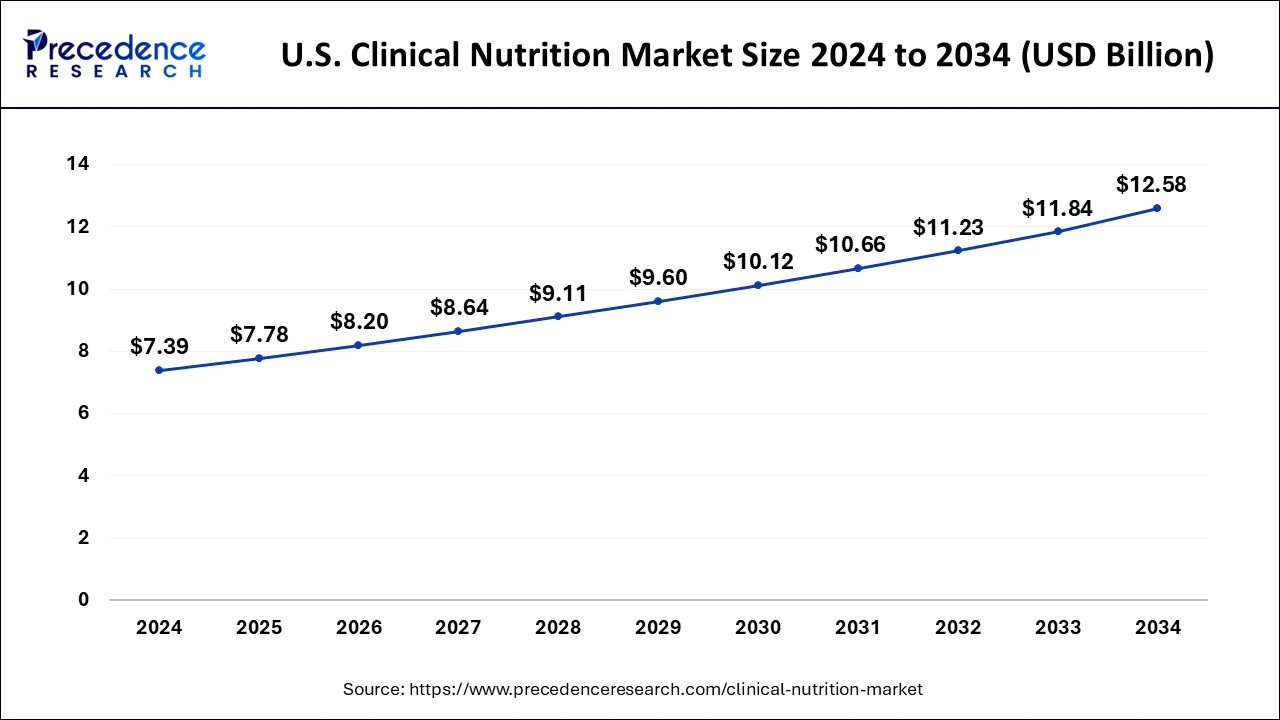
The U.S. clinical nutrition market size is exhibited at USD 7.78 billion in 2025 and is projected to be worth around USD 12.58 billion by 2034, growing at a CAGR of 5.46% from 2025 to 2034.
The North America segment dominated the global clinical nutrition market in 2024, in terms of revenue and is estimated to sustain its dominance during the forecast period. Due to significant research and development spending, the presence of large businesses and their product availability, and the region's well established healthcare infrastructure.
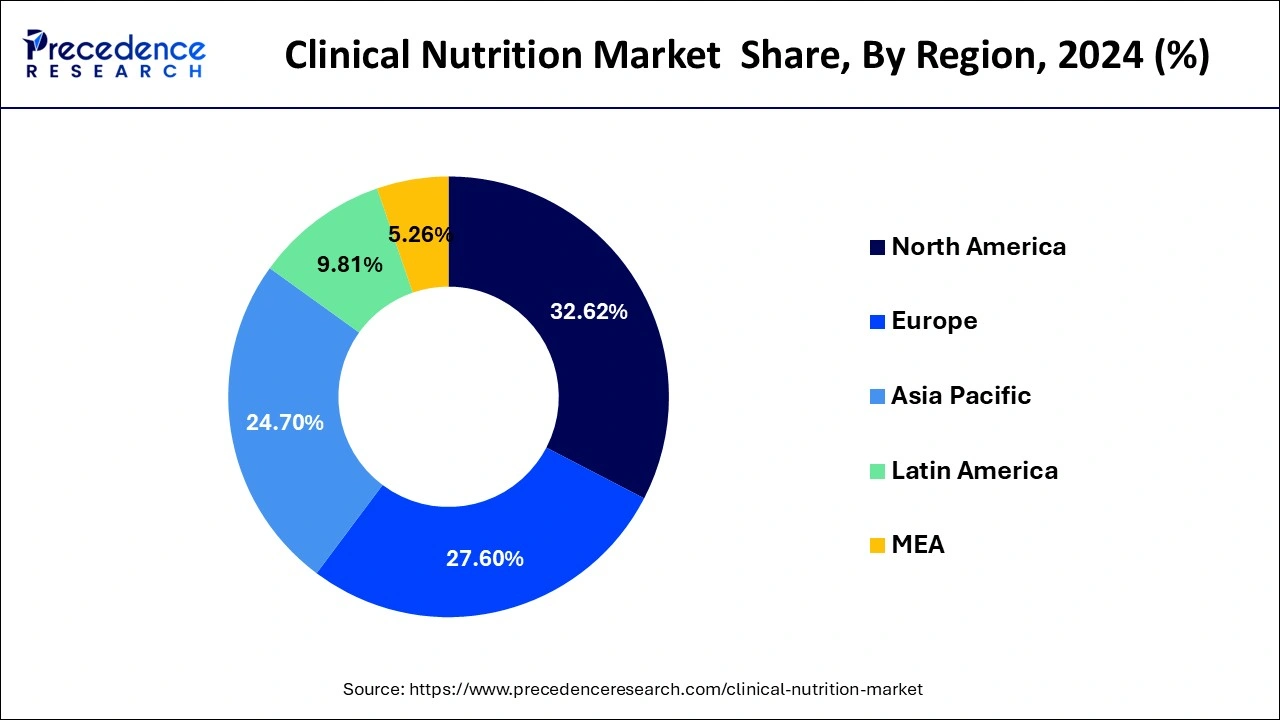
On the other hand, the Asia-Pacific is estimated to be the most opportunistic segment during the forecast period. The governments are spending in the construction of healthcare infrastructure; the Asia-Pacific is predicted to have the greatest CAGR during the forecast period.
The rising incidence of non-communicable and chronic diseases, including type 2 diabetes, cardiovascular issues, obesity, and others requiring extended hospitalization, has heightened attention to clinical nutrition in the United States. According to the Sudden Cardiac Arrest Foundation, more than 356,000 individuals experience out-of-hospital cardiac arrests annually in the United States, with 90% resulting in death. The substantial investment in healthcare by both public and private sectors in the United States drives the expansion of the clinical nutrition market. Investing in preventive healthcare initiatives, like clinical nutrition, is seen as a strategic approach to enhance patient results and reduce healthcare expenses.
The main factors propelling clinical nutrition market in India include the rising occurrence of chronic diseases and metabolic disorders, an aging demographic, growing awareness about the significance of nutrition for health, innovations in products and technological progress, government efforts, increasing healthcare spending, and a higher rate of malnutrition, particularly in pediatric patients, all of which have fueled market expansion. The sector is mainly led by companies like Sun Pharmaceuticals, Zydus Wellness, Glenmark Pharmaceuticals, Zeon Lifesciences, Nestle, and Mead Johnson & Company, LLC, among others.
- In November 2024, Pristine Pearl Pharma and Dutch Medical Food B.V. established a strategic partnership aimed at delivering personalized medical nutrition products to India, addressing the problem of disease-related malnutrition.
Europe shows a significant growth rate in the clinical nutrition market during the forecast period. This growth is boosted by a combination of factors, which includes an aging population, increased incidence of chronic diseases, and a greater impact on preventive healthcare. Government initiatives targeted at enhancing healthcare and supporting research and development in clinical nutrition are thus contributing to market expansion.
German universities and research institutions are actively engaged in nutritional science research, encompassing studies on the influence of food on health and disease, along with the development of innovative dietary therapies.
How is North America leading in the Clinical Nutrition Market?
The North America segment led the global clinical nutrition market in 2024. In North America, market share is mainly attributed to high consumer awareness, advanced healthcare systems, and the region's strong commitment to preventive health. Besides, growing chronic disease cases and demand for personalized and clean-label nutrition products are the main drivers for adoption. Also, the region benefits from innovation in product formulation and the presence of established clinical nutrition manufacturers who have strong market shares.
United States Clinical Nutrition Market Trends:
In the U.S., the market for personalized and clean-label clinical nutrition products is the largest and most innovative. The main factor is the increased prevalence of diseases caused by poor lifestyle and preventive nutrition being more widely known. The U.S. is also very advanced in healthcare infrastructure; hospitals are widely adopting the new high-end formulations, and consumers are very interested in wellness concept products.
What are the driving factors of the Clinical Nutrition Market in Europe?
Europe, on the other hand, is a mature market that continues to grow at a stable rate, mainly due to the increasing number of elderly people and the rising occurrence of chronic diseases. The region's sustainability and functional nutrition practices, along with the enabling regulatory frameworks, are the factors that provide the market with expansion opportunities. Integration of nutrition therapy into healthcare practices through training and workshops is one of the ways that clinical nutrition adoption is made possible in hospitals and long-term care facilities.
How is Asia-Pacific performing in the Clinical Nutrition Market?
Asia-Pacific is growing rapidly, mainly thanks to better healthcare systems, higher disposable incomes, and greater awareness of the necessity of balanced nutrition. There is a strong competition among the e-commerce channels, and the government initiatives that are supporting the nutritional programs are leading to market penetration. The increasing cases of malnutrition and premature births are also contributing to the demand for specialized clinical nutrition products in the area.
China Clinical Nutrition Market Trends:
China is among the top countries in the Asia-Pacific region to sell clinical nutrition products, particularly because the population is getting older and chronic disease rates are on the rise. The presence of online retailing and the government's nutritional support programs constitutes a double advantage of making the market more accessible. The health-conscious attitude of the consumers, together with their preference for high-quality clinical nutrition products, reinforces the Chinese market's position.
India Clinical Nutrition Market Trends:
The Indian clinical nutrition market is expanding so fast that it is difficult to keep track. The main drivers behind the increasing market size are awareness of nutrition-related health issues and the rise of chronic diseases in the country. Product demand is increasing due to the aforementioned factors and also because of the expansion of healthcare facilities, a young population, and government efforts against malnutrition. Digital health platforms and affordable product availability are among the factors that are expanding the market's reach.
Key Companies & Market Share Insights
For expansion and diversification, these significant market players place a premium on strategic activities such as new product launches, collaborations, partnerships, and commercialization. Moreover, these industry leaders are heavily spending in research to enable them to introduce novel products to the market and maximize income and profit. Nestle Health Science signed agreement to buy IM HealthScience in August 2020. As public awareness of clinical nutrition grows, so does demand for adult and pediatric nutrition formulae. As a result, key market players are working to provide nutritional solutions that meet all of the needs of the target population around the world.
Clinical Nutrition Market Companies
- Abbott Laboratories
- B. Braun Melsungen AG.
- Mead Johnson Nutrition Company
- Perrigo Company Plc.
- H.J. Heinz Company
- Hospira Inc.
- Groupe Danone
- Fresenius Kabi AG
- Baxter International Inc.
- Nestle SA
Recent Developments
- In January 2025, Culina Health, which has developed a virtual platform offering clinical nutrition care, recently received $7.9 million in a Series A funding round led by Healthworx, the investment arm of CareFirst, the largest nonprofit insurer in the Mid-Atlantic region. This brings the company's total capital raised to $20 million, with Culina the first company of its kind to be backed by a payer.
- In February 2025, the JUMPstart initiative begans its fourth phase and having finished the educational program for Wave 4, this year's JUMPstarters have shared their preliminary research concepts with the Scientific Committee in a Speed Research Challenge and are currently enhancing their proposals to vie for the €250,000 JUMPstart research grant.
- In May 2024, Centrum, the world's leading multivitamin brand, launched a health initiative titled ‘Your Nutrition Matters' on the occasion of World Nutrition Day on May 28th, 2024. The campaign highlighted the critical role of multivitamins in addressing micronutrient deficiencies and fostering healthier lifestyles in India. Centrum's initiative aims to raise awareness about Recommended Dietary Allowances (RDAs) and educate individuals on the importance of incorporating multivitamins into their daily routines.
- In May 2022, Everlywell, a prominent digital healthcare company known for its accessible and personalized health solutions, announced the expansion of its health and wellness portfolio. The company introduced a new range of vitamins and supplements formulated with high-quality, evidence-based ingredients, further strengthening its commitment to supporting long-term health and wellness.
Value Chain Analysis
- R&D: New clinical nutrition products that are innovative and the creation of them through testing, the improvement of ingredients, and the formula.
Key Players: Abbott Laboratories, Nestlé Health Science, Danone - Clinical Trials and Regulatory Approvals: Thorough assessments for the product to be safe, effective, and compliant with the regulations.
Key players: FDA, EMA, CDSCO, IQVIA - Formulation and Final Dosage Preparation: The mixing of the active agents with the excipients so that stable and ready-to-use nutrition products can be made.
Key players: Nestlé Health Science, Abbott Laboratories - Packaging and Serialization: The use of secure packaging, proper labeling, and traceability measures to protect and identify the products.
Key players: Amcor, Berry Global, Gerresheimer, Huhtamaki - Distribution to Hospitals, Pharmacies: Fast and safe logistics that guarantee the health facilities receive the clinical nutrition products on time.
Key players: McKesson Corporation, Cardinal Health, Cencora - Patient Support and Services of Clinical Nutrition: Regular education, monitoring, and support to promote the correct usage and improve the treatment results.
Key players: Academy of Nutrition and Dietetics, Abbott Laboratories, Nestlé Health Science
Latest Announcement by Industry Leader
- In September 2024, Nutricia, a part of a global leading food and beverage company Danone, launched its reformulated Nutrison core range tube feeds to address the evolving nutritional needs of patients by incorporating a higher content of plant-based protein. Katrien van Laere, Senior Vice President of Research & Innovation and Chief Medical & Scientific Officer at Danone, highlighted the significance of this advancement, stating that “utilizing our 125 years of expertise in specialized nutrition has never been more important in driving better patient outcomes through tailored nutritional care." The newly reformulated Nutrison products aim to enhance patient quality of life by effectively managing malnutrition.
Segments Covered in the Report
By Route of Administration
- Oral
- Enteral
- Parental
By Application
- Cancer
- Metabolic Disorders
- Gastrointestinal Disorders
- Neurological Disorders
- Others
By End User
- Pediatric
- Adult
- Geriatric
By Region
- North America
- Europe
- Asia-Pacific
- Latin America
- Middle East & Africa (MEA)
For inquiries regarding discounts, bulk purchases, or customization requests, please contact us at sales@precedenceresearch.com
Frequently Asked Questions





Ask For Sample
No cookie-cutter, only authentic analysis – take the 1st step to become a Precedence Research client