




List of Contents


What is the Bioelectric Medicine Market Size?
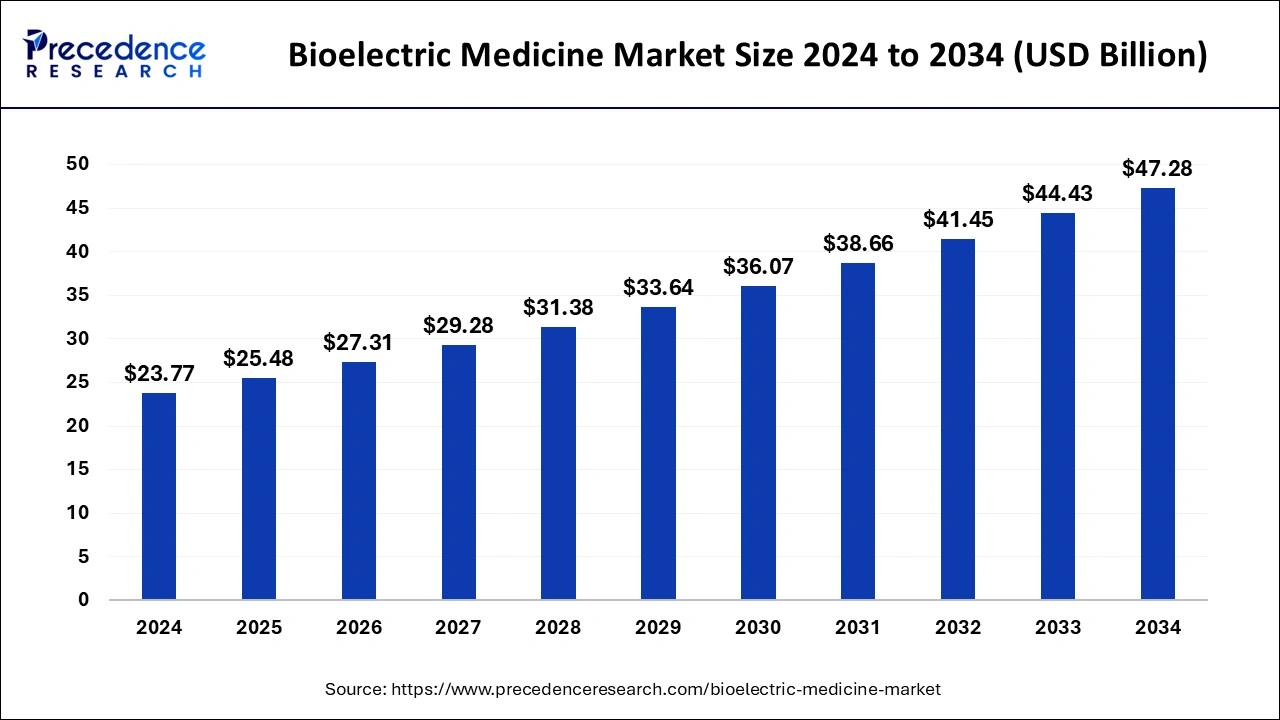
The global bioelectric medicine market size is valued at USD 25.48 billion in 2025 and is predicted to increase from USD 27.31 billion in 2026 to approximately USD 47.28 billion by 2034, expanding at a CAGR of 7.12% from 2025 to 2034.
Bioelectric Medicine Market Key Takeaways
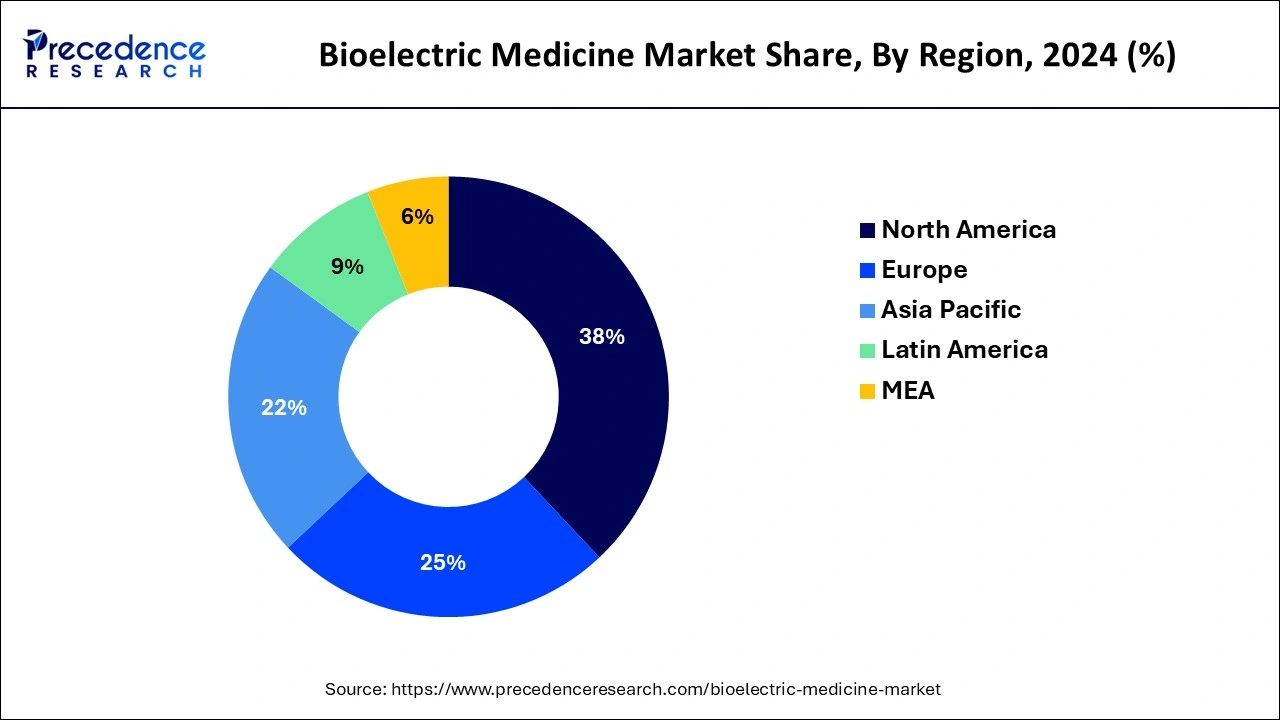
- North America led the global market with the highest market share of 38.14% in 2024.
- By product, the implantable cardioverter defibrillators segment has held the largest market share in 2024.
- By type, the implantable electroceutical devices segment captured the biggest revenue share in 2024.
- By application, the arrhythmia segment registered the maximum market share in 2024.
- By end user, the hospital segment dominated the market share in 2024.
What is meant by Bioelectric Medicine?
The bioelectronic medicine market is driven by increasing demand for innovative therapies that treat chronic diseases through electrical modulation of the nervous system. The rising prevalence of conditions such as arthritis, diabetes, and cardiovascular disorders, along with advancements in neuromodulation technologies, is fueling market growth. Bioelectronic medicine refers to therapeutic approaches that use targeted electrical impulses to modulate neural circuits, influencing organ function and disease pathways. By offering non-pharmacological treatment alternatives, these therapies aim to reduce side effects, improve precision, and enhance patient outcomes, representing a promising frontier in personalized medicine and chronic disease management.
Market Outlook
- Industry Growth Overview: The bioelectronic medicine market is expanding rapidly, driven by the rising prevalence of chronic diseases and demand for non-pharmacological therapies. Advancements in neuromodulation technologies, AI integration, and personalized treatment approaches are accelerating innovation, adoption, and clinical acceptance across multiple therapeutic areas.
- Sustainability Trends: There is a strong focus on creating energy-efficient devices, recyclable parts, and reducing dependence on hazardous materials. Manufacturers are adopting eco-friendly production methods and reusable or longer-lasting implants to lessen environmental impact while ensuring therapy effectiveness.
- Global Expansion:The global expansion of the market is driven by increasing adoption of neuromodulation therapies, strategic partnerships, and investments in emerging regions. Growing awareness of non-pharmacological treatments and supportive regulatory frameworks are accelerating international commercialization and clinical integration.
- Major investors: Major investors in the market include venture capital firms, private equity, and corporate investors such as Johnson & Johnson, GlaxoSmithKline, and Boston Scientific. They fund research, device development, and clinical trials, accelerating innovation and market adoption of bioelectronic therapies.
- Startup Ecosystem:The startup ecosystem in the market is thriving, driven by innovations in neuromodulation, AI-assisted therapy optimization, and wearable or implantable devices. Emerging companies attract investments and partnerships, accelerating the development of personalized, non-pharmacological treatments for chronic and complex diseases.
AI Integration Driving Innovation and Efficiency in the Bioelectric Medicine Market
AI integration significantly influences the bioelectronic medicine market by enabling precise, data-driven therapy design and optimization. Machine learning algorithms analyze patient-specific neural and physiological data to personalize stimulation parameters, improving efficacy and reducing side effects. AI supports real-time monitoring, predictive device maintenance, and adaptive feedback loops, ensuring responsive and safe therapy delivery. Additionally, AI accelerates drug-device combination research, optimizes clinical trials, and identifies novel neuromodulation targets. By streamlining device development, enhancing patient outcomes, and enabling scalable, intelligent bioelectronic therapies, AI is driving innovation and broader adoption in the bioelectronic medicine industry.
Bioelectric Medicine Market Growth Factors
Increasing prevalence of chronic disorders in the developed nations as well as the developing nations is one of the most important factors that is leading to the growth of this market. Growing geriatric population across the developed and developing nations or at a great risk of neurological disorders, increasing number of diseases in the geriatric population is driving the growth of the market. The market is expected to grow as it may be efficient for treating Parkinson's disease, Alzheimer's disease, epilepsy etc. the ability of this technology to treat all of these diseases will be a major boon in the medical industry. The use of this technology in order to treat obsessive compulsive disorder and different cardiac disorders are also expected to provide a boost to the market. There's no stimulating technology extremely helpful in treating many diseases.
The ability to treat chronic disorders to a great extent is one of the most important factors which is expected to provide a large consumer base to the market. Increasing awareness regarding the availability of bioelectric medicines is creating a demand and it is expected to drive the market growth. One of the most dreadful disease which leads to large number of deaths in the US is cardiovascular diseases. Increasing investments by the government in order to encourage the manufacturers to increase the research and development activities in this industry will also drive the market growth. Increase in the approvals provided by the regulatory bodies which is also encouraging and helping in the growth of the market.
Market Scope
| Report Coverage | Details |
| Market Size in 2025 | USD 25.48 Billion |
| Market Size in 2026 | USD 27.31 Billion |
| Market Size by 2034 | USD 47.28 Billion |
| Growth Rate from 2025 to 2034 | CAGR of 7.12% |
| Largest Market | North America |
| Fastest Growing Region | Asia Pacific |
| Base Year | 2024 |
| Forecast Period | 2025 to 2034 |
| Segments Covered | Product, Type, Application, and End User |
| Regions Covered | North America, Europe, Asia-Pacific, Latin America, and Middle East & Africa |
Product Insights
The implantable cardioverter defibrillators segment accounted largest market share in 2024. This product is largely used for our arrhythmia. Increasing geriatric population has led to increase indeed cardiovascular diseases. There is an increase in the chronic diseases geriatric population of developing as well as developed nations. As there is an increase in the amount of cardiac arrests this product is expected to grow during the forecast period.
Due to an increase in the lifestyle induced disorders like depression or even obesity the deep brain stimulator segment is expected to grow in the coming years. Increasing cases of Parkinson's disease is also expected to drive the market for this segment. A large number of patients are suffering with the Parkinson's disease in the European region. Deep brain stimulator segment is expected to grow largely in the European region. The other product segments are expected to have a good growth in terms of revenue. Increased research and development and launching of advanced products by the companies is driving the growth of the market.
Type Insights
On the basis of the type, the implantable electroceutical devices segment accounted largest market share in 2024. These devices are used in the treatment of many diseases. Sensorineural hearing loss, chronic pain, depression and tremor will be treated effectively with the use of these devices. Major market players are focusing on launching advanced products in order to overcome all of these diseases. In order to cater to the growing demand of consumers manufacturers are increasing their investments to provide more and more devices.
The implantable electrical devices the non-invasive electrical devices segment will also grow well during the forecast. As the companies are focusing on offering innovative products due to increasing research and development this segment is expected to grow.
Non-invasive electrical devices well we preferred more by many consumers. There is an increasing popularity of these devices in South Africa, India and China. Eastern is regarding the availability of these devices is driving the market growth.
Application Insights
The arrhythmia segment is expected to have a larger market share in 2024. The segment in terms of application has dominated the market in the recent years. Increasing number of the patience is driving the growth of the market. The use of the devices like pacemaker and defibrillators in the treatment of this disease will increase the patient base for this segment. On the basis of application the epilepsy segment is also expected to see a good growth during the forecast period. Major companies and institutes are focusing on developing innovative products to overcome these diseases. Vagus nerve stimulators are used for the treatment of this disease. Clinical trials were launched for the treatment of brain injury in 2017 with the use of vagus nerve stimulation.
Sensorineural hearing loss segment is also expected to have a good amount of revenue shared during the forecast period. This segment is expected to have a good growth in the coming years. I said that increase in the number of these patients with seek treatment or leading to the growth of the market. Sensorineural hearing loss is extremely common in the geriatric population. Patients above the age of 75 almost always have difficulty in hearing and the use of bioelectric medicines will help in treating the disorder.
End User Insights
By end user, the hospital segment had the largest market share in terms of revenue in 2024. The segment is expected to dominate the market during the forecast period. Increasing geriatric population under increase in the chronic diseases is driving the growth of the market. Frequent visits to hospital for the treatment of chronic pain, depression, Alzheimer's disease, epilepsy and many other such diseases will drive the growth of the hospital segment. About 50 million people are suffering with epilepsy and the number is expected to increase in the future which will lead to the increase in the demand for this technology. Increased number of car accidents which caused traumatic injuries is one of the major factors driving the growth of the hospital segment.
Large number of accidents takes place across many regions every day. Improved healthcare infrastructure and better reimbursement policies are helping in the growth of the market. Improved disposable income and growing awareness regarding the availability of technologically advanced medical devices is driving the growth of the electroceuticals market. Owing to all of these reasons the hospital segment is expected to have the largest market share in terms of revenue during the forecast period. Research institutes and home care segment will also show a significant growth. Increase in the amount of funding received by the manufacturers in order to produce advanced machinery and increase the research in the field is expected to drive the market. Research and development for launching new products is expected to drive the market growth.
Regional Analysis
U.S. Bioelectric Medicine MarketSize and Growth 2025 to 2034
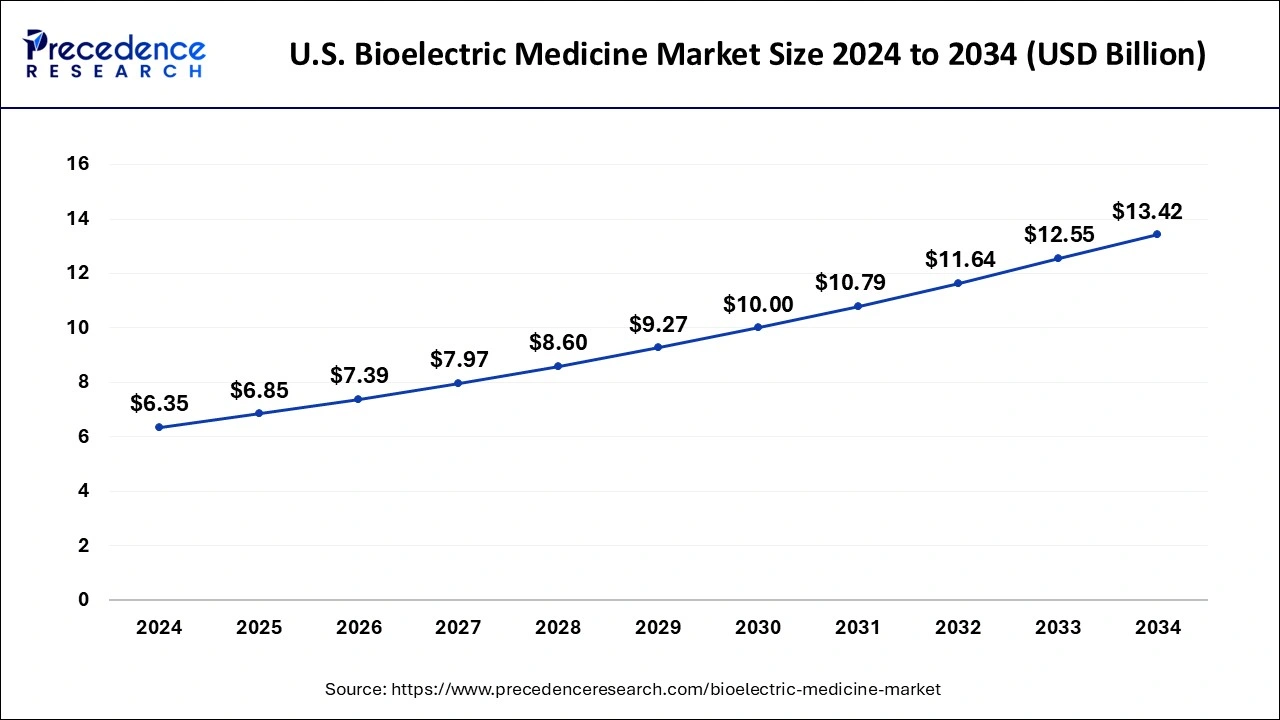
The U.S. bioelectric medicine market size is exhibited at USD 6.85 billion in 2025 and is projected to be worth around USD 13.42 billion by 2034, growing at a CAGR of 7.77% from 2025 to 2034.
What Made North America the Dominant Region in the Bioelectric Medicine Market?
North America dominated the bioelectric medicine market by capturing the largest share in 2024. The region's dominance stems largely from its highly developed healthcare infrastructure, substantial investment in research and development, and the presence of major medical device manufacturers. The region also benefits from early adoption of advanced therapies for chronic and neurological conditions, coupled with supportive regulatory and reimbursement policies that facilitate faster market uptake. The U.S. is a major contributor to the North American market because it boasts a highly developed healthcare infrastructure, large volumes of chronic cardiovascular and neurological conditions that drive demand, and robust investments in device‑based therapies and regulatory support.
What Makes Asia Pacific the Fastest-Growing Area?
Asia Pacific is expected to experience the fastest growth in the upcoming period. An increasing geriatric population and the presence of chronic diseases are driving the market. The number of patients suffering from epilepsy, Parkinson's disease, and Alzheimer's disease in countries like India and China is rising each year, which is expected to boost the adoption of this technology. The availability of favorable reimbursement policies in developing nations has recently contributed to the market's growth.
How is the Opportunistic Rise of Europe in the Bioelectric Medicine Market?
Europe presents a significant growth opportunity in the bioelectronic medicine market due to the increasing prevalence of chronic and neurological diseases, supportive regulatory frameworks, and rising healthcare investments. Expansion of advanced neuromodulation therapies, strategic partnerships, and research initiatives is driving adoption across hospitals, specialty clinics, and clinical research centers. Germany is a major contributor to the European bioelectric medicine market due to its robust healthcare infrastructure, high levels of medical‑device adoption, and strong collaboration between industry and academic research institutions, driving innovation and clinical trials.
How Crucial is the Role of Latin America in the Growth of the Bioelectric Medicine Market?
Latin America plays a crucial role in market growth due to its expanding healthcare infrastructure and the increasing prevalence of chronic and neurological disorders. Rising awareness of non-pharmacological therapies, expansion of clinical research, and investments in neuromodulation technologies are driving adoption, providing opportunities for global companies to establish a strong regional presence. Brazil leads the market because of its relatively advanced private hospital network, growing adoption of implantable and non-invasive neuromodulation devices, and a regulatory environment that's improving device approval cycles.
How Big is the Opportunity for the Growth of the Middle East and Africa Bioelectric Medicine Market?
The Middle East and Africa offer promising growth opportunities in the bioelectronic medicine market due to expanding healthcare infrastructure, rising prevalence of chronic and neurological diseases, and increasing investments in advanced therapies. Adoption of neuromodulation technologies and supportive regulatory initiatives is driving market development across hospitals and specialty clinics. Saudi Arabia is a major contributor to the MEA market, thanks to its sizeable investments in advanced healthcare infrastructure and ambitious reforms under its Vision 2030 program that are accelerating the adoption of neuromodulation and implantable therapies.
Value Chain Analysis
- Research and Development
This stage involves preclinical studies that are carried out to confirm mechanisms and improve device performance.
Key Players: Boston Scientific, SetPoint Medical, GlaxoSmithKline (GSK), Galvani Bioelectronics, and Cyberonics. - Clinical Trials and Regulatory Approval
Bioelectronic devices go through phased clinical trials to evaluate safety, effectiveness, and long-term results in patients.
Key Players: U.S. FDA, European Medicines Agency (EMA), Medtronic, Boston Scientific, SetPoint Medical. - Distribution to Hospitals and Pharmacies
Approved bioelectronic devices are shipped to hospitals, specialty clinics, and pharmacies via logistics partners and authorized distributors.
Key Players: Cardinal Health, McKesson Corporation, Medline Industries, Owens & Minor, and AmerisourceBergen. - Patient Support and Service
Patients receive device setup, training, and ongoing technical support, including software updates and therapy optimization. Post-market monitoring ensures adherence, safety reporting, and personalized care management.
Key Players: Boston Scientific, GlaxoSmithKline (GSK), Medtronic, SetPoint Medical, and local specialty clinics.
Top Companies in the Bioelectric Medicine Market & Their Offerings
|
Vendor |
Key Offerings / Products |
|
Medtronic plc |
Offers a broad portfolio of implantable neurostimulation and cardiac rhythm‑management devices, including products aimed at pain, mobility, and neurological conditions. |
|
Boston Scientific Corporation |
Provides neuromodulation solutions such as spinal‑cord and deep‑brain stimulation systems for chronic pain and movement‑disorders, along with expanding bioelectronic therapy offerings. |
|
Abbott Laboratories |
Develops implantable and wearable bioelectric medicine devices, including neuromodulation platforms for neurological and cardiac applications. |
|
LivaNova plc |
Focuses on neuromodulation therapies, especially vagus nerve stimulation (VNS) systems treatment for epilepsy and depression, advancing into bioelectronic medicine. |
Other Major Companies
- Cochlear Ltd. (Australia)
- Soterix Medical Inc. (US)
- Bioinduction Ltd. (UK)
- GiMer Medical (Taiwan)
- Cefaly (Belgium)
- BioControl Medical (Israel)
- TVNS Technologies GmbH (Germany)
Recent Developments
- In February 2025, Medtronic received FDA approval for its BrainSense Adaptive DBS system and Electrode Identifier technologies for Parkinson's disease. The device continuously monitors brain activity and automatically adjusts stimulation parameters, providing highly personalized therapy. This adaptive approach improves symptom control, reduces side effects, and enhances quality of life for patients.
- In May 2025, Boston Scientific launched a closed-loop deep brain stimulation (DBS) device for treatment-resistant epilepsy, featuring advanced sensing capabilities and MRI-compatible implants. The system allows real-time feedback and precise adjustment of stimulation, improving patient safety and therapy effectiveness. It represents a significant step toward the broader application of bioelectronic medicine in complex neurological disorders.
- In March 2025, Galvani Bioelectronics partnered with Johnson & Johnson to develop graphene-based bioelectronic vagus nerve therapies for severe chronic conditions. The collaboration focuses on neuromodulation for immune, metabolic, and inflammatory disorders using implantable devices, advancing the scope of bioelectronic medicine beyond traditional neurological targets.
- In June 2025, Pulse Biosciences received FDA Investigational Device Exemption (IDE) approval for its CellFX nsPFA nanosecond pulse ablation system in cardiac surgery for atrial fibrillation. This technology extends bioelectronic interventions into cardiovascular therapy, offering precise tissue ablation while minimizing collateral damage, demonstrating diversification of bioelectronic applications.
Segments covered in the report
By Product
- Implantable Cardioverter Defibrillators
- Cardiac Pacemakers
- Transcutaneous Electrical Nerve Stimulators
- Sacral Nerve Stimulators
- Vagus Nerve Stimulators
- Cochlear implants
- Spinal cord stimulators
- Deep brain stimulators
By Type
- Implantable
- Noninvasive
By Application
- Arrhythmia
- Depression
- Treatment-resistant depression
- Epilepsy
- Pain management
- Tremor
- Urinary and fecal incontinence
- Sensorineural hearing loss
- Parkinson's disease
- Others
By End User
- Hospitals
- Individual Users
- Homecare Centers
- Ambulatory Surgical Centers
- Specialty Clinics
- Others
By Geography
- North America
- U.S.
- Canada
- Europe
- U.K.
- Germany
- France
- Asia-Pacific
- China
- India
- Japan
- South Korea
- Malaysia
- Philippines
- Latin America
- Brazil
- Rest of Latin America
- Middle East & Africa (MEA)
- GCC
- North Africa
- South Africa
- Rest of the Middle East & Africa
For inquiries regarding discounts, bulk purchases, or customization requests, please contact us at sales@precedenceresearch.com
Frequently Asked Questions





Ask For Sample
No cookie-cutter, only authentic analysis – take the 1st step to become a Precedence Research client